Updated: July 2026 — written by locals who ride this city every day.
Guide Index
Tap the topic you need and jump straight to it:
- Why Medellín (and Why This Guide Is Different)
- Is Medellín Safe in 2026? The Honest Answer
- Medellín's Weather: Eternal Spring (and What to Pack)
- The Year in Medellín, Month by Month
- Before You Fly: Passport, Visa and the Famous Check-Mig
- From José María Córdova Airport to Medellín: Every Option
- The Medellín Metro, Used Like a Local
- Taxis, Uber, DiDi and What It Costs to Get Around
- Renting a Car in Medellín? Driving and Parking Without Headaches
- Where to Stay in Medellín: the Right Area for Your Trip
- The Neighborhoods: a Mental Map of the City
- Things to Do in Medellín: the Essentials (Done Right)
- Medellín with Kids: the City Is for Them Too
- Everyday Medellín: the City Without the Tourism
- Market Plazas and Exotic Fruits: Paradise Is at the Market
- Shopping: El Hueco, the Malls and Crafts
- Soccer in Medellín: Living a Match at the Atanasio
- Food in Medellín: from the Corrientazo to Fine Dining
- Itineraries: 1, 3, 5 and 7 Days in Medellín (Built by Locals)
- Culture, Language and Etiquette: Understanding the Paisas
- Money, Internet and Practicalities
- Health and Emergencies: Don't Get Caught Off Guard
- Medellín for Digital Nomads
- Guatapé and the Peñol Rock: the Perfect Day Out of the City
- The Surroundings Almost No Guide Shows
- Coffee Tours Near Medellín: the Zones, Not One Farm
- From Medellín to the Rest of Colombia: Airports and Terminals Explained
- The MOVE Way to Experience Medellín (by Electric Bike)
- Frequently Asked Questions About Visiting Medellín
- To Close: You Don't Visit Medellín — You Feel It
Why Medellín (and Why This Guide Is Different)
This guide is written by people who live Medellín every single day: we ride its streets by bike, eat breakfast in its neighborhood bakeries, know its shortcuts and its traffic jams, and celebrate goals at the Atanasio stadium. It's not a guide written from the outside by someone who spent four days here. It's the city, told by its people.
Why another Medellín guide? Because almost all of them tell you the same things: Comuna 13, Guatapé, bandeja paisa. All of that is here — with details few others share — but so is what other guides don't tell you: how much the taxi from the airport costs and which option suits you best, how to pay for the metro like a local, where office workers have lunch for 15,000 pesos, what El Hueco is and how to shop there, why the food here isn't spicy (and how to ask for ají), what to do if you need a doctor, and whether it's a good idea to go to the stadium on a soccer Sunday.
One promise before we start: total honesty. Beginning with the question you've been asking yourself since before buying your ticket: is it safe? We'll answer it straight, the way we'd explain it to a friend visiting for the first time.
Welcome to the City of Eternal Spring. You'll quickly understand why so many people come for a week and stay for months.
Is Medellín Safe in 2026? The Honest Answer
The short answer
Yes — Medellín is safe for tourists in 2026, with the same precautions you'd take in London, New York or any big city. Millions of visitors enjoy it every year without any trouble. In the areas where you'll actually spend your time — El Poblado, Laureles, Envigado, Downtown (El Centro), Comuna 13 — the real risk isn't violence: it's having your phone snatched through carelessness, or the odd nighttime scam. Follow the rules in this section and your trip will be smooth.
What the data says (no sugarcoating)
Medellín's transformation is real and measurable: since the 1990s — when it was one of the most violent cities in the world — homicides have fallen by more than 90%. Today's city looks nothing like the TV series, and we locals love it when visitors see that for themselves.
What about travel advisories? Let's be precise, because there are plenty of alarmist headlines out there: the U.S. government keeps Colombia at Level 3 ("reconsider travel," updated March 2026), but the areas it flags as do not travel are Arauca, Cauca, Norte de Santander and the Venezuelan border — regions hundreds of kilometers away. Neither Medellín nor tourist Antioquia is on that list.
And here's a nuance the numbers never show, but every local knows: a good share of the violent incidents behind the statistics happen in disputes between illegal groups, in areas far from the tourist circuit and from the city's everyday life. It's not violence aimed at ordinary residents or visitors. The same goes for London, New York or Paris: a big city's overall indicators don't describe the actual experience of a tourist walking through its good areas. Ordinary street crime does exist — as in every big city — which is why the rules below matter, but the Medellín you'll experience is calmer than the average headline suggests.
The areas: where to roam freely, where to pay attention
Relaxed, day and night: El Poblado (including Provenza and Manila), Laureles, Envigado and Sabaneta. These are the areas where most visitors stay — street life, restaurants and people around at all hours.
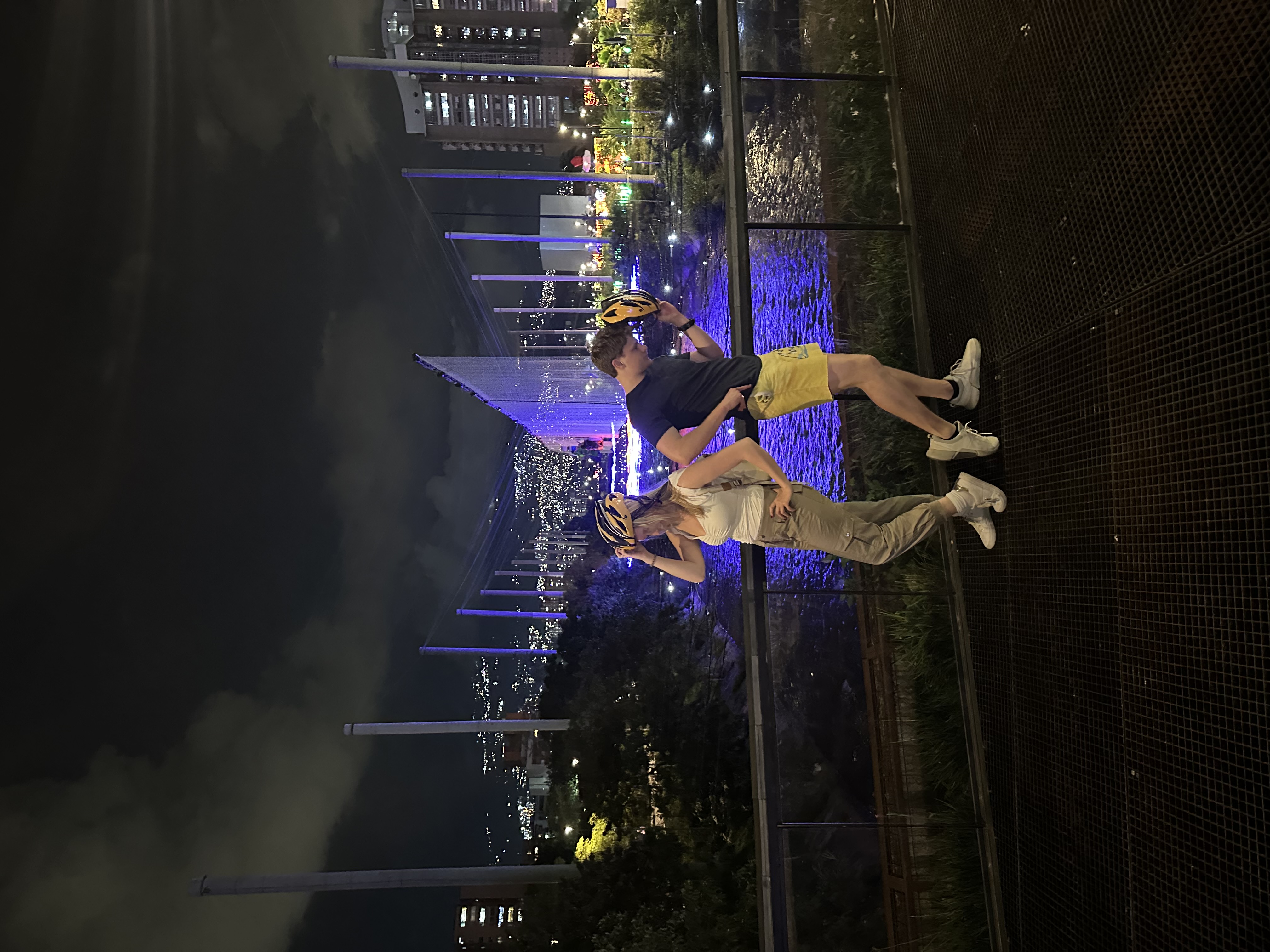
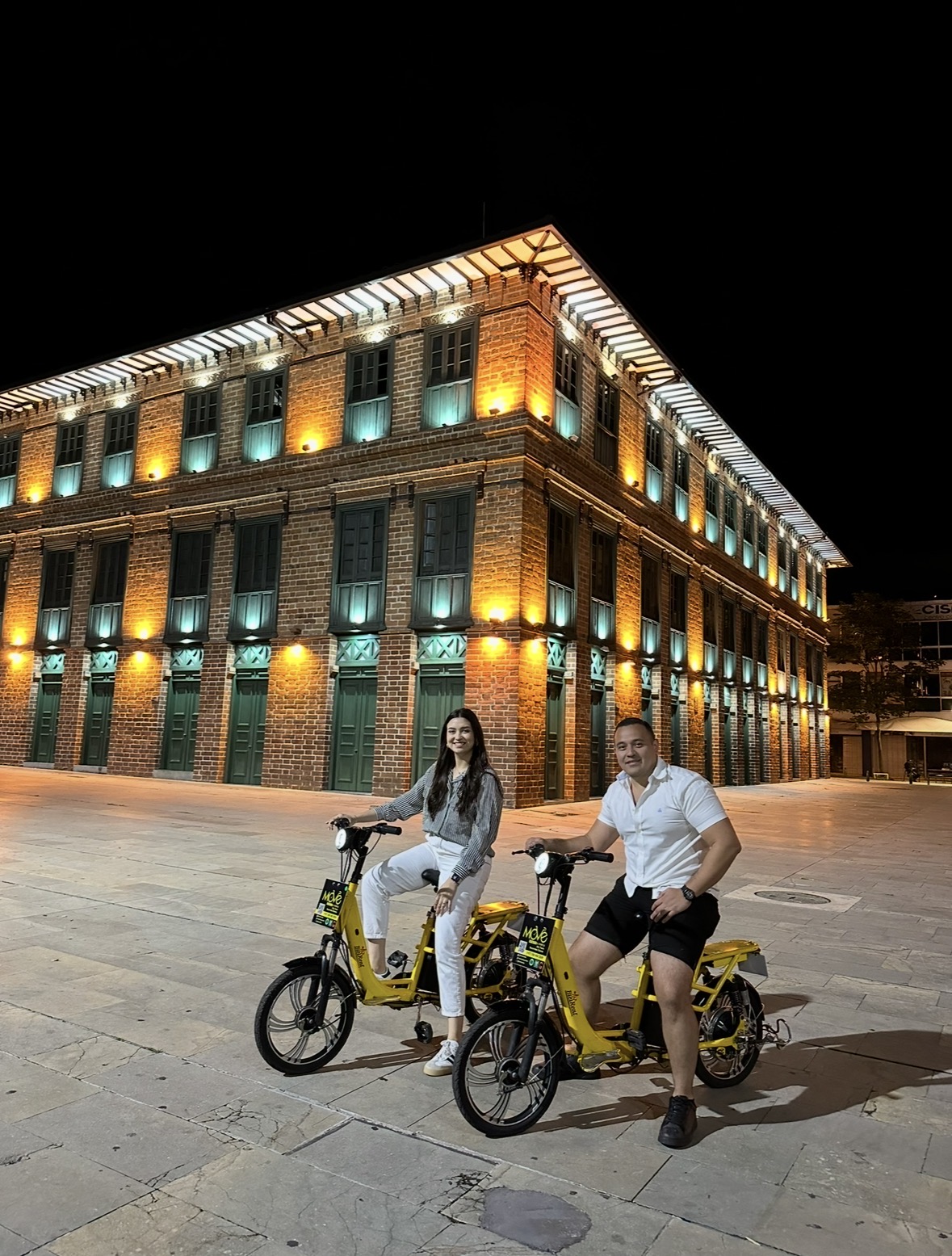
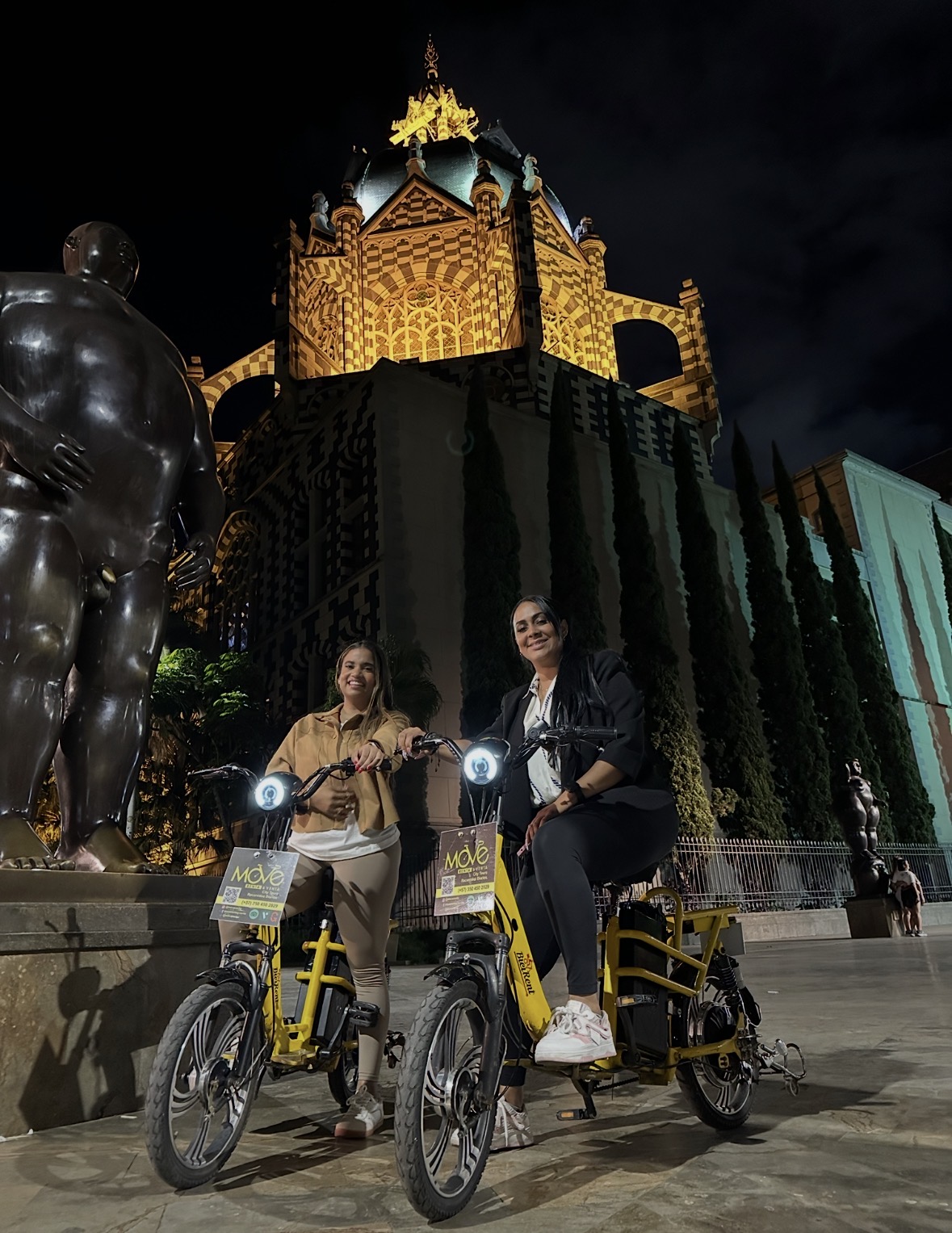
With attention and good company: Downtown (El Centro). By day it's unmissable — Plaza Botero, the Palacio de la Cultura, Junín — though it is a phone-in-your-pocket kind of place, camera in the backpack between shots. And at night? Here's something almost no guide can tell you firsthand: we ride Downtown at night by bike, all the way to Plaza Botero itself, and it's a different city — lit up, crowd-free, with constant police presence. It can be done, and it's worth it. That said: like any big city's downtown, it has good streets and bad streets, so at night the advice is to go with someone who knows the city, not wandering wherever GPS takes you.
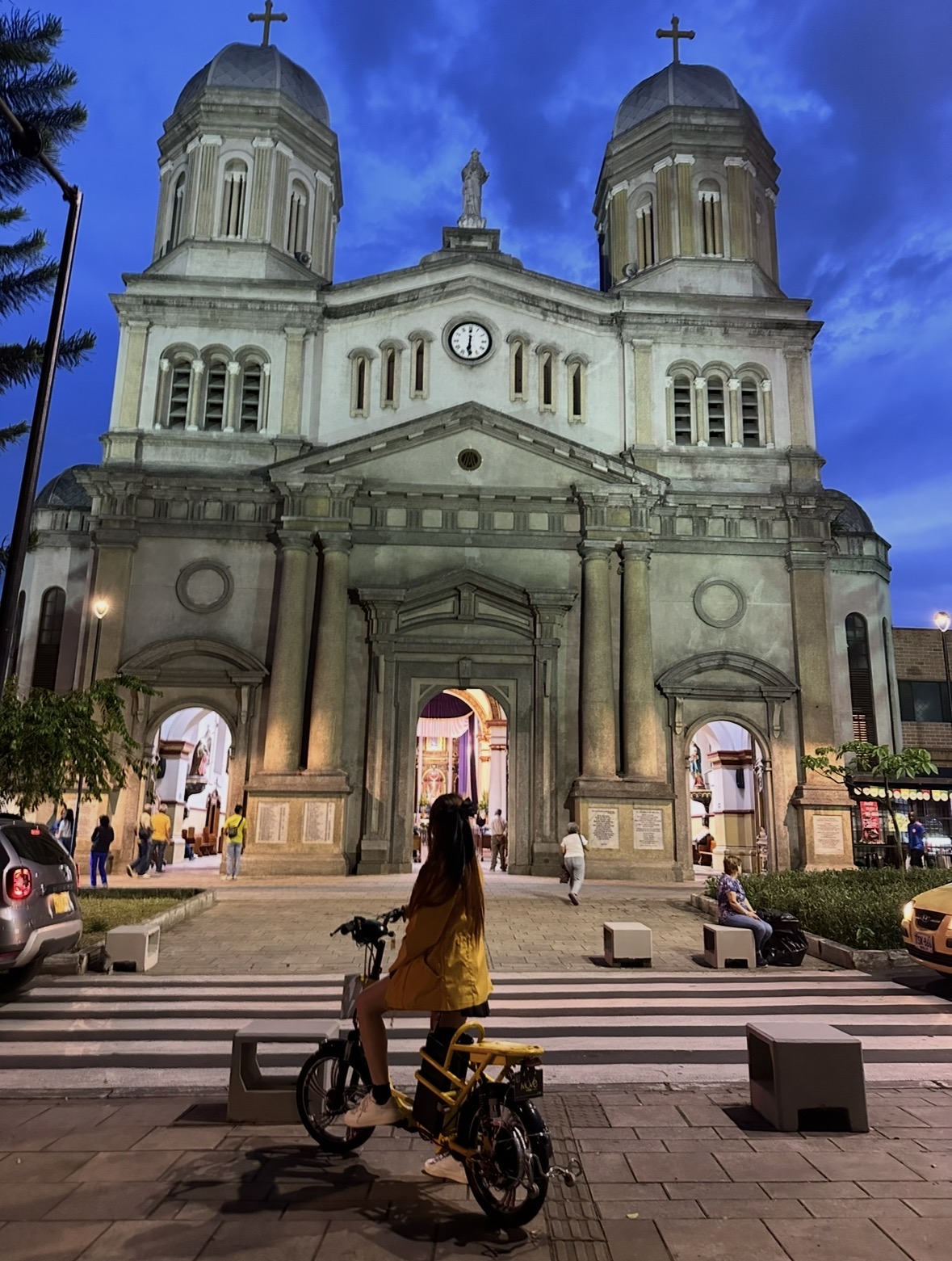
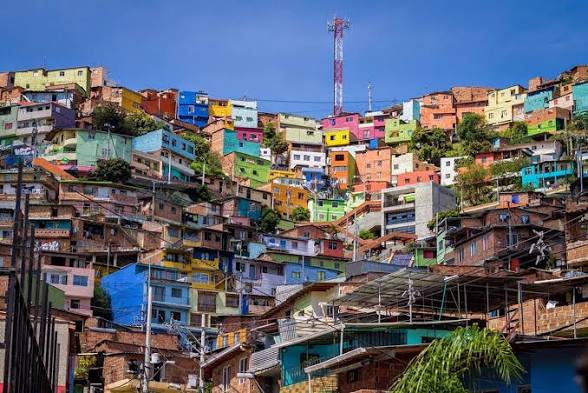
Comuna 13 is, above all, a neighborhood of the city: you can visit on your own without any problem in the tourist area (the Graffitour and the escalators). A local guide isn't a safety requirement — it's the difference between seeing pretty graffiti and understanding the social transformation behind every wall. The non-touristic hillside barrios, on the other hand, simply have nothing set up for visitors: not a threat, just not where the plan is.
"No dar papaya": the paisa art of not making yourself a target
You'll hear this expression a thousand times, and it sums up all of local safety: don't display anything someone might want to take. The rules we locals live by:
- Phone away while you walk. Need the map? Step into a shop or café and check it there.
- No flashy jewelry, watches or chains on display.
- Withdraw cash at ATMs inside shopping malls, not on the street.
- At night, move by Uber/DiDi or app-ordered taxi, door to door.
- Never leave your drink unattended or accept drinks from strangers. Never.
- Carry a copy of your passport; leave the original at your accommodation.
- And if you do get robbed despite it all: don't resist. Things can be replaced.
It sounds like a long list, but it's what you'd do in any major city in the world. Here it simply has a name of its own.
At night: how to move around and until what time
The nightlife zones — Provenza, Parque Lleras, La 70 in Laureles — stay alive into the early hours and are safe if you move between them by app rather than walking alone down empty streets at 3 a.m. The Metro runs until around 11 p.m. on weekdays; after that, ride-hailing apps are your friend. Downtown at night? As we said above: doable and beautiful all lit up, better with local company. One simple rule for the whole city: stay out as late as you like, but make the ride home door to door.
The scams that do exist (and how to dodge them)
Here's the part many guides skip, and the one most worth knowing:
Dating apps. The U.S. Embassy has officially warned about criminals using Tinder, Bumble and similar apps to lure, drug and rob foreigners. That doesn't mean you can't use them: it means first dates always in public places, your drink always in sight, and someone who knows where you are. Be wary of a date who pushes very fast to move somewhere "more private."
Scopolamine ("burundanga"). A drug that erases your will, slipped into drinks or food. The defense is rule 5 above: no unattended drinks, no treats from charming strangers.
Overcharging and street taxis. Taxis are fine by day; at night, order them through an app so there's a record and the fare is fair. In tourist areas, check prices before sitting down and confirm the fare before getting in.
What if I'm traveling solo (as a woman)?
Medellín is one of Latin America's favorite destinations for solo female travelers — the community of women nomads and travelers here is huge, and that alone says a lot. The rules are the same as this section's, with three points of emphasis: at night, always app transport door to door (and share the ride from the app with someone you trust); when partying, your drink stays with you, always; and for lodging, Laureles and the hostels/hotels with good reviews written by women are the safe play. Catcalling? It exists, as everywhere in Latin America — the local technique is to ignore and keep walking, and it passes. And one reassuring fact: the Metro has constant staff presence, and the paisa culture of "looking out for each other" means asking a señora on the street is like gaining an instant emotional bodyguard.
What about Comuna 13?
It's the star question and deserves its own answer: yes, Comuna 13 is safe to visit in 2026, and you can even go up on your own — it's a living neighborhood and one of the busiest, most watched-over tourist spots in Medellín, precisely because tourism transformed it. With a local guide? Better — not for safety, but for depth: the story of that social transformation is what makes the visit unforgettable. We tell it in full in our honest guide to Comuna 13, and if you want to go deeper on safety in general, here's our complete safety guide for tourists.
A local's bottom line: the question is no longer "is Medellín dangerous?" but "why does everyone who visits want to stay?" Follow the rules, move smart, and this city will treat you like a guest of honor.
Medellín's Weather: Eternal Spring (and What to Pack)
What the weather is really like (from a local)
Medellín doesn't have seasons: it has one friendly climate all year round, moving between 17°C (63°F) at dawn and 27–28°C (81–82°F) at midday. That's why they call it the City of Eternal Spring — and it's not marketing: it's the actual feeling of stepping outside on any day of the year. That said — local honesty — this past year has run a bit warmer than usual: there are some genuinely hot days… hot "Medellín-style," of course. You'll never suffer the 40°C (104°F) of other cities here.
The second thing to know: paisa weather is proudly unpredictable. The sun can be blazing and, without warning, twenty minutes later the sky closes and a downpour lets loose. The good news: the rain almost never lasts. It pours hard, it clears fast. And here's the local trick: don't fight the rain — duck into a café or a bakery, order something warm, and half an hour later you're back on your route as if nothing happened. Waiting out the rain is a plan too, and a good one.
Seasons? The rainiest stretches are April–May and October–November; the driest, December–March and July–August. But the golden rule never changes: a small umbrella or rain jacket in your backpack, always, no matter how the sky looks when you head out.
What to pack
The magic word is layers: a t-shirt for the day, a light jacket for the night, and comfortable shoes because this city is all hills. One non-negotiable in your bag: sunscreen, even on cloudy days — we're at 1,500 meters (5,000 feet) of altitude and mountain sun burns more than it feels.
What about shorts? A few years ago they were rare in the city; today, especially on Saturdays and Sundays, plenty of locals wear them too. So come comfortable, no embarrassment. If you'd rather blend in with the classic paisa daily uniform: jeans and a t-shirt, whatever the temperature.
High seasons and the two festivals that transform the city
Visitor (and hotel-price) peaks come in December–January, Holy Week and July–August. And there are two moments when Medellín puts on its best outfit:
The Flower Festival (August): the city's biggest celebration, headlined by the silleteros parade — farmers carrying giant flower tapestries on their backs — plus concerts and events everywhere. If you can choose your dates, this week is magical; book accommodation months ahead.
The Christmas Lights — Los Alumbrados (December): the light display along the Medellín River is among the most famous in Latin America, and December here — with novenas, natilla custard and buñuelos — is a masterclass in paisa culture.
What if it rains? The downpour plan
First, relax: you already know that here it rains hard and clears fast. But if the sky decides to soak the whole afternoon, the city has plenty of plan B: the museums (Museo de Antioquia right on Plaza Botero, the MAMM with its covered terrace, the Casa de la Memoria), the malls that here count as a legitimate outing, the specialty coffee route through Manila or Laureles to watch the rain with a single-origin in hand, or the most paisa plan of all: corrientazo delivered and a movie.
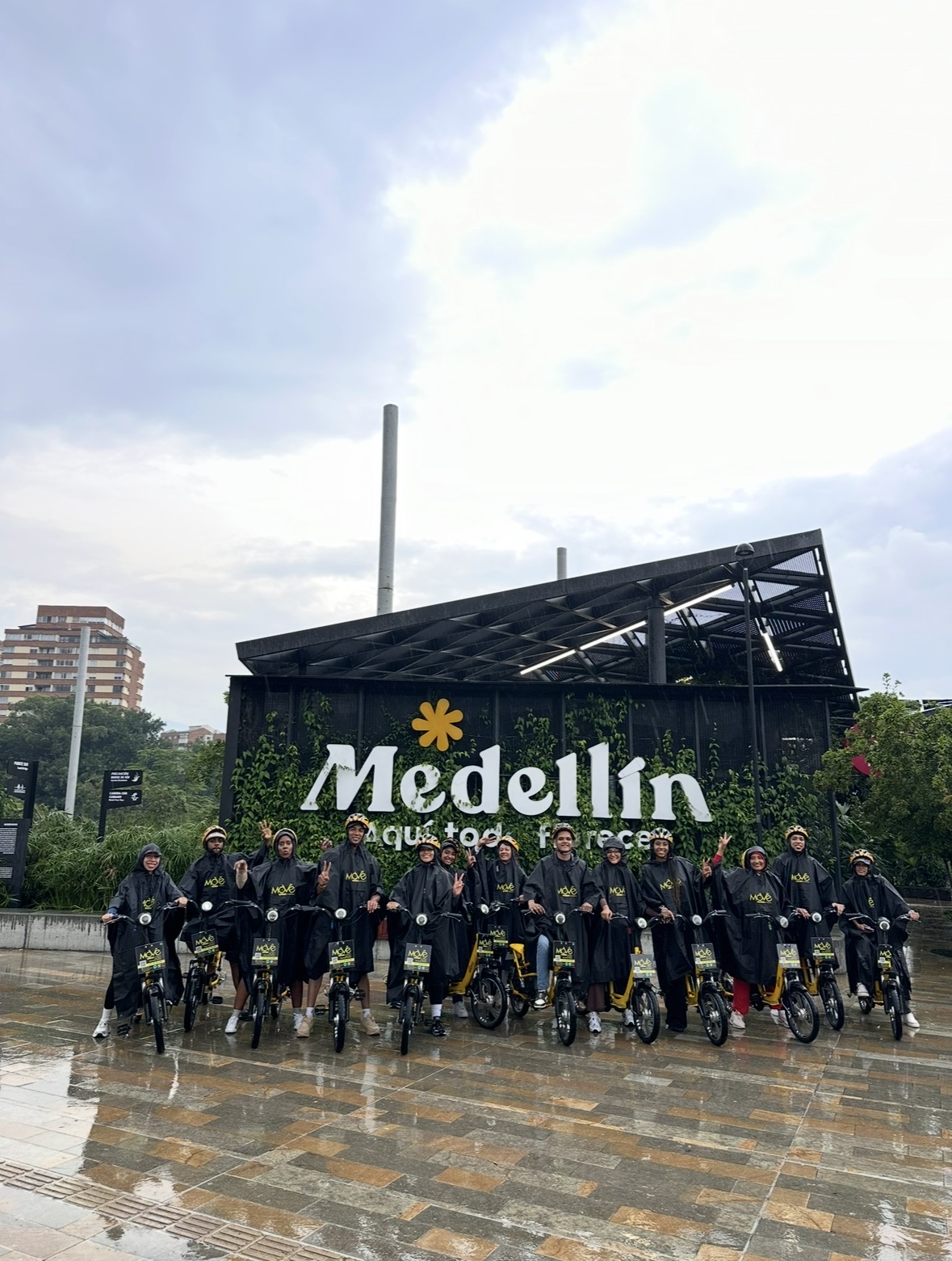
And if the downpour catches you mid-bike-tour? It happens to us, and here's a secret: the tour in the rain has its own magic. We pull out the ponchos we carry for exactly this, stop at a neighborhood shop that appears in no guidebook, and wait out the rain over tintos and conversation with the neighbors. The freshness after the rain, the city gleaming and freshly washed, the half-empty streets — people who've lived it say it was the best moment of their trip. The downpour doesn't ruin the plan: it makes it unforgettable.
 → Museum day? Which to pick for your trip, 2026 prices and the Monday mistake everyone makes, in our Medellín museum guide.
The Year in Medellín, Month by Month
When to come? Any month works — but each season has its own personality, and there are two weeks a year when hotel prices skyrocket without the unsuspecting traveler understanding why. Here's the calendar we locals go by (exact dates vary each year — confirm when planning):
January: starts in party mode — the Christmas lights stay on for the first days — and closes with Colombiatex, the textile fair that fills the city with buyers from across the Americas. February–March: the secret season — dry weather, calm city, friendly prices. Our favorite time to recommend. Holy Week (March/April): paisas head to the pueblos — the city turns deliciously quiet, but the hosterías and towns fill up; if your plan is Guatapé or Santa Fe that week, book ahead. April–May: more rain, everything green, few tourists — and the Días del Libro fill the Carlos E. Restrepo neighborhood with literature. June: the International Tango Festival — because yes: Carlos Gardel died in Medellín in 1935, and the city keeps a tango story almost no visitor knows. July: careful here — Colombiamoda, Colombia's fashion week, sends hotel occupancy and rates through the roof. If you're coming for tourism, avoid that week or book months ahead. August: the star month — the Flower Festival, with the silleteros parade, concerts and the city at its finest. September: the Book and Culture Festival at the Botanical Garden, one of the city's most beloved cultural events. October–November: the second rainy season and second calm — ideal for budgets. December: the beautiful madness — the Christmas lights, novenas, natilla, and the whole city celebrating. The highest season of the year: book everything in advance.
Before You Fly: Passport, Visa and the Famous Check-Mig
The basics: passport and tourism stamp
For most nationalities — the United States, the European Union, the UK, Canada and nearly all of Latin America — Colombia doesn't require a tourist visa: on arrival you get a 90-day stamp, extendable to 180 days per calendar year through Migración Colombia. You just need a valid passport (the golden rule of international travel: ideally with more than six months' validity) and — watch this one — the airline may ask for proof of onward travel out of the country. Have it bought, or at least reserved, before heading to the airport.
The Check-Mig: the requirement nobody tells you about (and it's mandatory)
Here's the detail that surprises half the world at the check-in counter: Colombia requires filling out the Check-Mig, an online immigration form, before boarding your international flight — both inbound and outbound. You complete it on Migración Colombia's official site between 72 hours and 1 hour before your flight, the confirmation arrives by email, and you show it at check-in (printed or on your phone).
Two friendly warnings: it's completely free — pirate websites exist that charge to "process" it; use only the official site — and don't leave it for the airport: between travel stress and airport wifi, that 5-minute form becomes 40. Do it from home the day before and land in Medellín with everything ready.
From José María Córdova Airport to Medellín: Every Option
First, get oriented: "Medellín's airport" (MDE) is actually in Rionegro, a neighboring town on the eastern plateau. The ride down to Medellín goes through the Oriente tunnel and takes about 40 minutes. And here's a local tip worth a flight: for the trip back to the airport, allow a full hour — any slowdown on the road or incident in the tunnel can squeeze your check-in, and nobody needs that scare.
Real prices, verified July 2026:
Arrival: what you'll see walking out (and how not to get hustled)
No guide tells you this part: you exit international arrivals — the door is on your right — and the moment you step out, several people will approach you: "taxi? transport? where are you going?". Relax, it's nothing dangerous: it's just everyday hustling. The smart move is to keep walking unhurried, don't let anyone pressure you, and look straight ahead: parked right in front are the white taxis and colectivos — yes, white: airport vehicles look different from the city's yellow cabs — and the buses are right there too. You deal directly with the driver or at the bus door. No middlemen, no mystery.
Official taxi: door to door — COP 132,000
The fare to the city is regulated and fixed: COP 132,000 (about USD 33), tolls included — no haggling, no surprises when you arrive. It's the obvious choice for two or more people, lots of luggage, or after a long flight: it drops you at your accommodation's front door.
The colectivo: the white shared taxi — COP 30,000–35,000 per person
A colectivo is a white taxi shared between passengers that leaves once it fills up. At the airport you'll see them right in front of the exit; in Medellín they depart from the gas station at the San Diego roundabout — "la bomba de San Diego," as we say — where they all head up to the airport. It costs COP 30,000–35,000 per person each way, up or down. It's the perfect middle ground: friendly price, and you travel almost as fast as a private taxi.
The bus: the budget option — COP 20,000
The big Combuses bus runs 24 hours, 7 days a week between the airport and three points in the city: San Diego, the Hotel Nutibara (right downtown) and Exposiciones station. At the airport, catch it at national departures (doors 2 and 3); pay cash, card, QR or Cívica. Time difference versus a private car? Just 15–20 minutes more. From your drop-off point, a short taxi or app ride to your hotel runs COP 10,000–20,000. Do the math: about COP 35,000 total, versus 132,000 for the direct taxi.
Uber, DiDi and inDrive: the middle path — COP 100,000–130,000
The apps work at the airport with dynamic pricing; the average runs COP 100,000–130,000 depending on time and demand. The advantages: you pay with the card you already have set up, you see the price before getting in, and you don't need Spanish. Practical tip: many drivers prefer to pick up on the departures level — that's the second floor — where there's less congestion. Coordinate through the app chat.
Which one to choose?
Group, luggage or a late-night arrival → official taxi or app, straight to your door. Solo or as a couple with manageable bags → the white colectivo is the local move. Backpacker budget → the bus for COP 20,000 and a smile.
And if you land at night, a welcome gift that costs nothing: when your car comes out of the tunnel, look out the window. Medellín appears all at once, lit up and spread across the valley — that first nighttime view of the city is one of those postcards you never forget. Welcome.
The other airport: Olaya Herrera (EOH), the hidden gem
If you're flying domestically from a small or mid-sized Colombian city, you might land at Olaya Herrera: the regional airport that sits inside the city itself, 10 minutes from Laureles and 15 from El Poblado. And here's a calculation few travelers make: even if the ticket to EOH costs a bit more than one to Rionegro, you may still come out ahead — you save the COP 132,000 taxi from José María Córdova and, even more valuable, close to an hour of travel. When you're traveling, time is gold. More on this airport later, when we cover getting around from Medellín to the rest of Colombia.
→ Just landed (or about to fly)? The four ways down with prices, the arrival scene and the return tricks, in our MDE airport guide.
The Medellín Metro, Used Like a Local
Why the Metro is sacred to paisas
The Metro isn't just transportation: it's the symbol of Medellín's rebirth. It opened in 1995, in the middle of the hard years, and the city adopted it as proof that another future was possible. That's why you'll find it spotless — no graffiti, no litter — and why "Metro culture" exists: no eating on board, seats are offered, people let others exit before boarding. Join in and you'll ride like one more local.
How to pay: easier than you think
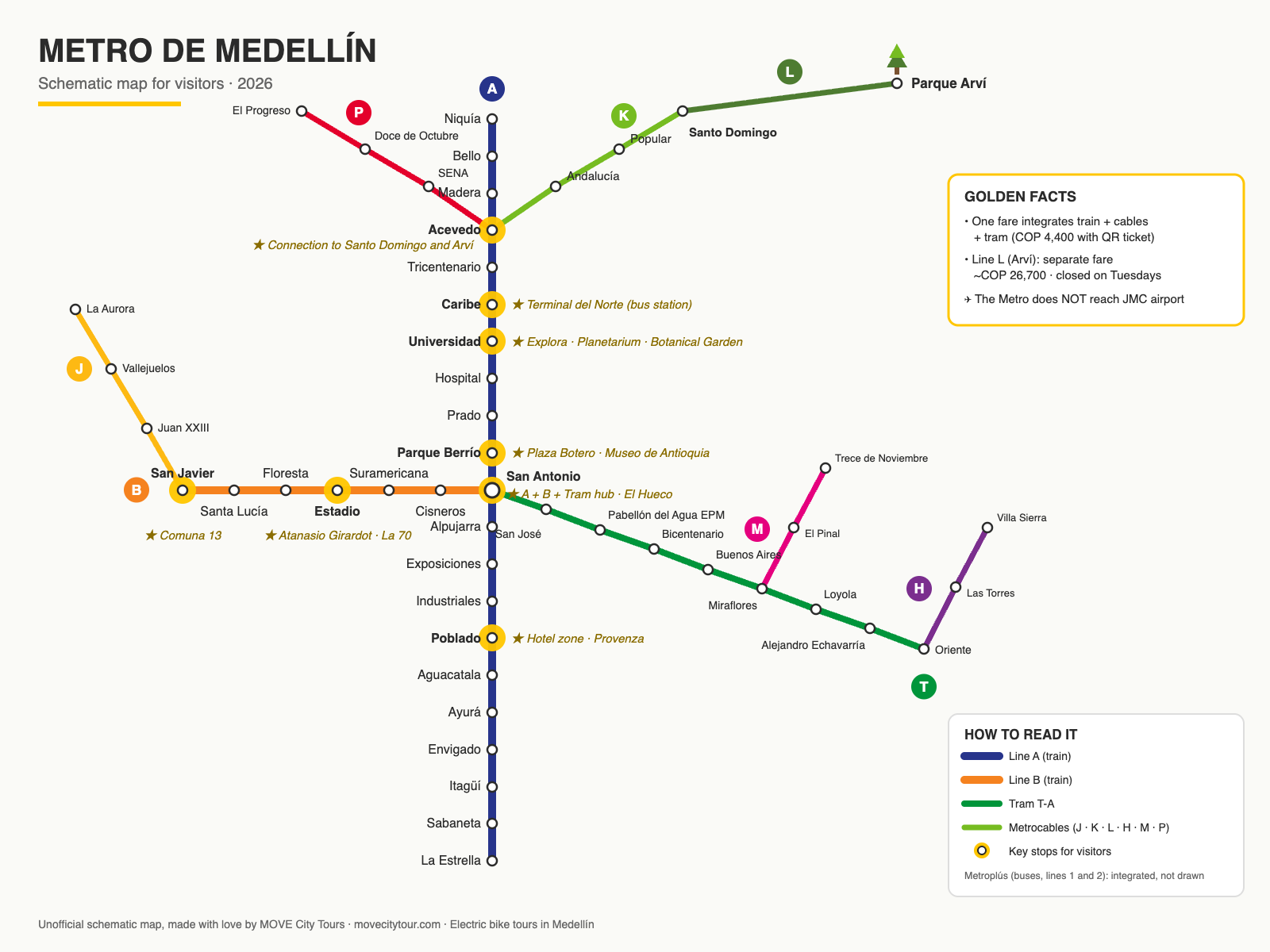
Two options (2026 fares): the single-ride QR ticket, bought at any station ticket office for COP 4,400 per trip — the most practical if you're here for a few days — or the Cívica card, the locals' rechargeable card, which drops the fare to COP 3,820 and can be issued free at customer service points in major stations like San Antonio or Niquía (bring your passport). Staying a week or more? The Cívica pays for itself.
And a very Medellín scene will happen to you: you're at the ticket window and someone offers to swipe you through with their Cívica in exchange for your cash. It's a common, good-faith practice among locals when lines are long — but our honest recommendation is the ticket office or your own Cívica: it's your ride and your record, and you depend on no one.
One fare covers the whole integrated system: metro, tram, the metrocables and Metroplús buses, as long as you don't exit the stations when transferring.
The mental map in 30 seconds
Think of it like this: Line A runs the valley north–south (Niquía to La Estrella) following the river — the backbone. Line B heads west from downtown (San Antonio) to San Javier. Branching off those two spines are the metrocables climbing the hillsides, the Ayacucho tram heading up east, and the Metroplús lines (articulated buses with dedicated lanes). Hours? Monday through Saturday the system opens at 4:30 a.m. and runs until close to 11 p.m.; Sundays and holidays, roughly 5 a.m. to 10 p.m.
Sightseeing by Metro: which station to get off at
The Metro doesn't just move you: it shows you the city. Stops worth the ride:
- San Javier (Line B): the gateway to Comuna 13.
- Acevedo → Metrocable K + L: the cable ride up to Santo Domingo (Line K) is included in your Metro fare — the most spectacular ride in the city for the price of a ticket. The final stretch to Parque Arví (Line L) has a separate fare — about COP 26,700 for foreign visitors — and heads up: it is closed on Tuesdays for maintenance.
- Universidad: the Botanical Garden, Parque Explora and the Planetarium, all walkable.
- Parque Berrío: the heart of Downtown — Plaza Botero and the Palacio de la Cultura one block away.
- San Antonio: the system's great hub and the tram's starting point; from here you can walk to the Bird of Peace at Plaza San Antonio.
- Estadio: the Atanasio Girardot stadium and the La 70 strip.
- Poblado: the hotel zone's station (heads up: it's an uphill walk from the station to Provenza — with luggage, better a short taxi).
→ The Metro deserves its own guide: 2026 fares, the Cívica card, the key tourist stations and Metro culture, all in our Metro guide for tourists.
Taxis, Uber, DiDi and What It Costs to Get Around
The apps we use here
Uber, DiDi and inDrive all work in Medellín, and locals use them daily. There's also the classic yellow taxi, which you can flag on the street with confidence by day; at night, better to order through an app so there's a record of the trip and the price is fair. Pocket tip: keep two or three apps installed and compare — sometimes the difference between them is 30%.
What it costs and how long it takes (the list nobody publishes)
Typical app fares between the points visitors move between most (July 2026, outside rush hour):
- El Poblado ↔ Laureles: COP 15,000–25,000 · 20–30 min
- El Poblado ↔ Downtown: COP 14,000–22,000 · 20–30 min
- El Poblado ↔ Comuna 13: COP 25,000–35,000 · 30–40 min
- Laureles ↔ Downtown: COP 10,000–16,000 · 15–20 min
- Laureles ↔ Comuna 13: COP 12,000–18,000 · 15–20 min
- El Poblado ↔ Estadio (Atanasio): COP 15,000–22,000 · 20–25 min
- Anywhere ↔ MDE Airport: COP 100,000–130,000 · 40–60 min
The fine print that matters: during rush hour (7–9 a.m. and 5–7:30 p.m.) travel times can nearly double and surge pricing kicks in. If your plan crosses the city, schedule it outside those windows — or better: do like the locals and combine Metro + app for what the Metro doesn't reach.
City buses and delivery apps
The green and multicolored buses you see everywhere are the paisa daily ride: pay as you board (fare similar to the Metro's) and they reach every corner of the valley. For a visitor they're less intuitive than the Metro or the apps, but riding a bus through Laureles or Envigado is an authentically local experience. They run frequently into the night; after 10–11 p.m., your plan is an app.
Staying in? Rappi is the king of delivery in Colombia: food, groceries, pharmacy, even cash, paid with your international card in the app. Ordering a "corrientazo" delivered on a rainy day is cultural tourism too.
The secret to not losing half your trip inside a car
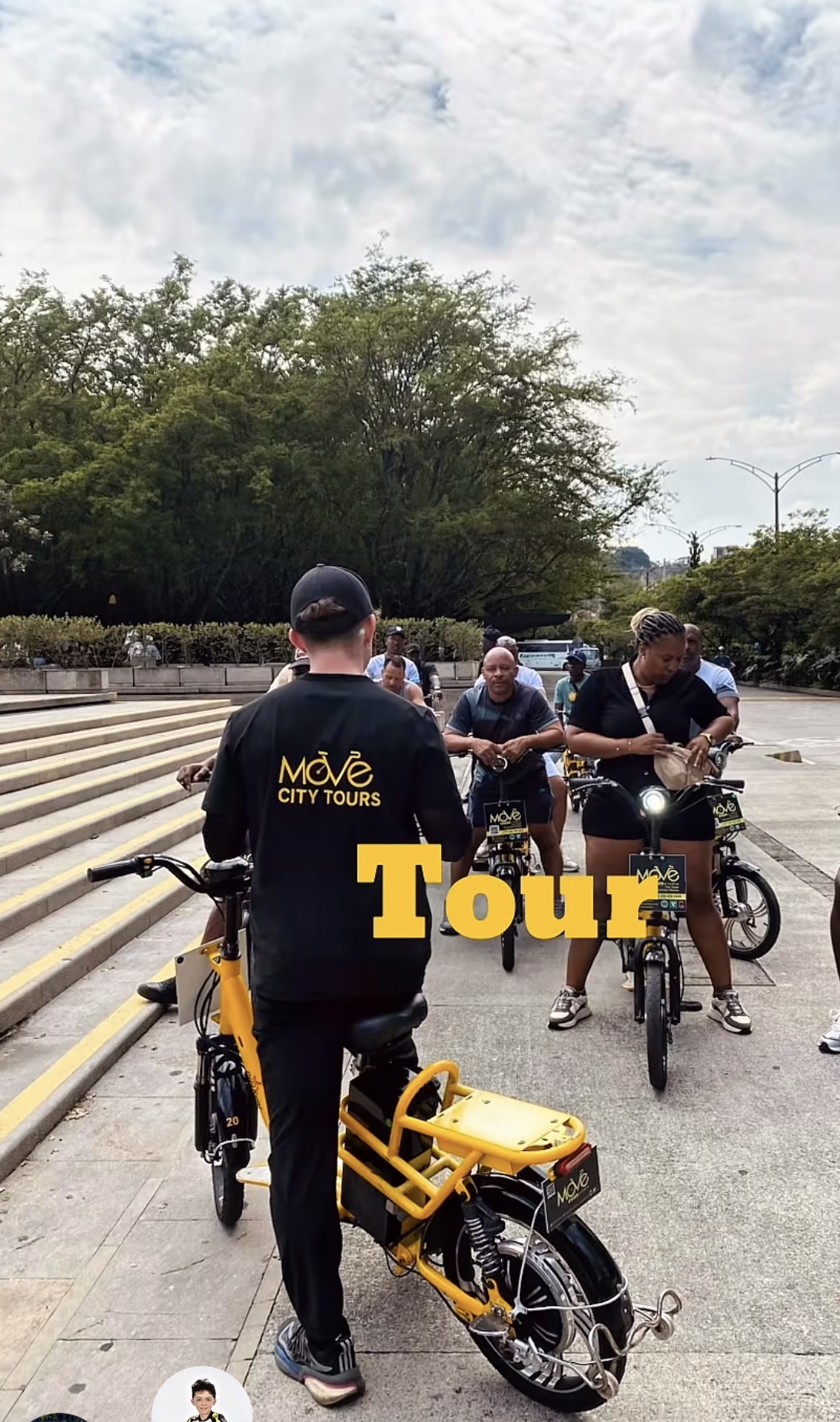
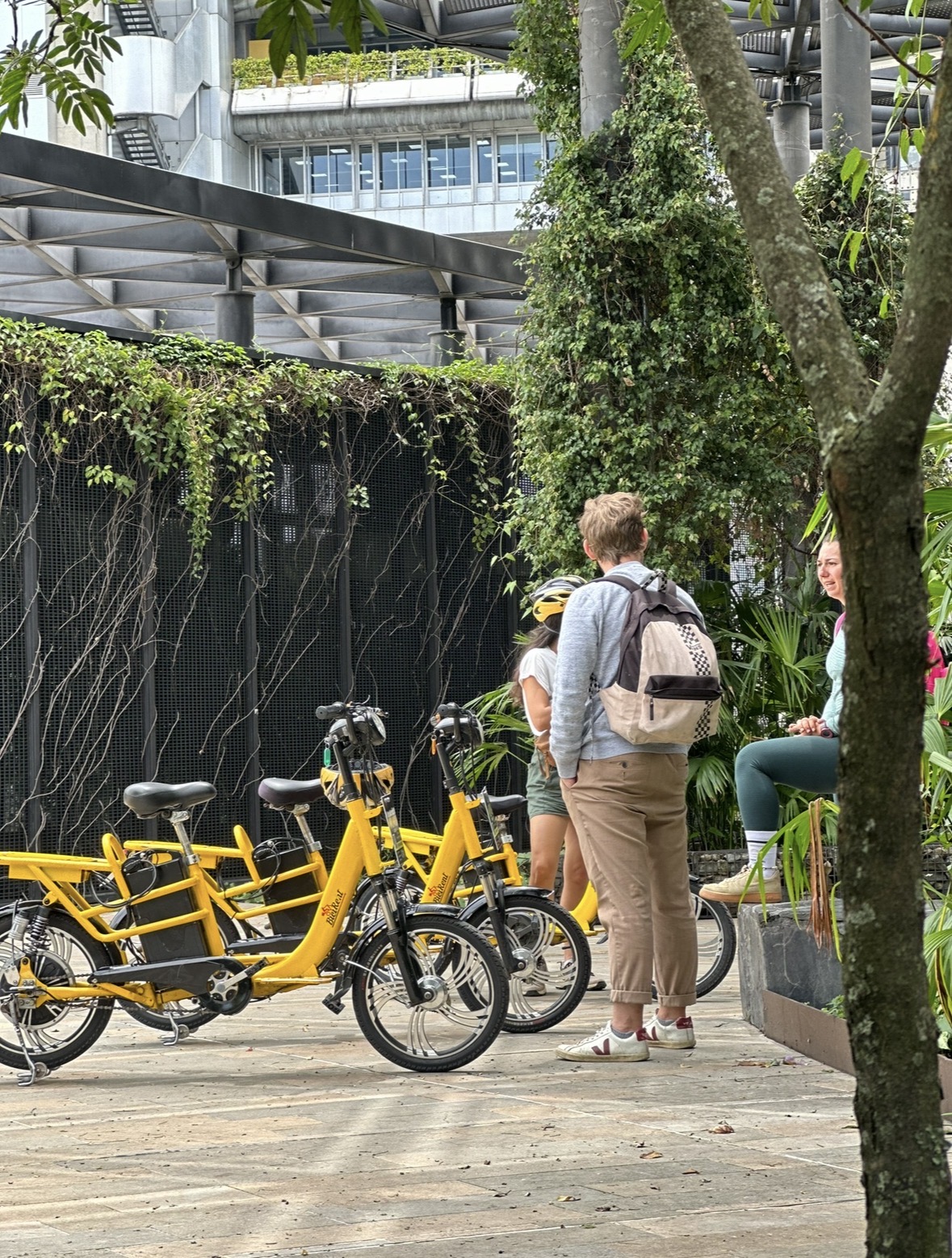
An uncomfortable Medellín truth: between traffic and hills, transfers can eat half a day. Our favorite trick (and yes, it's our business — there's a reason we built it): the electric bike. You climb the hills without sweating, cover in one morning what takes a full day by car in traffic, and the city happens right next to you instead of through a window. Want to feel it? MOVE's Express Tour (1.5–2 hours, COP 109,000) is the perfect first-day orientation — message us on WhatsApp and we'll help you plan it.
Renting a Car in Medellín? Driving and Parking Without Headaches
A local's honest answer
To get around within Medellín: you don't need one. Between the Metro, affordable apps and short distances, a car in the city is more problem than solution — traffic, hills, parking and a restriction called pico y placa that we explain below. When is it worth it? To explore the surroundings at your own pace: Guatapé, the Oriente, the coffee-growing Southwest, Santa Fe de Antioquia. There, a car gives you a freedom the bus can't.
Where and how to rent
You'll find multinational and local agencies at José María Córdova airport and in El Poblado. What they'll ask for: passport, a valid driver's license from your country (if it's not in the Latin alphabet, bring an international permit), a credit card for the deposit, and a minimum age of around 23–25 depending on the agency. Book ahead in high season and check what the insurance covers — basic coverage tends to carry high deductibles.
Pico y placa: the rule every driver must know
Medellín restricts private cars — rentals included — by the last digit of the license plate: Monday through Friday, 5:00 a.m. to 8:00 p.m., across the entire Aburrá Valley (verified July 2026). Each weekday covers two different digits, and the rotation changes every semester, so check the current numbers when you arrive (ask at the rental agency or search "pico y placa Medellín" + the month). What never changes: Saturdays, Sundays and holidays are restriction-free — which is why the perfect play is renting a car just for a weekend of pueblo-hopping. And an ace up your sleeve: electric and hybrid cars are exempt — if the agency has one available, you can forget the whole thing.
Parking in Medellín: the three rules
One: the default is the covered parking lot ("parqueadero") — they're everywhere and charge by the minute. Malls are the most comfortable and secure. Two: in some areas like Laureles there are marked on-street parking cells (Regulated Parking Zones): you pay the authorized attendant who works the block wearing a vest and carrying a ticket pad — if there are no cell markings, it's not a parking zone. Three: never park on sidewalks, yellow curbs or anywhere you notice nobody else parks — Medellín's tow trucks work fast, and rescuing your car from the impound lot costs you the day plus a hefty fine.
One last local driver's truth: motorcycles here weave and appear from everywhere — double-check your mirror before every lane change, drive calm, and let the GPS recalculate without stress. Rushing in Medellín gets you there at the same time, just in a worse mood.
→ Thinking about your own wheels? When it’s worth it, the full pico y placa and the routes where it shines, in our car rental guide.
Where to Stay in Medellín: the Right Area for Your Trip
The most important decision of your trip isn't what to do — it's where to sleep. The area you choose defines your walks, your nights, and even how much you spend on transportation. These are the four we recommend with local confidence:
El Poblado: the visitor classic
Green, modern and hilly, El Poblado concentrates the city's biggest offering of hotels, design hostels and nightly apartments. Its star sub-neighborhoods: Provenza, the epicenter of restaurants and nightlife, and Manila, its quiet sister, with specialty coffee shops and a more human scale. The good? Everything close, everything pretty, everything in English if you need it. The honest? It's the most expensive area in the city, the hills are serious (walking here is leg day) and on weekend nights Provenza can feel more like an international party destination than like Colombia.
Laureles: the favorite of repeat visitors
Flat — blessed be flatness in this city —, tree-lined and walkable, Laureles is where travelers stay when they want to live Medellín like a local: bakery on the corner, unhurried cafés, La 70 with its neighborhood party and the Atanasio stadium around the corner. There's a reason it's been called one of the coolest neighborhoods in the world. Friendlier prices than El Poblado and real neighborhood life. If this is your second visit to Medellín, you probably already know you'll end up here.
Envigado: authentic paisa life
Technically a separate municipality, but it borders El Poblado and is connected by Metro. Envigado is family Medellín: a central park with its church, lifelong cafés and a rhythm that hasn't changed in decades. Ideal for long stays and travelers escaping the tourist zones without straying far from them.
Sabaneta: the southern secret
Colombia's smallest municipality and one of the valley's most beloved. Its main park is legendary for natilla, buñuelos and small-town atmosphere inside the city. It sits at the end of Metro Line A: farther from the tourist must-sees, but if you want full immersion at local prices, this is it.
Which one for your trip?
First time and few days → El Poblado or Laureles. Local vibe without giving up comfort → Laureles. Digital nomad → Laureles or El Poblado (Manila). Family or long stay → Envigado. Tight budget with neighborhood soul → Sabaneta or Belén. The full area-by-area comparison is in our where to stay in Medellín guide.
The Neighborhoods: a Mental Map of the City
How Medellín is organized (in one minute)
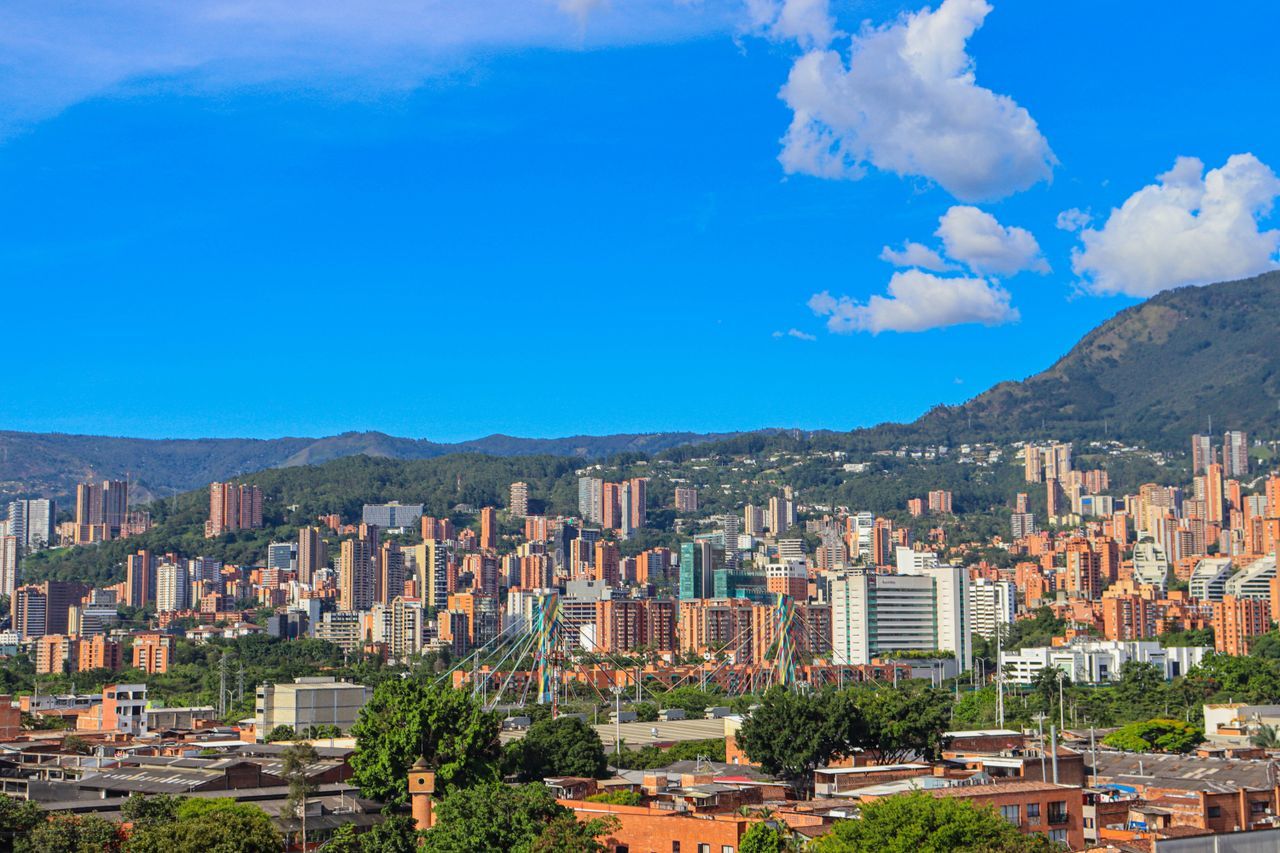
Medellín lives in a narrow valley — the Aburrá Valley — with the river down the middle and neighborhoods climbing both hillsides. The Metro runs parallel to the river, and the general rule is simple: flat is down by the river; steep is up. Administratively, the city divides into 16 "comunas" — and here's an important note: "comuna" does not mean dangerous area; it simply means district. Comuna 14 is El Poblado, the most upscale in the city. If the word sounded like something else to you, that was the echo of the TV series.
Neighborhoods to visit vs. neighborhoods to sleep in
Not the same thing. To sleep: the four areas in the previous section. To visit: Downtown (history and life at full volume), Comuna 13 (art and transformation), and the neighborhoods below. Our complete neighborhoods guide gives you the full picture.
The neighborhoods only locals know
Belén: to the southwest, pure neighborhood life — the Medellín where nothing extraordinary happens, and that's exactly why it's worth it: fondas, sports courts, grandparents playing parqués.
El Perpetuo Socorro: the old workshop district turned creative quarter — galleries, giant murals, design cafés between the auto shops that resist. The Gothic church that gives it its name is one of Medellín's least expected postcards.
Downtown, properly explored: more than a neighborhood, an experience — best walked with someone who can read it. And if you want more places off the circuit, we keep a list of spots only locals know.
→ Prefer to see it drawn out? We made a Medellín tourist map with the must-sees sector by sector — and how to connect them all by electric bike.
Things to Do in Medellín: the Essentials (Done Right)
We're not going to hand you a list of 40 things — just the ones worth it, each with its local tip. The extended version lives in the best things to do in Medellín.
Comuna 13 and its transformation
Medellín's most visited spot, and deservedly so: the graffiti, the escalators and the energy of a neighborhood that reinvented itself are unique in the world. Local tip: go on a weekday morning (weekend afternoons are a river of people), and read our honest Comuna 13 guide first so you understand what you're looking at.
The viewpoints: the city from above
Medellín is a city meant to be seen from above, with viewpoints for every taste: the classic Pueblito Paisa on Cerro Nutibara (a replica Antioquian village plus a 360° panorama), Las Palmas for the night view, and Cerro El Volador for sunsets with locals.
Downtown: the Medellín with history
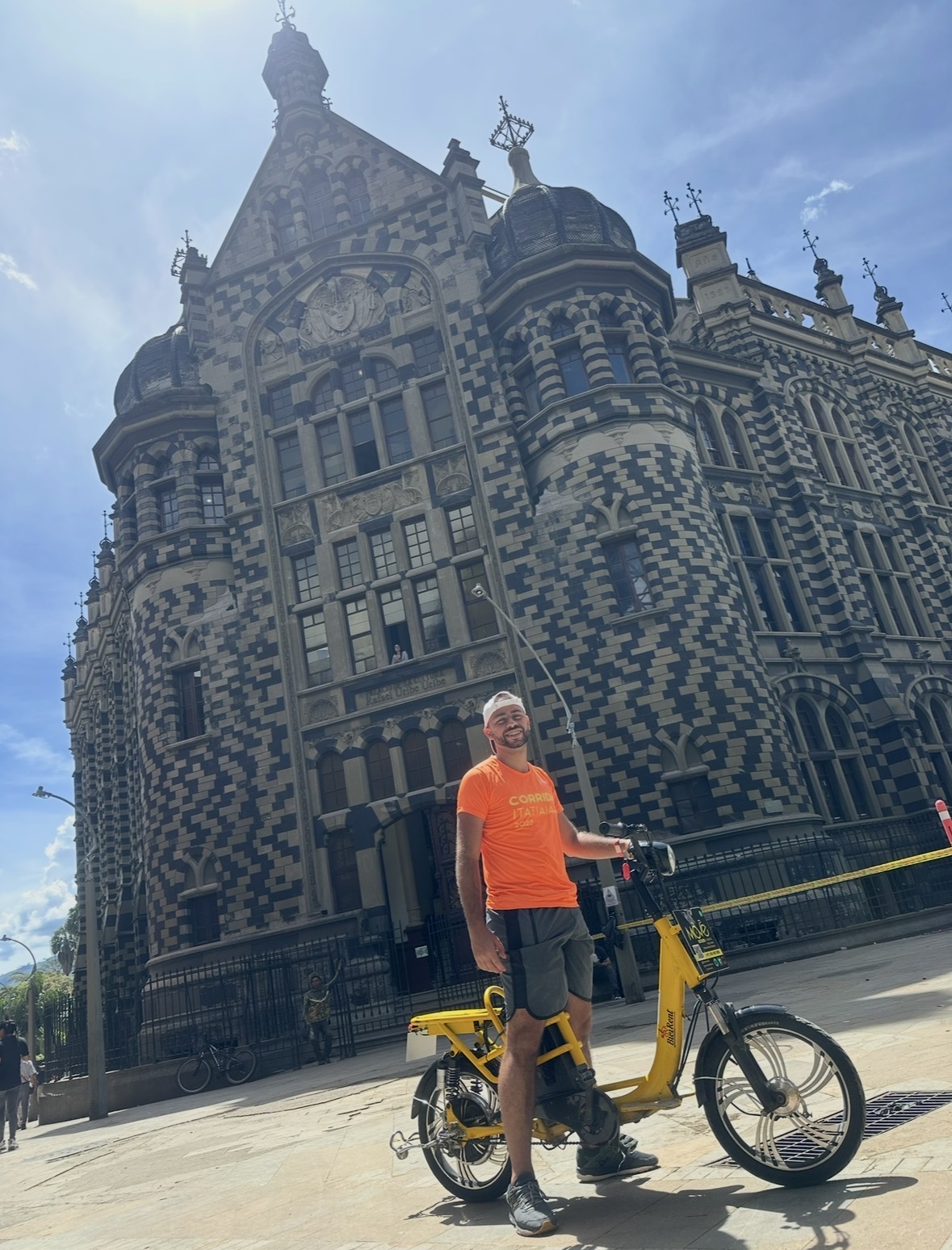
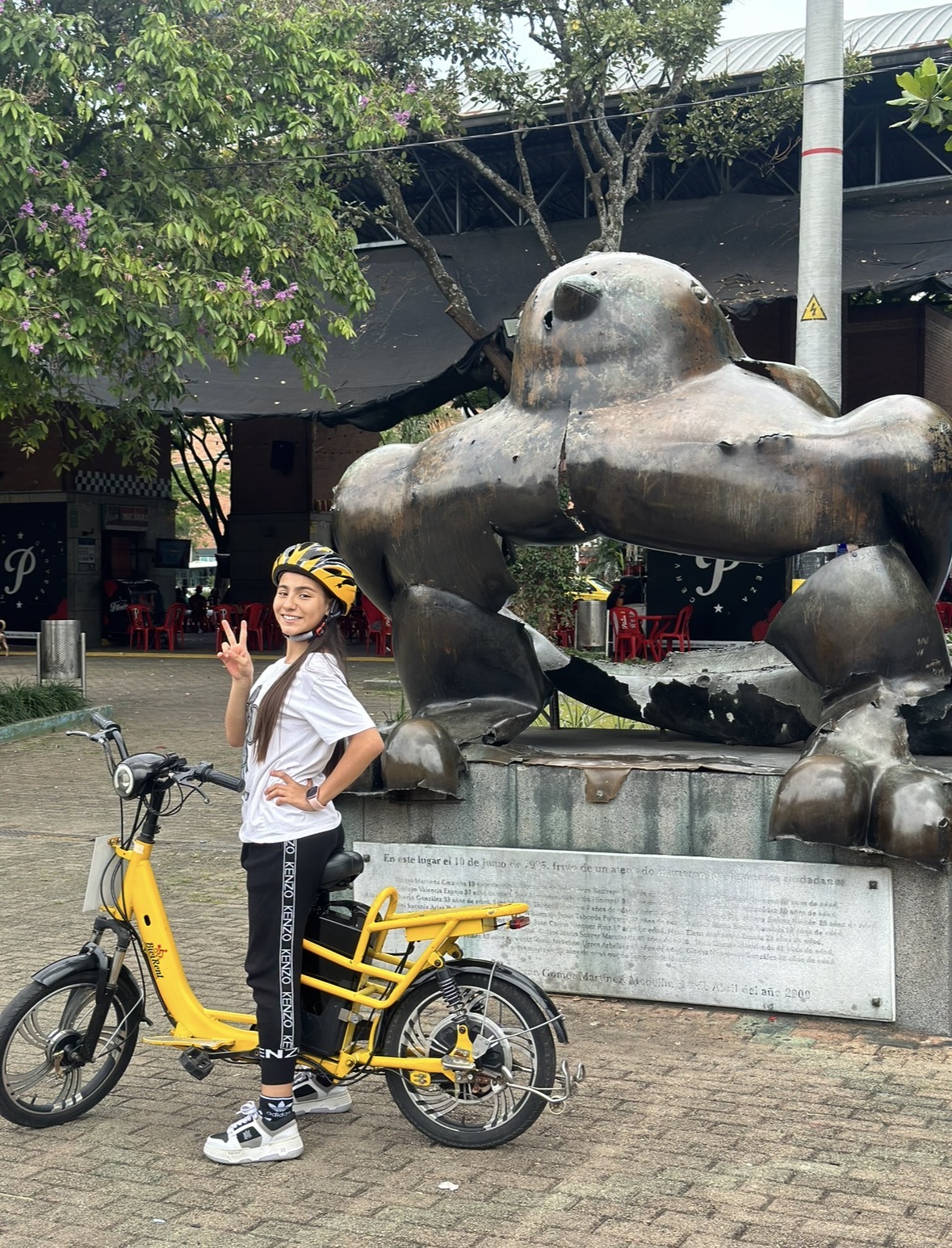
Half a day well spent: Plaza Botero with its 23 fat, happy sculptures, the Palacio de la Cultura (that checkered Gothic building you don't see coming), Junín street to stroll like an old-school paisa, and the Bird of Peace at Plaza San Antonio — the Botero sculpture shattered by a bomb in 1995 that the artist asked to leave in place, next to a new one, as memory. Few stops in the city say this much.
Parque Arví: the forest by cable car
Take the Metro to Acevedo, ride the Metrocable up to Santo Domingo, and from there another cable crosses the mountain into a cloud forest at 2,400 meters. Farmers' market, trails and cool air — a completely different day without leaving the Metro system.
El Perpetuo Socorro and the creative scene
For museum-and-design travelers: galleries, murals and the Gothic church. Combine it with the best photo spots route if the camera is your thing.
The night: Provenza, Lleras and La 70
Three flavors of nightlife: Provenza (cocktails, rooftops, beautiful people), Parque Lleras (the most intense party — and where the safety-section rules apply most) and La 70 (neighborhood partying with beer, soccer and salsa). Local tip: start in Provenza, finish on La 70, and the ride home always door to door by app. More night ideas and plans for couples or friends here.
Guatapé and the Peñol Rock
The king of day trips deserves its own chapter — we cover it in full later in this guide, in the surroundings section.
The secret to seeing it all without losing days
Everything above is scattered across a city of hills and traffic. By car, it's two or three days of transfers; pedaling with an electric motor, the viewpoints, Downtown and the creative neighborhoods fit in a single morning — that's why our Panoramic Tour exists (5 hours, COP 249,000): the whole city, without sweating the climbs. Prefer a custom plan? Message us on WhatsApp and we'll set it up.
See It in Motion
Four video proofs that this city is best lived on two wheels:


https://www.youtube.com/shorts/hZYFsE3798A → Do the mountains call you? Tres Cruces at dawn, El Volador, the Arví trails and the hiker’s rules, in our Medellín hiking guide.
Medellín with Kids: the City Is for Them Too
Few people know it, but Medellín is a great destination with children — and paisas adore kids, so they'll be welcome everywhere.
The star circuit for families
The city's north side packs the perfect full-day plan, all connected and walkable from the Universidad Metro station: Parque Explora (the interactive science museum with Latin America's largest freshwater aquarium and a dinosaur hall that produces screams of joy), the Planetarium right across, and the Botanical Garden for the recovery picnic under the trees. Ten minutes away are Parque Norte (classic amusement rides) and the Parque de la Conservación — the former zoo turned native-wildlife conservation center, a much lovelier visit.
The plans kids never forget
The Metrocable is, for a child, an attraction in itself — the ride to Arví is "the infinite cable car" and the forest picnic closes the day. Comuna 13 works great with kids (escalators + ice cream + art everywhere), the Sunday Ciclovía is the free family plan par excellence, and the market plaza fruits become a game: who dares try the granadilla you're supposed to slurp?
The family tour (with the clear policy)
And the bikes? Here's the honest, concrete answer: from ages 10–11, if the child rides well, they do the tour on their own e-bike — and trust us, they usually end up the happiest one in the group. Younger kids ride on mom or dad's bike (front or back), as long as the adult rides confidently. Babies or stroller-age kids? We'll be frank: it's not possible — it becomes a safety issue, and safety isn't negotiable. Message us on WhatsApp with your kids' ages and we'll confirm the ideal plan for your family; if they're too young for the tour, we'll point you to the alternatives in this section.
Everyday Medellín: the City Without the Tourism
This is our favorite section of the whole guide, because it's the one nobody else can write. The real Medellín isn't only at the viewpoints: it's in the routine, and the routine here is beautiful.
A normal day in a paisa's life
It starts at 6 or 7 a.m. at the corner bakery: warm pandequeso, a buñuelo fresh out of the fryer and a "tinto" — that's what we call the small, sweet black coffee that fuels this country. Mid-morning, another tinto, just because. At noon, the sacred ritual of the almuerzo ejecutivo, the set lunch (more on that in the food section). In the afternoon, people spill into the neighborhood parks: kids to the court, grandparents to dominoes and parqués, the mango-with-salt-and-lime vendors doing their best business. And at dusk, the whole block is outside talking, because in Medellín the street is the living room.
Why are we telling you this? Because you can live all of it. None of these scenes has a ticket, a schedule or a line.
Places with history and zero tourists
Downtown's lifelong cafés: spots with decades of history where tinto is served on the fly, soccer and politics are debated, and nobody looks at you funny for sitting down to watch life go by.
Junín and the art of "juniniar": for decades, Junín street was THE promenade of Medellín — so much so that paisas invented a verb: juniniar, to stroll Junín with no plan other than window-shopping and people-watching. The verb is still alive, and so is the stroll.
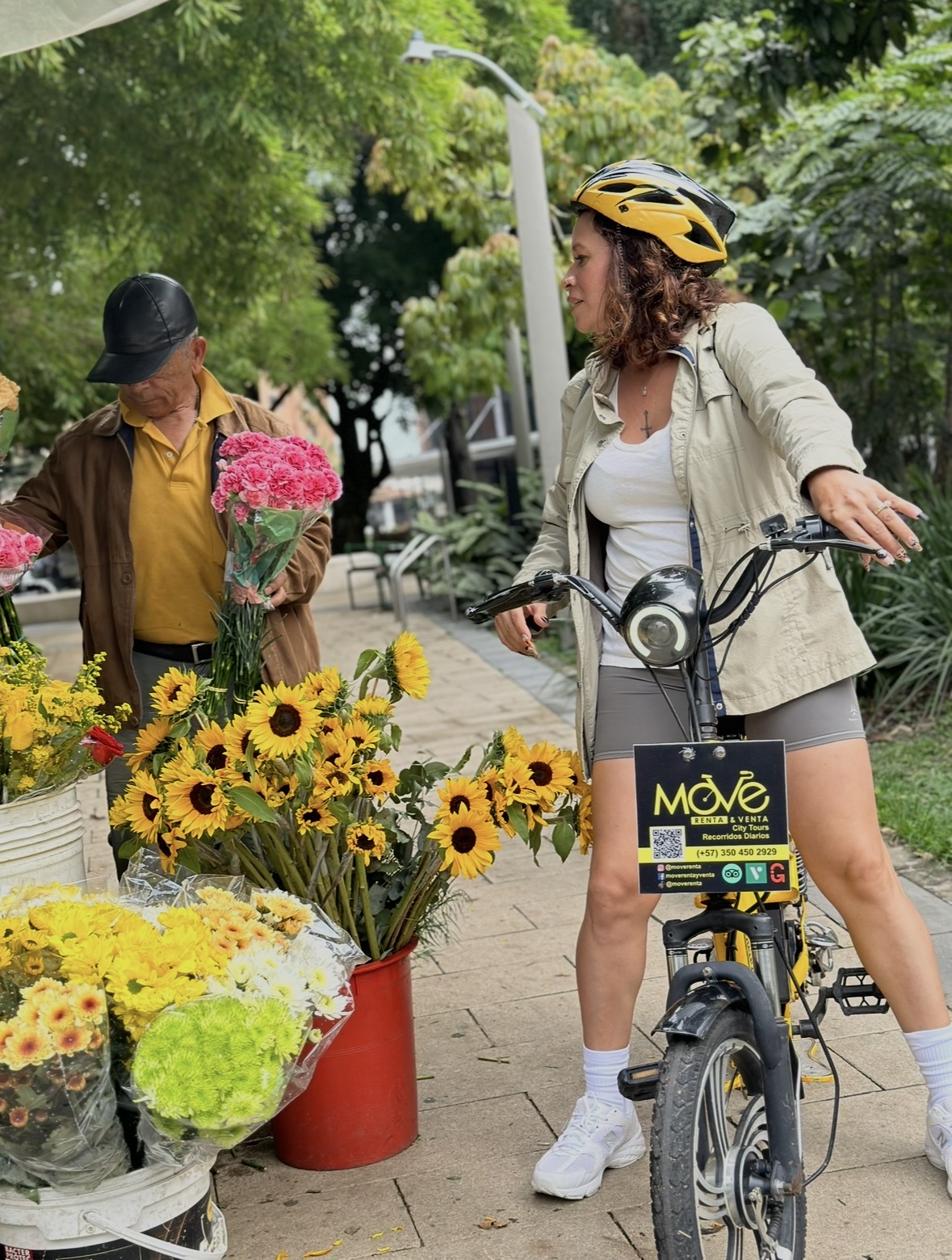
The everyday Placita de Flórez: before "gastronomic markets" existed, there was the Placita — flowers, herbs for every ailment, fruit, and señoras who call you "mi amor" while they serve you.
Churches with real life: not as museums but as what they are — the Basílica de la Candelaria right downtown fills with candles and real people's prayers at any hour.
Sundays like a local
The paisa Sunday has its own liturgy: the Ciclovía (main avenues close for bikes, skates and joggers — the whole city comes out to sweat as a family), morning mass with ice cream after, lunch at grandma's or at a roadside fonda, and soccer — at the stadium or the neighborhood court. If your trip includes a Sunday, don't waste it in a mall: go to the Ciclovía. It's free, and it's the best postcard of happy Medellín.
How to join in without feeling like an intruder
Three keys to local behavior: always greet when entering ("buenas") and say goodbye when leaving; order "the usual" on your second visit (they love it); and don't photograph people without asking — but if you ask with a smile, they'll pose happily. More ideas like these in how to experience Medellín as a curious traveler and our list of places only locals know.
Market Plazas and Exotic Fruits: Paradise Is at the Market
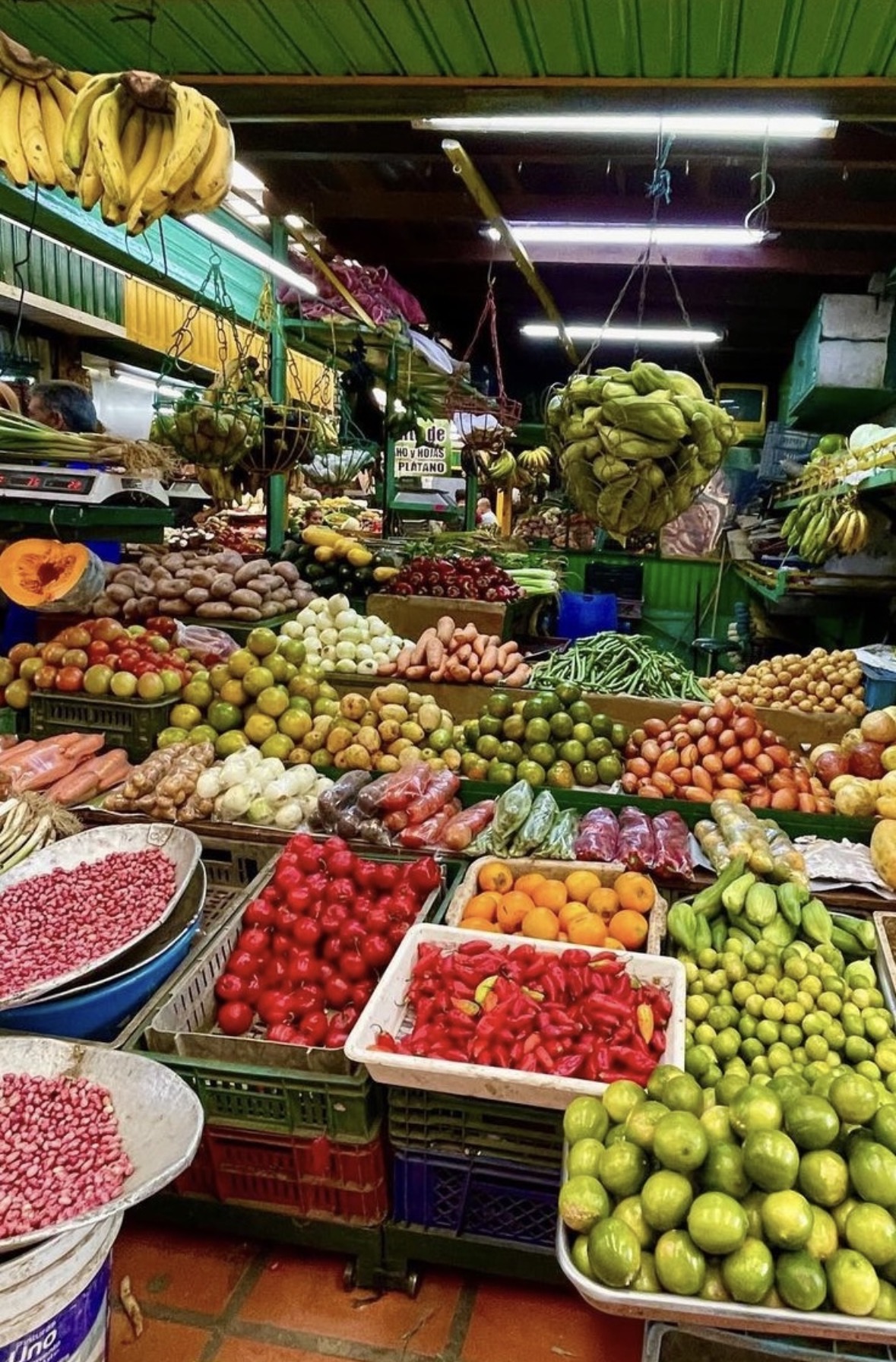
If you only have time for ONE authentic local experience, make it this one. Colombia is one of the most fruit-biodiverse countries on the planet, and Medellín's market plazas are its cathedral.
The plazas, one by one
La Minorista: the mother of them all — a covered labyrinth of hundreds of stalls where you'll find everything from the most exotic fruit to the day's fish. Intense, loud and wonderful. Go in the morning, have breakfast there (a broth or a juice with buñuelo for pocket change) and let yourself drift.
La Placita de Flórez: smaller and more manageable, famous for flowers and herbs. Perfect as your first plaza if La Minorista intimidates you.
Plaza de La América: the neighborhood market of the west side — the most local experience of all, where you'll hardly see another tourist.
The fruit festival (and how to order)
Get ready for names you've never seen in your life: lulo (tart and refreshing, the paisas' favorite juice), granadilla (sweet, you slurp it — yes, slurp), guanábana (creamy, giant; the milk-based juice is dessert), mangostino (the queen: perfect sweetness in purple segments), uchuva (sweet-and-sour, addictive), tomate de árbol (the national breakfast juice), curuba, zapote, borojó (the coast's "energizer" — order it with respect), feijoa... The golden rule when ordering juice: they'll ask "¿en agua o en leche?" — water or milk. In water it's lighter and fruitier; in milk it's practically a snack. When in doubt: lulo in water, guanábana in milk. You can thank us later.
What else to take home from the plaza
Origin coffee, cacao, panela, aromatic herbs, and the conversation — market vendors are the best storytellers in the city.
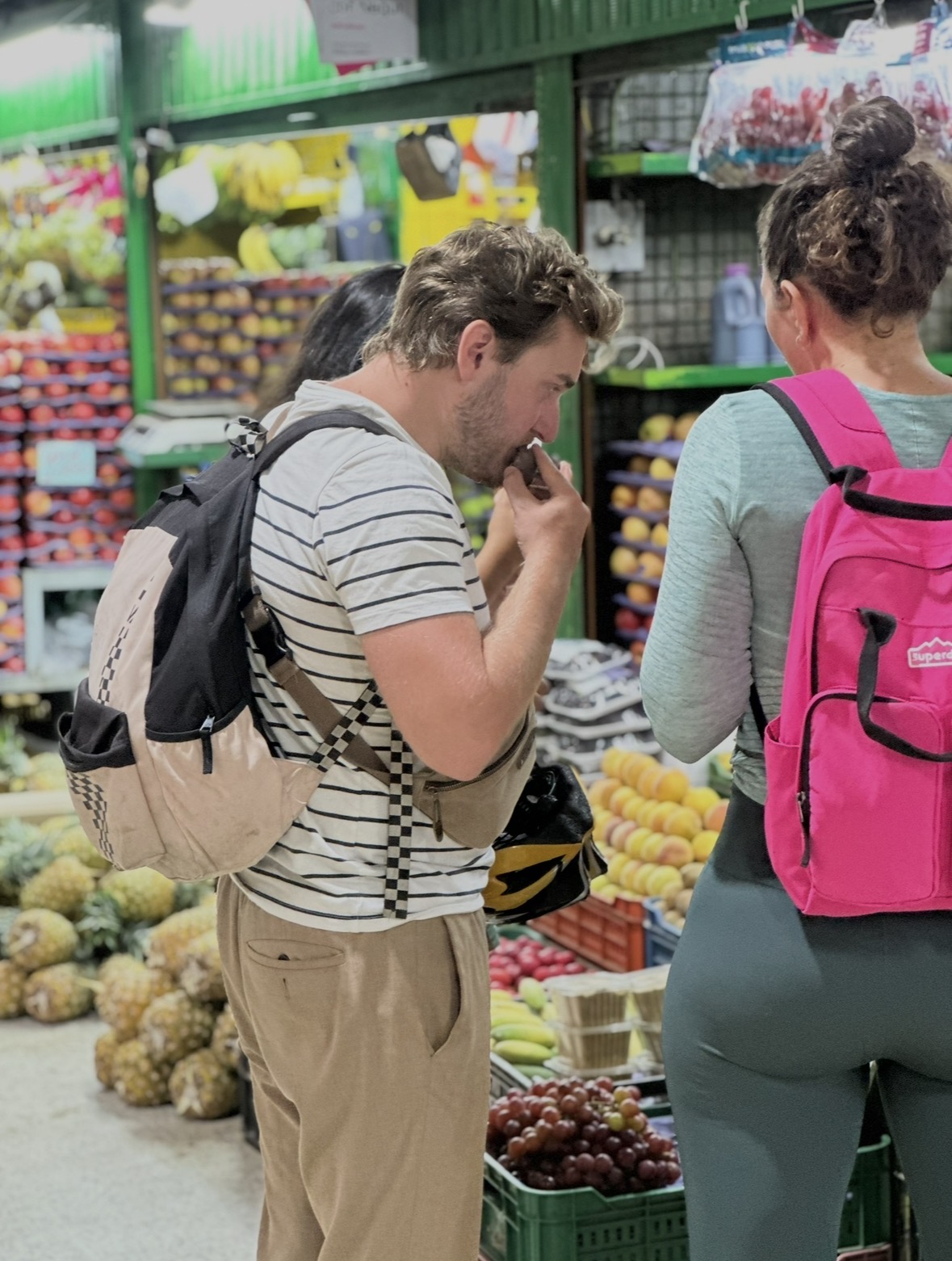
Want to experience the plaza with a local who explains every fruit, scores you the free taste and translates all that paisa affection? Our Full Tour: Comuna 13 + Market (7 hours, COP 329,000) includes exactly that experience — it's the favorite of travelers who want the complete Medellín in one day.
→ Want the full flavor map? Every fruit one by one — how to eat it, where to try it and the ñapa trick — in our exotic fruit guide.
Shopping: El Hueco, the Malls and Crafts
What El Hueco is (and why you have to see it)
El Hueco is the most famous commercial district of downtown Medellín: block after block of pure commerce where paisas swear you can find EVERYTHING — clothes, shoes, tech, costumes, fabrics, spare parts, whatever you can think of — at the best prices in the city. It's not a mall: it's an ecosystem. Hundreds of shops, passageways and packed storefronts where shopping is a sport and haggling (with respect and a smile) still works at many stalls.
How to get there: Metro to San Antonio and walk — you're in the heart of the district. When: Monday to Saturday during daytime; Saturdays it's buzzing. How to handle it: downtown rules apply — just enough cash, split up; phone away; no jewelry; full attention on the present. It's not a dangerous zone, it's a crowded zone: carelessness has a price.
The local trick: go in with a mission ("I need shoes") and get lost on purpose. Asking prices at two or three shops before buying is completely normal — nobody takes offense. The full guide to the district — history, haggling and tricks — is in our dedicated El Hueco post.
The malls: which one for what
The total contrast to El Hueco: El Tesoro (Poblado, the prettiest, with views and restaurants), Oviedo and Santafé (Poblado, brands and variety), Viva Envigado (the giant of the south), Unicentro (the Laureles/Belén classic). They're good for the usual — movies, brands, air conditioning — and for changing money and parking drama-free.
Crafts and gifts with soul
For souvenirs with history there are two routes. The classic: the San Alejo artisan market (traditionally the first Saturday of the month at Parque Bolívar — confirm dates when you arrive), the craft stalls at Pueblito Paisa, and the Colombian design shops in Provenza and Perpetuo Socorro.
And the practical route — allow us to show off a little: the MOVE City Tours shop, half a block from La 70, the same home base our bike tours depart from. Magnets, mugs, hats, caps and Medellín t-shirts, backpacks and leather crafts — beautiful, fairly priced, and no need to sync your trip with San Alejo's calendar. La 70 is an area you'll end up visiting anyway (the heart of Laureles, steps from the stadium), so drop by, say hi, and meet the electric bikes while you're at it. Two gifts in one stop.
What to take home? An aguadeño hat, backpacks, origin coffee, chocolate, and anything featuring the paisa "carriel." The full list with prices is in what to buy in Medellín and our shopping route through the city.
Soccer in Medellín: Living a Match at the Atanasio
One city, two loves
In Medellín, nobody asks "do you like soccer?" — they ask "which team are you?". The city splits between the green of Atlético Nacional and the red of DIM (Independiente Medellín) — two fan bases that share a stadium, the Atanasio Girardot, and a century-old rivalry that paints the whole city in two colors on "clásico paisa" day. For a visitor, catching a match here isn't a sports plan: it's cultural immersion of the best kind.
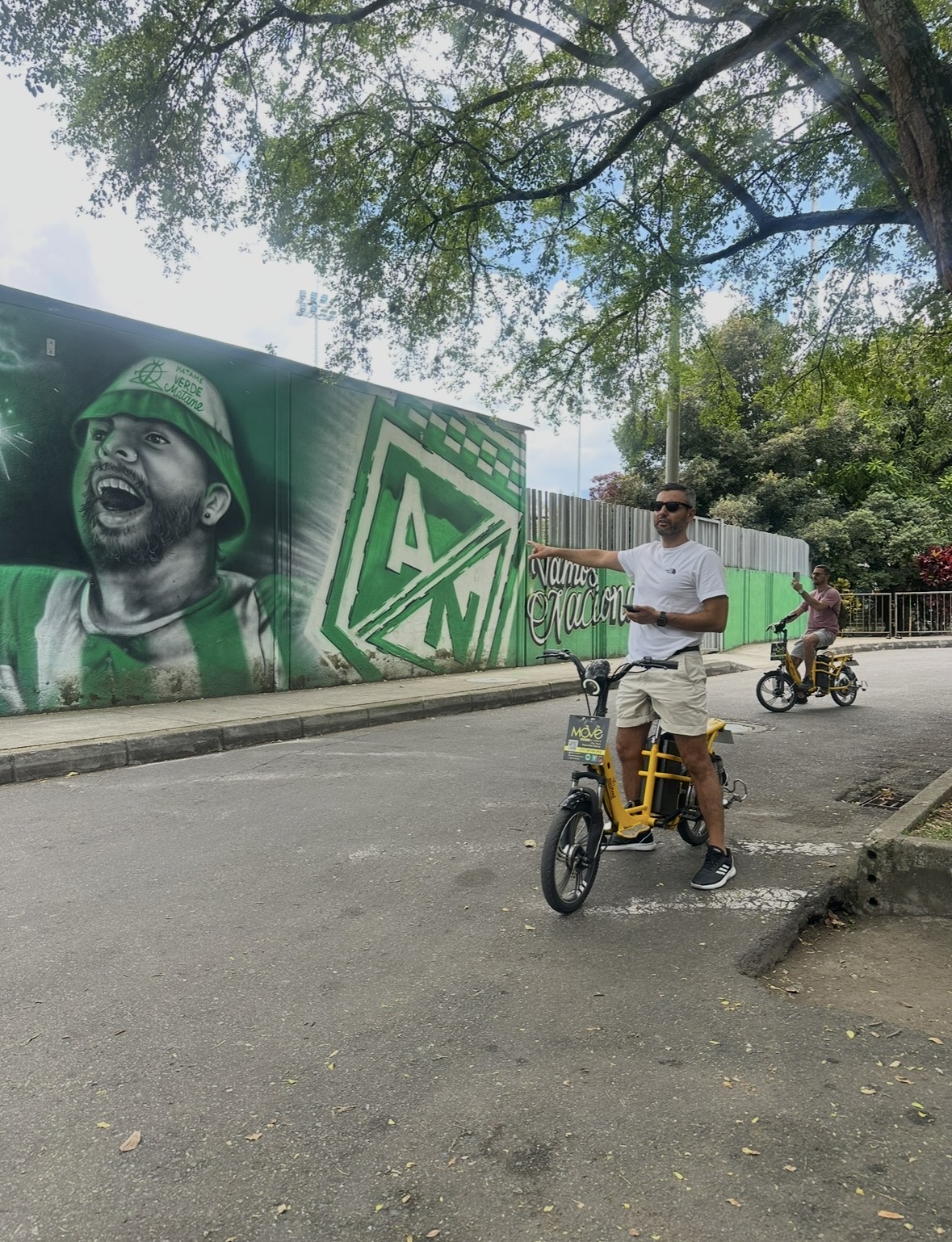
How to know when there's a match (and get a legitimate ticket)
Fixtures change every week, so we won't print a calendar that expires: the reliable sources are each club's official social media and websites (they publish dates, kickoff times and ticket sales) and the Colombian league calendar. Buy tickets only through each club's official channels — never from street resellers, the classic way to pay double for a fake. Prices vary by stand and match: from about COP 30,000–50,000 in general stands to COP 150,000 or more in the west stand for big matches (check when buying).
Is the stadium safe for a foreigner?
Yes, with two or three local rules. For your first match, buy the east (oriental) or west (occidental) stand: those are the family stands with a relaxed vibe and the best view. The "popular" stands (north and south) belong to the barras — a spectacle of chants and flags in their own right, but not the place for your debut, and definitely not at a clásico. Speaking of which: the clásico paisa (Nacional vs. DIM) is a peak experience that calls for extra care — official ticket, side stand, arrive early, and don't wear either team's jersey around the stadium if you don't know the scene. For any regular match, the plan is simple and safe: Metro to Estadio station, arrive with time to spare, and after the final whistle join the celebration (or the mourning) on La 70, steps away and boiling with soccer atmosphere.
Closing fact: the Atanasio sits right in the Laureles-Estadio district — if you're staying in Laureles, you can walk. And if soccer isn't your thing but culture is, wandering the stadium surroundings on match day, even without going in, is a show in itself.
→ Is there a match during your trip? Tickets, stands, the La 70 ritual and the visiting-fan rules, in our Atanasio football guide.
Food in Medellín: from the Corrientazo to Fine Dining
Here comes the hungriest section of the whole guide. Paisa food is generous, homestyle and abundant — and the city's food scene now has it all: from the COP 15,000 lunch where office workers eat to restaurants competing with the continent's best.
The classics you must try
The bandeja paisa is the flagship dish and a caloric challenge: beans, rice, ground beef, chicharrón, chorizo, morcilla, fried egg, sweet plantain, avocado and arepa. Local advice: order it at lunch, not dinner, and don't plan anything demanding afterward. Its essential siblings: mondongo (tripe soup — Sunday religion here), sancocho (a hug in soup form), the arepa in all its shapes (it accompanies EVERYTHING here), and the afternoon duo of buñuelo + pandequeso with hot chocolate.
Eating like a local: the art of the "corrientazo"
This is the secret no tourist guide tells you. On weekdays at noon, locals don't eat at à-la-carte restaurants: they eat "corrientazo" — the set lunch of the day, which in 2026 costs between COP 15,000 and 20,000 and includes soup, a main (protein + rice + beans or salad + plantain) and fresh juice. It's honest, homestyle, fast cooking.
How do you find a good one without knowing a single name? The local method never fails: walk any office district or residential neighborhood between 12:00 and 1:30 and look for the signs — a line of office workers at the door (the king of signals: where the people who work nearby eat, you eat well), a handwritten board with the day's menu, and tables that turn over fast. If it says "menú ejecutivo," it's the same thing wearing a tie (COP 20,000–28,000). Sit down, say "el del día, por favor," and welcome to Medellín's true popular gastronomy.
What about spice? The heads-up Mexicans, Dominicans and Boricuas will thank us for
Prepare for a cultural surprise: food in Medellín is NOT spicy. At all. Colombian cooking doesn't use heat as a base — the average Colombian doesn't like it, and one wrong sauce "ruins" the dish for them. That's why ají isn't on the table like in Mexico: it arrives as a side sauce, only if you ask. The magic phrase: "¿me regala ají, por favor?". Most local restaurants keep a homemade ají (cilantro, onion, lime and a touch of heat) that's worth trying. If you're someone who needs fire, seriously consider packing your emergency hot sauce — we mean it, and the Mexicans reading this know exactly why.
Street food: what you eat standing up
Empanadas with ají outside the bakery, green mango with salt and lime (the official park snack), cheese arepas from the night cart, chuzos (skewers) on the way out of the party, and ice cream from the neighborhood heladería. Simple rule for eating on the street without scares: where locals line up, there's trust; an empty stall at peak hour — keep walking.
Coffee: from the corner tinto to specialty
Colombia exports its best coffee, but Medellín kept a good share: the city is living a specialty coffee boom concentrated in Manila, Provenza and Laureles, where award-winning baristas serve Antioquian single-origin beans in brewing methods you've never seen. The contrast is the charm: a COP 1,000 tinto on the corner in the morning, a farm pour-over with tasting notes in the afternoon. Both experiences are Medellín. The full route is in our Colombian coffee guide.
The other extreme: paisa fine dining
And when it's time to celebrate: Medellín now has a dining scene that surprises travelers from any capital. Where it concentrates: Provenza and Manila (El Poblado) for author cuisine, rooftops and international kitchens; Laureles for neighborhood bistros with serious level; and Envigado for elevated traditional cooking. Book days ahead on weekends — the good ones fill up. The full zone-by-zone picture is in where to eat in Medellín and what to eat in Medellín.
And a house secret — literally: in Conquistadores (Laureles) you'll find Café Torbellino, our garden restaurant — fresh cooking, a green terrace and the same care as the tours. If the plan is eating well without leaving the neighborhood, see you there.
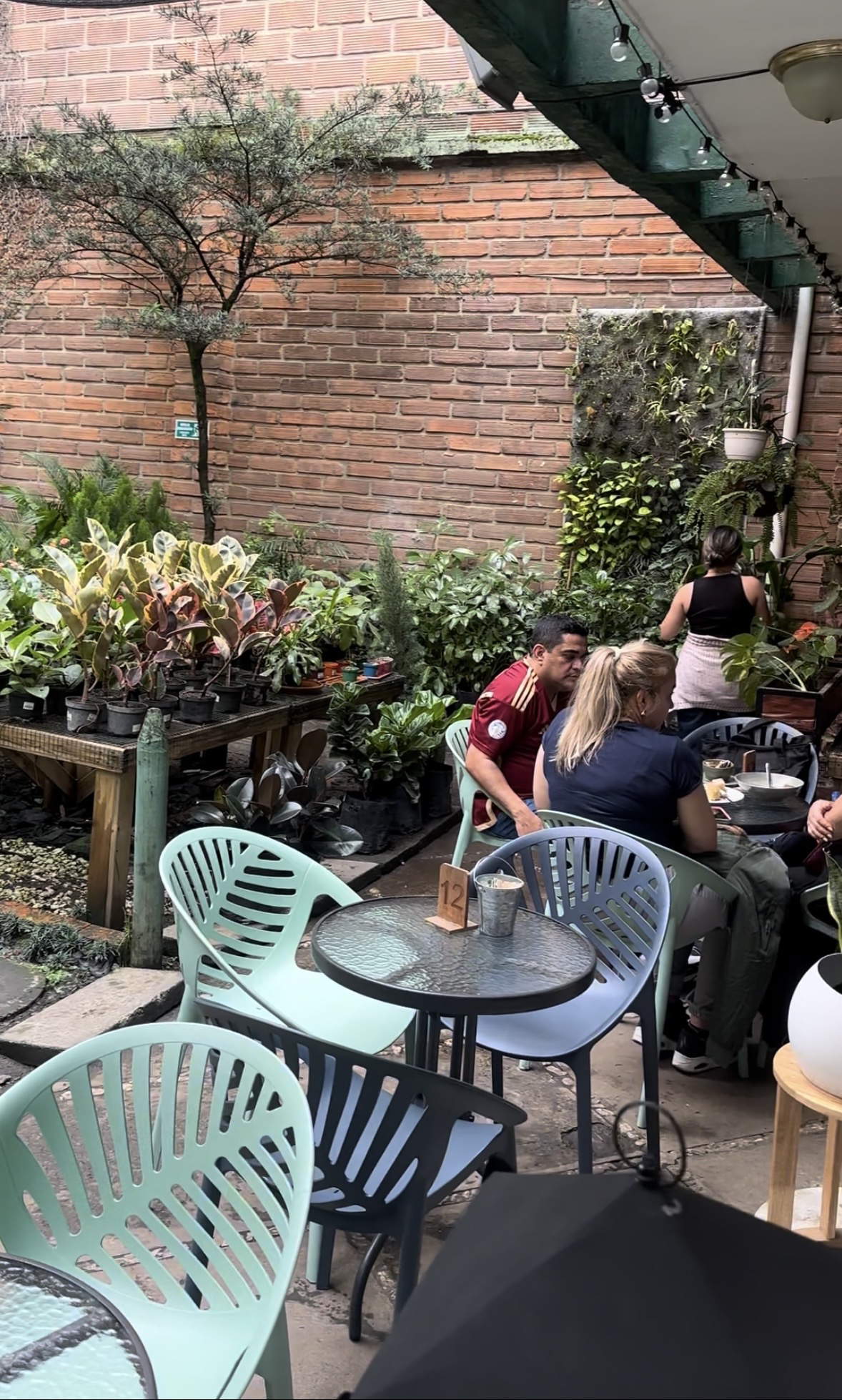
And if it rains? Rappi to the rescue
As we told you in the transportation section: downpour day + corrientazo delivered by Rappi = a perfectly paisa plan. Local food is also enjoyed in pajamas. → Traveling on a budget? The corrientazo, the bakery breakfast and the whole cheap-flavor map, in our guide to eating for under COP 20,000.
Itineraries: 1, 3, 5 and 7 Days in Medellín (Built by Locals)
How many days do you need in Medellín? Our honest answer: 3 for the essentials, 5 to fall in love, 7 to not want to leave. Here are the four plans, tested with hundreds of visitors — full breakdown also in how many days in Medellín:
If you only have 1 day
We'll say it straight: with a single day, the electric bike is the only real way to see most of Medellín. That's not a sales line, it's geometry: the bike doesn't sit in traffic, and it goes where no other vehicle can — it crosses the Parques del Río where only pedestrians pass, rolls through Plaza de las Luces, glides into Pies Descalzos and arrives at Plaza Botero itself. A motorcycle can't enter the parks; a car goes from tourist spot to tourist spot along main roads without ever seeing the city; and on foot, just crossing those parks eats half your day. By bike, it's minutes.
That's why the against-the-clock traveler's plan is the Full Tour (7 hours, COP 329,000): Comuna 13, the market and the whole city in a single day — what would take three by foot and taxi. Night: dinner in Provenza or Manila to close it out. Prefer to build it yourself? The step-by-step is in your perfect first day in Medellín.
The 3-day classic
Day 1: historic Downtown in the morning + viewpoints in the afternoon (Pueblito Paisa at sunset) + dinner and a stroll through Provenza. Day 2: Comuna 13 in the morning + Metrocable to Arví in the afternoon (the transformation + nature combo) + night on La 70. Day 3: Guatapé and the Peñol Rock, full day. It's the most balanced first-visit itinerary there is — developed hour by hour here.
5 days: the version we recommend
The classic 3 days + Day 4: everyday Medellín — market plaza morning (Minorista, breakfast included), neighborhood afternoon (Laureles, Envigado) and specialty coffee. And here's the local tip: give 3.5 hours of this day to an Urban Tour or Alternative Paisa Tour by e-bike (COP 189,000) — they go precisely through the traditional spots and neighborhoods where cars don't go, because vehicles move from one point of interest to the next along main roads, and the real city sits in between, unseen. + Day 5: your own rhythm — Botanical Garden and Parque Explora, shopping at El Hueco, or whatever you've been craving. With 5 days you stop "visiting" and start "living."
7 days: the complete trip
The 5 above + Day 6: a second day trip in your style — a heritage pueblo (Jardín or Santa Fe de Antioquia), a sun day in the West, or paragliding in San Félix. + Day 7: if it lands on Sunday, you won — Ciclovía in the morning, fonda lunch, stadium if there's a match. If not, a free day to repeat what you loved most. And even with the whole week, the Express Tour (1.5–2 hours, COP 109,000) in your first days is still gold: it's the orientation that makes the other six days count — and it crosses in minutes the river parks and plazas that take half a day on foot.
The bike rule (and yes, it's our business, but geometry doesn't lie): the fewer days you have, the longer your e-bike tour should be — because it's the only way to compress Medellín without missing it. One day → full-day tour. Five days → 3.5 hours through the neighborhoods. A week → at least the 90-minute orientation.
The universal advice: don't overpack your days. Medellín punishes hurry with traffic and rewards pause with moments. Leave gaps in the plan: that's where the magic happens.
Culture, Language and Etiquette: Understanding the Paisas
The paisas: why this city feels different
We paisas are Colombia's proudest hosts: we love our city and we love showing it to you. Expect conversation everywhere — the taxi driver, the coffee lady, the next table — and genuine help if you look lost. We're also professional exaggerators ("it's right over there!" can mean 40 minutes) and we say yes with the heart even when the schedule says no. Take it all with affection: it's culture, not a flaw.
The paisa survival mini-dictionary
Parcero/parce (friend — the word you'll hear most), ¿qué más? (hi, how are you? — no detailed answer expected), bacano/chévere (cool), chimba (excellent — informal; use it with confidence but not with grandma), ¿o qué? (universal tag: "all good or what?"), pues (the wildcard word: it goes anywhere in the sentence, pues), hágale (go ahead, do it), con mucho gusto (the paisa answer to "thank you" — you'll miss it when you leave).
Tipping: how it really works
In Colombia tipping is voluntary. At restaurants they'll suggest the 10% "servicio" — it comes included on the bill or the waiter asks "¿desea incluir el servicio?" (would you like to include the service?). The normal thing is to accept it (service in Medellín usually earns it), but if something went wrong, asking to remove it is your right and nobody takes offense. Taxis don't expect tips; tours and hotels appreciate them without requiring them. That simple.
The Pablo Escobar story: let's talk about it openly
We won't dodge the subject, because it's probably already on your mind: yes, this was the city of the world's most famous drug lord, and yes, there are tours that tell that story. Is it wrong to take them? Our honest local answer: no. That history is part of the country — with its loves and its hates: there were people who loved him because he gave them a house, and people who hated him because he killed their family — and it cannot be erased. It's like visiting Chicago for the Al Capone story or Berlin for World War II: you go for the history, not the morbid thrill.
The nuance we ask of you is tone: here, that history has survivors, so approach it as someone who learns, not someone who celebrates. Choose tours that tell the whole story — the pain and also the rebuilding — and complement it with the Casa de la Memoria Museum and Comuna 13, where the story is told by the people who lived it and overcame it.
And here's what we see every day with our own visitors: travelers arrive drawn by the Escobar story, cover it in a day… and have the rest of their days to discover that Medellín is not drug trafficking or violence — it's its people, its mountains and its present. Almost everyone leaves more in love with the city than interested in the story that brought them. The history attracts; the city wins you over.
Other rules? The same as any destination in the world, said once and without a sermon: drugs are illegal, and the sexual exploitation of minors is an extremely serious crime prosecuted with the full weight of the law. Done. This city is far too good to lose it over one bad decision.
Money, Internet and Practicalities
Where to change money: the full strategy
At the airport, change only the minimum — the rate punishes you. USD 20–50 covers your transport into the city (or pay the taxi by card/app and skip even that). Once in the city, the two good options: withdraw at ATMs (official rate; use machines inside shopping malls, check your bank's flat fee and withdraw larger amounts at once to dilute it) or the exchange houses inside the malls (Oviedo, Tesoro, Unicentro), with far better rates than the airport. Compare the day's rate on your phone before accepting.
Cards, yes — but know about the "datáfono"
You can pay by card in a great many places in Medellín... but several businesses, especially small ones, charge 4–5% extra for card payments. It's a local custom, not a scam — but ask before handing over your card ("¿cobran por datáfono?"). Practical rule: card for hotels, bigger restaurants and malls; cash for corrientazos, markets, El Hueco and transport.
The zeros thing: when they say "it's fifteen," they mean fifteen THOUSAND
The peso has a lot of zeros, and Colombians treat them so casually that we drop them when speaking: "How much is the t-shirt?" — "Ten." "And lunch?" — "Fifteen." That "ten" is COP 10,000 and that "fifteen" is COP 15,000. We don't do it always, but you'll hear it constantly.
And there lies the trap for the traveler thinking in dollars: if they say "five" for a beer, that's five thousand pesos (just over a dollar) — not five dollars. Paying "5" while thinking in dollars means paying more than four times the real price: sometimes it's honest confusion, and sometimes a sharp operator just lets the confusion do the work. The rule that saves you: in Colombia, spoken prices almost always mean thousands of pesos. When in doubt, confirm with the full word — "¿quince mil?" — and done.
The complement is a first-day habit: run the conversion math once with the day's rate and keep it in mind for the rest of the trip, or use any currency app for an instant conversion before paying. With one honest nuance: the app shows the official rate — the real cash rate always differs a little, because exchange houses and ATMs take their commission. The difference exists, but it's small: know it's there and don't let it sour your day. Last wallet tip: the 100,000 bill is hard to break at small shops — ask for 20,000s and 50,000s when you withdraw.
An honest daily budget (2026)
- Pure backpacker: COP 70,000–100,000/day — hostel bed, corrientazo, Metro and free plans (this city overflows with them).
- Budget with a private room: COP 100,000–200,000/day — simple hotels start around COP 80,000–90,000 a night. And the couple's tip: traveling as two, the room is shared — two people can cover hotel + meals for COP 150,000–200,000 a day between both.
- Mid-range on your own: COP 200,000–300,000/day — well-located hotel, restaurants, apps, exploring the city independently.
- Mid-range with guided experiences: COP 300,000–500,000/day — the above plus tours or guided day-plans around the city.
- Not looking at prices: COP 600,000+/day — boutique hotels, private experiences and gourmet dining.
And a local clarification that sounds counterintuitive: doing everything on your own is cheaper in pesos but more expensive in time — and time is the one thing no exchange house converts back. Besides, a good guide from an honest company — like the one writing this guide, allow us the wink — tends to pay for itself: it spares you "tourist prices" and points you to the good, affordable options only someone who lives here knows. At any budget, Medellín remains remarkably more affordable than any comparable city in the U.S. or Europe.
Internet, water and plugs
Get an eSIM before landing (Claro and Tigo have the best coverage) or a physical SIM at any mall with your passport. Tap water in Medellín is safe to drink — yes, really: it's among the best in Latin America; refill your bottle with confidence. Plugs: type A/B at 110V, same as the U.S. — Europeans, bring an adapter. The essential apps are in the transportation section; add WhatsApp, which here is the operating system of life (restaurants, hotels — and us — included).
Health and Emergencies: Don't Get Caught Off Guard
The number to memorize: 123
123 is the single emergency line across all of Colombia — police, ambulance and firefighters in one number, 24/7. It works from any cell phone, even without credit. For non-urgent police matters, every area has its CAI (the small neighborhood police posts you'll see all over) and tourist zones have tourism police presence.
If you get robbed (unlikely if you follow this guide's rules)
First: your safety over your stuff, always. Then: block your cards and phone, and file the report — it can be done online through the Fiscalía's website or in person. The report matters for your travel insurance and for the statistics that help police patrol where it counts.
Reference clinics by area
Medellín is also a serious medical destination — its hospital quality ranks among the continent's best. The references by zone (24h ER): El Poblado → Clínica Medellín (El Poblado branch), Clínica El Rosario (El Tesoro branch) · Laureles/Estadio and the west → Clínica Las Américas · Downtown → Clínica Soma, San Vicente Fundación · Top-complexity referral → Hospital Pablo Tobón Uribe. ERs treat foreigners without hurdles — but they bill full rate, which brings us to the golden tip…
Travel insurance: the non-negotiable expense
An emergency without insurance can cost millions of pesos. Decent travel insurance costs a few dollars a day and turns any scare into paperwork. Don't travel without it — that's not guidebook advice, it's friend advice.
Pharmacies… sorry: "droguerías"
First, the fact that throws every tourist off: here we call pharmacies "droguerías", because in Colombia medicines are colloquially called "drogas" — nothing to do with narcotics. So when you see a giant DROGUERÍA sign on the street, relax: it's not what your brain just thought, it's the neighborhood pharmacy. Cruz Verde and Farmatodo are everywhere, many open 24 hours and with delivery by app or WhatsApp. For the basics (headache, upset stomach, the hangover we won't discuss) the pharmacist sorts you out without a prescription. Prescription meds: bring your own with the prescription.
Medellín for Digital Nomads
Why every nomad talks about Medellín
The recipe is hard to match: perfect weather all year, cost of living in pesos, cafés with wifi to spare, a huge expat community, and a time zone (GMT-5) aligned with the U.S. — you work your company's hours and step out into eternal spring. There's a reason it's spent a decade on every nomad ranking in the world.
Where to settle and where to work
The nomad bases are the same areas from the accommodation section, with nuances: Laureles for walkable local life (and where today's nomad community beats strongest), El Poblado/Manila for networking and design coworkings, Envigado for long budgets and quiet. There are dozens of coworkings across all three — and the laptop-friendly café scene of Manila and Laureles is among the continent's best (order a specialty brew and work guilt-free; here's the coffee route).
The digital nomad visa (it exists and it works)
Colombia has an active V visa for digital nomads: it lets you stay up to two years working remotely for companies outside the country. The general requirements — proof of remote work and minimum income, health insurance — and the online process are on the Foreign Ministry's official page, always up to date. Coming for under 90 days? You don't even need it: the tourism stamp covers short stays (extendable to 180 days per year).
Approximate cost of living
On USD 1,200–1,800/month you live well (furnished studio, corrientazos + restaurants, transport, gym); on USD 2,000–2,500 you live very well in any area. The same life in Austin or Lisbon costs double or triple — which is why so many "I came for a month" people have been here three years. → Coming to stay a while? Visa, neighborhoods, monthly costs and the rookie mistakes, in our complete digital nomad guide.
Guatapé and the Peñol Rock: the Perfect Day Out of the City
Why it's THE day trip
Two hours from Medellín awaits a postcard that doesn't look real: a 200-meter monolith rising out of a labyrinth of water and green mountains. You climb the 740 steps of the Peñol Rock (take it slow and hydrated — it climbs easier than it looks) and at the top waits what many call the best view in Colombia: the Guatapé reservoir stretching in every direction like a living map.
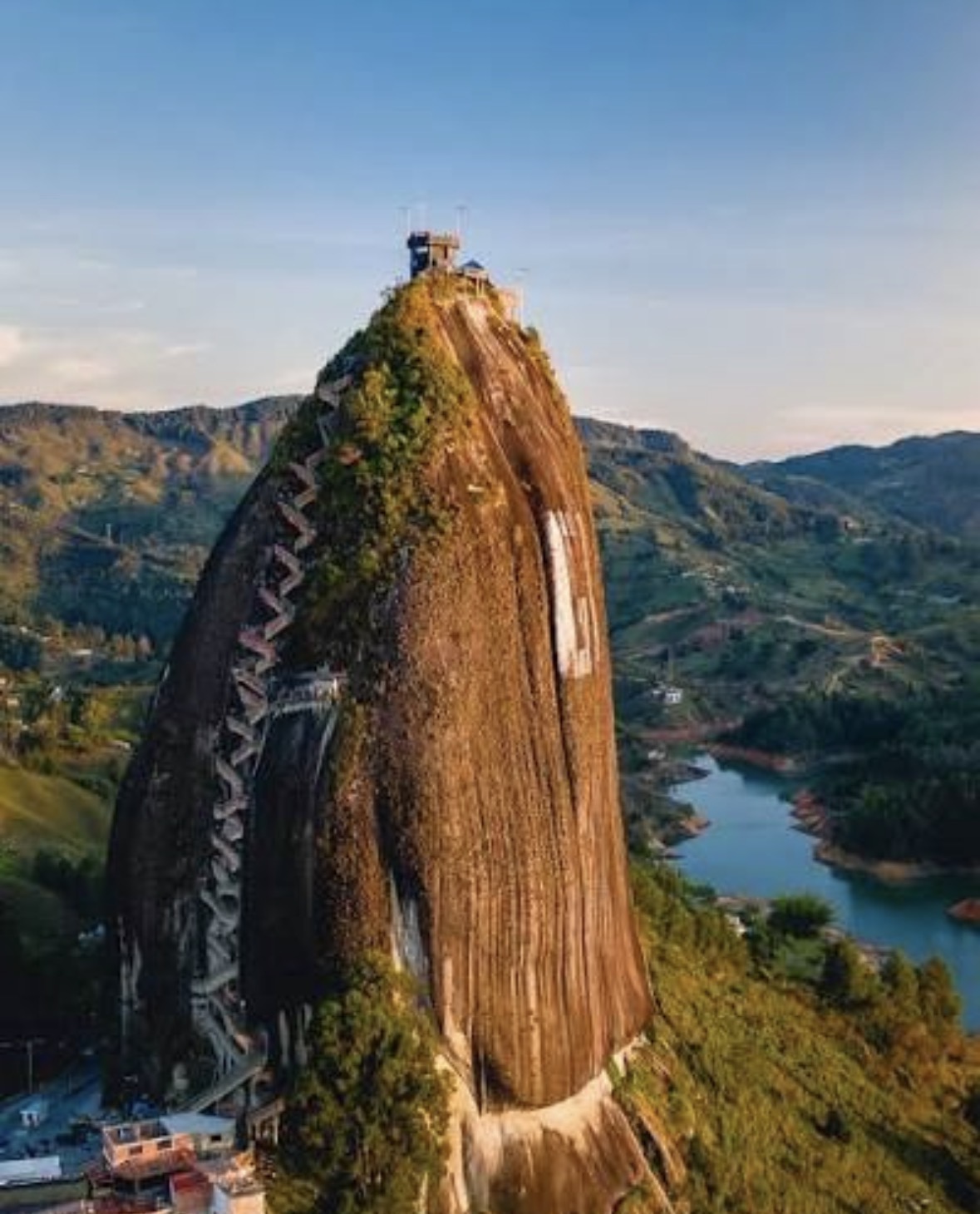
Ten minutes from the Rock is the town of Guatapé, the most colorful in the country: every house is decorated with zócalos — hand-painted reliefs telling each family's story — and its streets seem designed for the camera. The Plazoleta de los Zócalos and the Calle del Recuerdo are the must-stops, with the waterfront boardwalk to close the day.
How to get there and what it costs
By bus: from the North Terminal (reachable by Metro, Caribe station) direct buses leave all day — about 2 hours and COP 20,000–30,000 each way (check when buying). Buy your return as soon as you arrive, especially on weekends. With us, zero hassle: together with a trusted partner we offer the full-day Guatapé experience, bookable directly on our website — COP 129,000 for the group tour, breakfast and lunch included (full details on the page). It's the easiest way to sort the day without thinking about buses or schedules. By car: an easy, beautiful route — remember pico y placa on weekdays. Rock entrance: about COP 20,000–25,000.
The local tricks
Go on a weekday if you can — Saturdays and Sundays the Rock is a pilgrimage. Climb the Rock BEFORE noon (less heat, less line, better light) and leave the town for the afternoon. Try the trout, the reservoir's signature dish. And if you fall in love with the place? Stay a night: when the tourist buses leave, Guatapé belongs to the guatapenses again, and it's a different town.
→ Going? Guatapé deserves its own guide: the 740 steps, the drowned-town story, the day hour by hour and every trick, in our complete Guatapé guide.
The Surroundings Almost No Guide Shows
Everyone knows Guatapé. But we paisas have half a dozen more escapes that almost no tourist discovers — here they all are.
The West: the paisas' "sun day"
This is the best-kept secret of the paisa weekend: when we want heat, a pool and a pueblo, we head west. Santa Fe de Antioquia is the jewel — Antioquia's former capital, colonial and cobblestoned, with 400 years of history, the famous Puente de Occidente bridge and deliciously warm weather all year (it sits at just 550 meters: you drop from spring weather to beach weather in an hour's drive). And what do people go for? The hosterías with day passes ("pasadía"): countryside hotel-estates along the road where you pay a day entrance (COP 60,000–120,000 depending on the place, many with lunch included) and get pool, sun and rest until the afternoon — no overnight needed. It's THE Antioquian Sunday plan, and almost no foreigner knows it.
On the same road, before Santa Fe, sit San Jerónimo and Sopetrán: warm-weather towns barely an hour past the western tunnel, with cheaper hosterías and a one-hundred-percent local vibe. If you want the sun day without going all the way to Santa Fe, this is it.
→ Craving the heat? The day-pass hosterías, the full Santa Fe and the perfect day hour by hour, in our day-of-sun guide.
Sunday's East: Llanogrande and San Antonio de Pereira
The other pole of the paisa weekend is the eastern plateau, 45 minutes away: cool climate, endless green and food. Llanogrande is the zone of countryside restaurants and weekend markets where Medellín families spend the entire Sunday — arepa-and-chocolate breakfast, a walk, a long lunch and a sunset drive home. And San Antonio de Pereira (10 minutes away, in Rionegro) is the town of desserts: its park is ringed by traditional sweet shops, and Sundays are a festival of merengones, obleas and strawberries with cream. Combined with the airport's proximity, it's the perfect farewell if your flight leaves in the afternoon.
→ Want to live that Sunday? The full Llanogrande and San Antonio de Pereira plan — including the farewell-flight trick — in our paisa Sunday guide.
San Félix: paragliding over the valley
Forty minutes from the city, in the heights of Bello, lies Antioquia's paragliding capital: tandem flights with certified instructors (COP 200,000–300,000 per flight, depending on duration) and the most breathtaking view of the Aburrá Valley that exists — the whole city beneath your feet. You don't need experience, just a calm stomach and a charged camera. Want it sorted the easy way? We offer it too, through a certified partner: book your paragliding directly with MOVE and we coordinate everything.
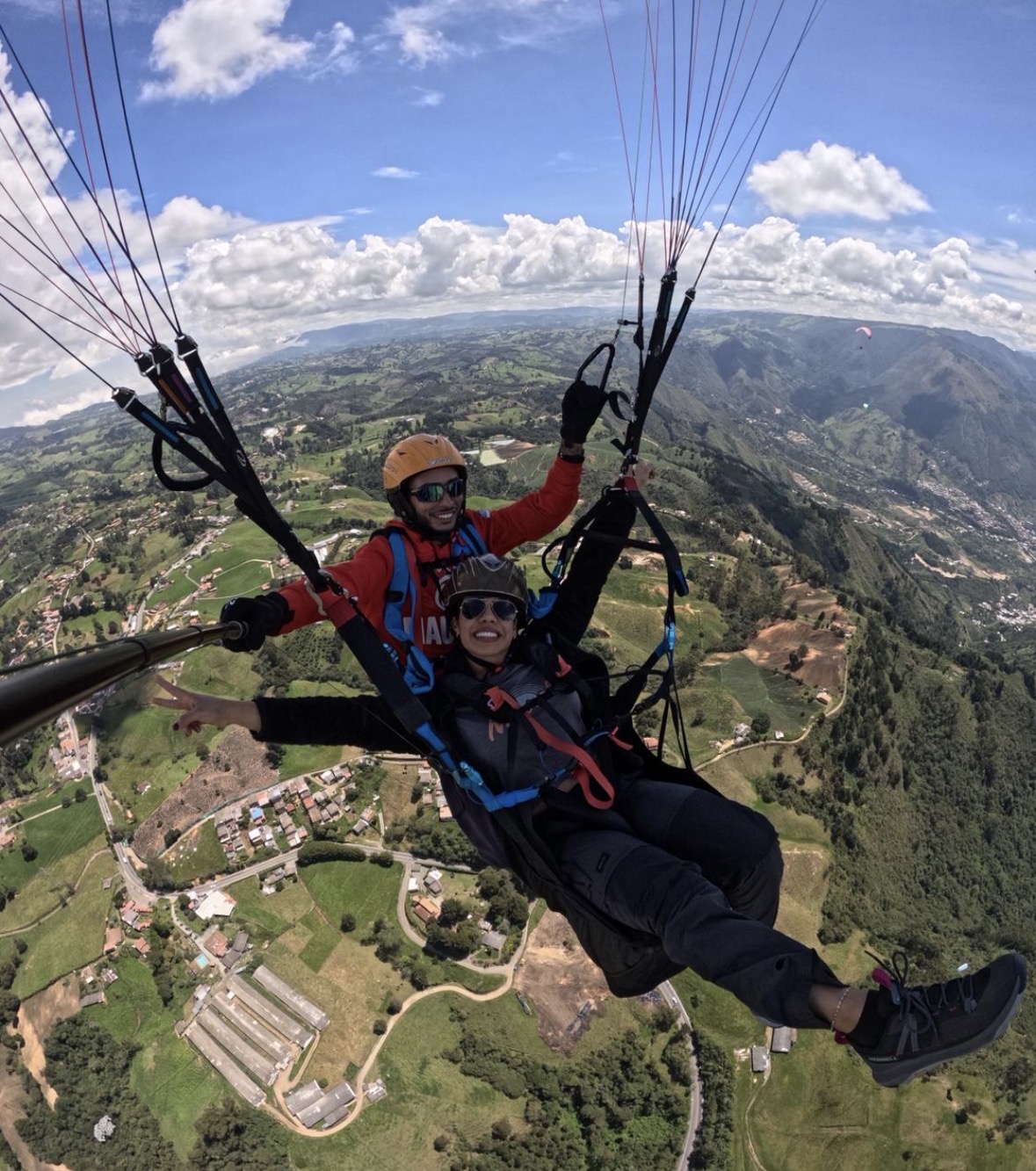
The valley's North: Copacabana and Girardota
Rural Medellín half an hour away: Copacabana with its traditional park and river swimming holes, and Girardota, famous for the pilgrimage to the Señor Caído and the roadside fondas selling marranitas. They're not postcard destinations: they're the real Antioquia — and that's exactly why they're worth a visit once you've seen the classics.
The coffee Southwest: Jardín and Jericó
Antioquia's two prettiest towns sit 3–3.5 hours southwest, deep in coffee country. Jardín: a colorful plaza beneath coffee mountains, the garrucha ritual (an artisanal cable car crossing the valley), Andean cocks-of-the-rock at dawn, and a plaza-café life unchanged in 80 years. Jericó: heritage, museums, the town of Colombia's first saint and the Cristo viewpoint. Both deserve a night — the perfect 2-day plan if your trip allows more than one escape from the city.
If you have more days: San Rafael and the eastern rivers
The final secret, about 3 hours away: San Rafael (and its neighbor San Carlos), the land of crystal-clear rivers and swimming holes — natural pools of transparent water between jungle and giant boulders. It's the paisas' freshwater paradise and the perfect antidote after several city days. It's still mostly local tourism: getting there is easy by bus from the North Terminal, and whoever goes comes back telling stories.
Coffee Tours Near Medellín: the Zones, Not One Farm
You don't need to go all the way to the Coffee Axis
Many travelers believe that living Colombian coffee means flying to Salento. No: Antioquia is origin coffee country, and from Medellín you have three ways to live the coffee, depending on your time:
The three coffee routes (from least to most time)
In the city (2–3 hours): the specialty coffee scene of Manila, Provenza and Laureles offers cuppings and barista experiences where you taste methods and origins and understand why Colombian coffee is something else. Perfect if you can't leave Medellín.
Nearby farms (half a day to a day): in the mountains surrounding the valley — Medellín's rural districts and neighboring towns — coffee farms welcome visitors barely an hour from the city: you walk the crop, see the full bean-to-cup process and have lunch overlooking the coffee fields. The complete experience without the early alarm.
The coffee Southwest (1–2 days): total immersion — Jardín, Jericó, Fredonia, Támesis and the towns where coffee isn't tourism but life. Full farm tours, lodging among the coffee fields, and the heritage-town-plus-coffee combination that makes many call the Southwest "the Coffee Axis without the crowds."
What a typical coffee tour includes
A walk through the crop, harvesting (in season), bean processing — pulping, drying, roasting — and the final cupping where it all makes sense. A half-day at a nearby farm runs around COP 100,000–200,000 per person with transport (check by option); the Southwest is worth it as an overnight trip. Our complete Medellín coffee guide covers the urban scene in detail.
→ Is coffee your reason for traveling? The three full routes — city, nearby farms and the Suroeste — with prices and tricks, in our coffee tour guide.
From Medellín to the Rest of Colombia: Airports and Terminals Explained
Continuing your Colombia trip after Medellín? This is the section that saves you hours of research.
By plane: MDE for the big routes, EOH for regional
José María Córdova (MDE) handles international flights and the big domestic routes (Bogotá, Cartagena, Santa Marta, Cali, San Andrés). Olaya Herrera (EOH) — the airport inside the city — is the gem for regional routes to small and mid-sized cities. And remember the math from the airport section: if the EOH flight costs a bit more, subtract the COP 132,000 taxi to Rionegro and the hour of travel — EOH often wins.
By bus: the two terminals, with their destinations
Medellín has two bus terminals, and knowing which one is yours is half the trip:
North Terminal (reachable by Metro, Caribe station): buses leave from here to Bogotá (~9–10 hours), the entire Caribbean coast — Cartagena (~13h), Barranquilla (~14h), Santa Marta (~15h), Montería —, the eastern Antioquia region (Guatapé, Rionegro, San Rafael), the West (Santa Fe de Antioquia, San Jerónimo, Sopetrán) and the country's northern destinations.
South Terminal (across from Olaya Herrera airport): everything heading south and west of the country leaves from here — the entire Coffee Axis: Manizales (~5h), Pereira (~5–6h), Armenia (the base for Salento and Filandia), plus Cali (~8–9h) and the Antioquian Southwest (Jardín, Jericó).
The simple rule: heading north, east or to the coast → North Terminal. Heading south or to the Coffee Axis → South Terminal.
Plane or bus? The honest math
For the Caribbean coast, the plane almost always wins: the bus to Cartagena is 13+ hours versus a 1h15 flight, and with low-cost airlines the price difference is usually smaller than you think. For the Coffee Axis, the bus competes well: 5–7 hours through mountain scenery, leaving from the South Terminal. For Bogotá, the one-hour flight beats 9–10 hours of road, unless you want the overland experience. Universal tips: buy bus tickets at official counters or the carriers' apps, arrive 30–40 minutes early, and for long night rides bring a jacket — the air conditioning on Colombian buses is an arctic experience nobody warns you about. Well, we just did. → Continuing through Colombia? The Norte/Sur rule, every destination from each terminal and the long-bus tricks, in our terminals guide.
The MOVE Way to Experience Medellín (by Electric Bike)
If you've made it this far, you've noticed: this guide is written by the people who pedal this city every day. MOVE City Tours are 100% private electric bike tours — you, your people and a local guide who lives what they tell. The electric part is the democratic key: whatever your fitness level, Medellín's hills climb themselves, and you enter the parks, plazas and neighborhoods where no other vehicle can.
Our menu, with 2026 prices:
- Express Tour (1.5–2 hours — COP 109,000): the perfect first-day orientation. The river parks, Downtown and the essence of the city in one morning.
- Urban Tour (3–3.5 hours — COP 189,000): the classic city in depth, including the corners cars can't reach.
- Alternative Paisa Tour (3–3.5 hours — COP 189,000): the Medellín of neighborhoods and local life — the one this guide taught you to love.
- Panoramic Tour (5 hours — COP 249,000): the complete city, viewpoints included, in a single ride.
- Full Tour: Comuna 13 + Market (7 hours — COP 329,000): the perfect day if you're short on time — graffiti, the market plaza with exotic fruits, and the whole city.
This is what a day with us looks like:

Want to go beyond the city? There's the full-day Guatapé experience (COP 129,000 with breakfast and lunch) and paragliding over the valley, both with trusted partners and direct booking on our site. You'll also find us at the La 70 shop for that farewell souvenir.
Why with us? 5.0 stars with 300+ Google reviews, bilingual local guides, and instant confirmation through Viator and GetYourGuide too, if you prefer booking there. But the easiest way is the usual one around here: message us on WhatsApp (+57 350 4502929), tell us how many days you have, and we'll build your plan — whether you book or not, we'll answer gladly.
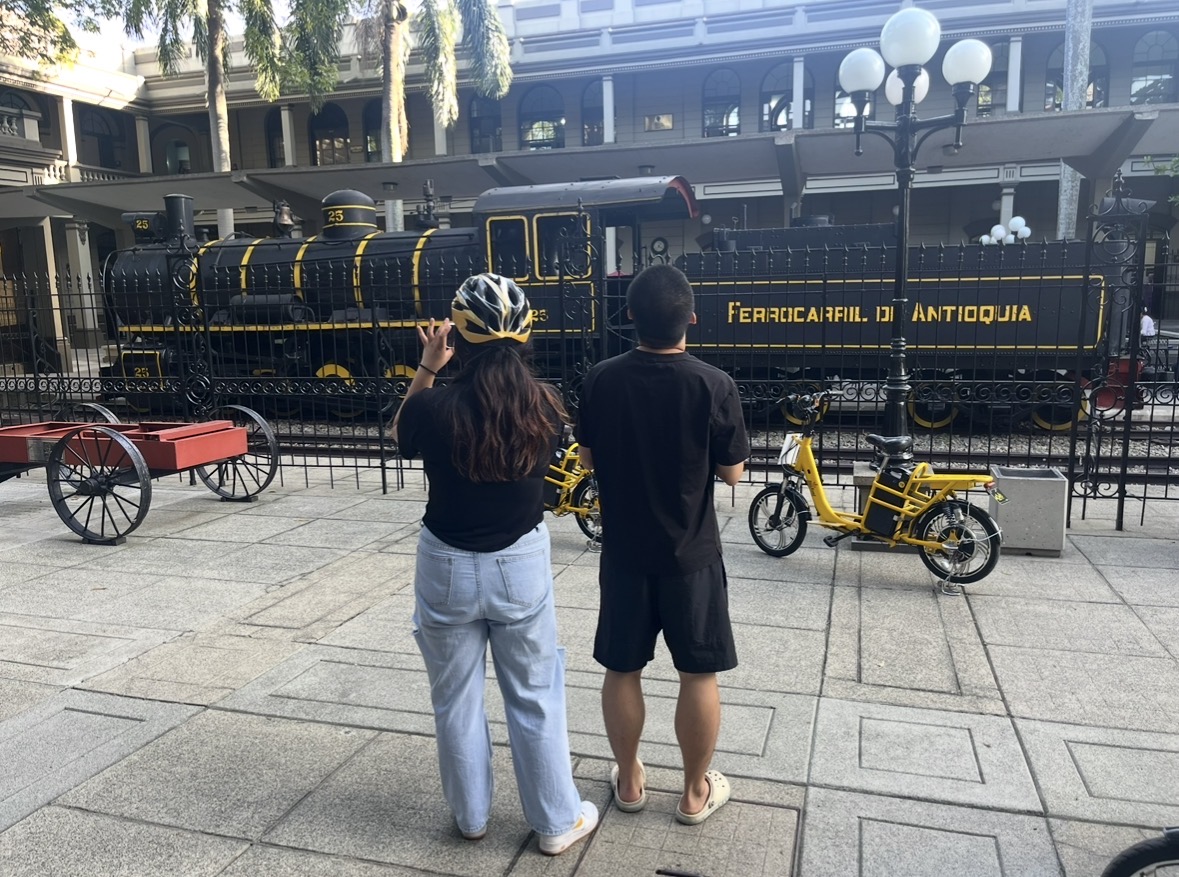
And one last truth, because this guide promised honesty to the very end: in Medellín it sometimes rains mid-tour, and sometimes your legs ask how much is left (not much — that's what the motor is for). For the rain we carry ponchos designed for exactly this, and the downpour stop usually ends at a neighborhood café that wasn't in the plan, watching the water fall with a tinto in hand and a freshly washed city waiting outside. We say it with the experience of hundreds of tours: years later, nobody remembers whether they got wet or tired — everyone remembers what they felt. That's how the memory of good trips works: it keeps what you lived and lets go of the rest.
Frequently Asked Questions About Visiting Medellín
Is Medellín safe for tourists in 2026? Yes, with the normal precautions of any big city. Tourist areas are safe day and night, the main risk is phone theft through carelessness, and the local rule "no dar papaya" (don't display valuables) solves almost everything.
Is it safe to visit Comuna 13? Yes — you can even go on your own to the tourist area (Graffitour and the escalators). It's one of the most watched-over, most visited spots in the city. A local guide is recommended to understand the history, not for safety.
How many days do I need in Medellín? Three days for the essentials (Downtown, Comuna 13, viewpoints and Guatapé), five to live the city like a local, seven to add pueblos and day trips. With fewer than three, prioritize a tour that compresses the city into one day.
What's the best time to visit Medellín? Any time — it's the City of Eternal Spring for a reason (17–28°C / 63–82°F year-round). The driest months are December–March and July–August. August adds the Flower Festival and December the Christmas lights: the two most spectacular (and busiest) seasons.
What's the best area to stay in? It's relative, but here's our local recommendation: Laureles if you want to really know the city — flat, calm and family-like, with extensive walkable nightlife, and better located: you reach Comuna 13, the historic Downtown and El Poblado's party scene easily and without traffic. El Poblado is the pick if you want the best-known hotels and the party at your doorstep. Envigado for families and long stays; Sabaneta for total immersion.
How do I get from the airport (MDE) to Medellín and how much does it cost? Four options (2026): official taxi COP 132,000 (fixed fare), apps COP 100,000–130,000, shared white colectivo COP 30,000–35,000 per person, or the Combuses bus COP 20,000 (24 hours). The ride takes about 40 minutes; allow a full hour for the return.
Is Uber legal in Medellín? Uber, DiDi and inDrive work normally and locals use them daily. They're the recommended option at night and for non-Spanish speakers: you see the price before getting in and pay with your card.
Until what time does the Medellín Metro run? Monday to Saturday from 4:30 a.m. until close to 11 p.m.; Sundays and holidays roughly 5 a.m. to 10 p.m. One fare (2026: COP 4,400 single, COP 3,820 with Cívica) covers metro, tram, metrocables and Metroplús.
Do I need to speak Spanish to visit Medellín? Not essential in tourist areas — hotels, tours and many restaurants handle English — but outside them it helps a lot. Learn five phrases, use your phone's translator, and paisa friendliness does the rest.
Can you drink tap water in Medellín? Yes. Medellín's tap water is safe and among the best in Latin America. Refill your bottle with confidence — it's one of the few places on the continent where you can.
How much money do I need per day in Medellín? From COP 70,000–100,000 a day as a backpacker, COP 200,000–300,000 as a mid-range traveler on your own, and COP 300,000–500,000 adding tours and guided experiences. Couples share the room and lower the per-person cost.
Cash or card: which is used more? Both: card at hotels, malls and bigger restaurants; cash for corrientazos, market plazas, El Hueco and transport. Note: some small businesses charge 4–5% extra for card payments — ask before paying.
Where's the best place to change dollars: airport, exchange house or ATM? At the airport change only what you need for transport (USD 20–50): the rate punishes you. Best options: withdraw at ATMs (official rate, inside malls) or use the mall exchange houses, with much better rates.
Are all cards accepted in Medellín: Visa, Mastercard, American Express, Diners? Yes — all networks work in Colombia. Visa and Mastercard have universal coverage; American Express and Diners are accepted at hotels, malls and bigger restaurants, though less at small businesses. Bring a Visa or Mastercard as your primary and the others as backup.
Is there Western Union in Medellín? Yes. Western Union operates in Colombia through agents like Banco Unión, SuperGiros and Acciones y Valores, with dozens of locations in Medellín — several inside malls. MoneyGram works too. To collect a transfer bring your passport and the tracking number (MTCN).
How much cash can I bring into Colombia? Up to USD 10,000 (or its equivalent in other currencies) per traveler without declaring. Entering or leaving with more requires declaring it to customs — failing to do so can cost you the money's retention plus penalties.
What does "no dar papaya" mean? It's the golden paisa safety rule: don't display anything someone might want to take — phone on the street, jewelry, visible cash. Don't give the opportunity ("papaya") and your trip will be smooth.
Is the food in Medellín spicy? No — not at all. Colombian cooking doesn't use heat as a base and ají isn't on the tables: it's requested separately as a sauce ("¿me regala ají?"). If you truly need fire, pack your favorite hot sauce.
What is a "corrientazo" and how much does it cost? It's the set lunch where locals eat on weekdays: soup, main course and juice for COP 15,000–20,000 (2026). To find a good one, look for the line of office workers at noon and the handwritten menu board.
What is El Hueco and is it safe to shop there? It's Downtown's most famous commercial district, where "you can find everything" at the city's best prices. It's safe by day with Downtown rules: just enough cash, phone away and full attention. Get there by Metro (San Antonio station).
Is it safe to go to the stadium for a match in Medellín? Yes: buy tickets through official channels and choose the east or west stand for your first match. The Nacional–DIM derby calls for extra care (arrive early, no team jerseys around the stadium). Get there by Metro, Estadio station.
Is Guatapé worth it as a day trip? Absolutely — it's the king of day trips: 2 hours from the North Terminal, 740 steps and the best view in Colombia. Go on a weekday and climb the Rock before noon. Organized tours from COP 129,000 with meals included.
Should I rent a car in Medellín? What is pico y placa? For the city you don't need one (Metro + apps win); for pueblos and surroundings it can be worth it. Pico y placa restricts cars by plate number Monday–Friday (5 a.m.–8 p.m.); weekends are free and electric/hybrid cars are exempt.
Which terminal does my bus leave from: North or South? Simple rule: heading north, east or to the coast (Bogotá, Cartagena, Santa Marta, Guatapé) → North Terminal. Heading south or to the Coffee Axis (Manizales, Pereira, Salento, Cali, Jardín) → South Terminal.
Where can I do a coffee tour near Medellín? Three options without going to the Coffee Axis: cuppings and barista experiences at the city's specialty cafés (2–3 hours), coffee farms an hour from Medellín (half a day), or total immersion in the Southwest — Jardín, Jericó, Fredonia — with a night among the coffee fields.
What is a "droguería"? A pharmacy. In Colombia medicines are colloquially called "drogas," so the DROGUERÍA sign you'll see everywhere is simply the neighborhood pharmacy — many open 24 hours with home delivery.
What are the emergency numbers in Medellín? 123 is Colombia's single emergency line: police, ambulance and firefighters, 24/7, from any cell phone. For health, reference clinics with 24h ERs exist in every tourist area.
Is Medellín good for digital nomads? Among the world's best: perfect weather, cost of living in pesos (USD 1,200–2,500/month), a U.S.-aligned time zone, dozens of coworkings and an active digital nomad visa allowing up to two years.
What should I avoid doing in Medellín? Not much: don't display valuables ("no dar papaya"), don't leave your drink unattended, don't walk alone down empty streets in the small hours, don't buy tickets from scalpers and don't drive without knowing pico y placa. The rest is enjoying yourself.
What is the Check-Mig and is it mandatory? Yes, it's mandatory: it's Colombia's online immigration form, completed before boarding international flights both in and out. Fill it out free on Migración Colombia's official site between 72 hours and 1 hour before your flight — beware of websites that charge for the process.
Can kids join the bike tour? Yes: from ages 10–11, if they ride well, they get their own electric bike; younger kids ride on mom or dad's bike if the adult rides confidently. Babies and stroller-age children can't join, for safety. Message us on WhatsApp with the ages and we'll build the plan.
What's the best way to see Medellín in a short time? By electric bike — and it's not just us saying it, it's geometry: no traffic, hills climbed effortlessly, and access to parks and plazas where no other vehicle can go. A one-day tour covers what would take three on foot.
How do I book a tour with MOVE? By WhatsApp at +57 350 4502929 (fastest — humans answer, not bots), directly at movecitytour.com, or through Viator and GetYourGuide with instant confirmation. Private electric bike tours from COP 109,000.
To Close: You Don't Visit Medellín — You Feel It
There are cities you tour and cities that stay with you. Medellín is the second kind: for the weather that embraces you, for the people who turn every asked direction into a conversation, for the mountains that follow you everywhere, and for that energy of a city that got back up and decided to become something else.
We'll keep updating this guide every few months — prices, facts and news — because just as the city doesn't sit still, neither does this page. Last updated: July 2026.
And a final invitation, no strings attached: if anything in this guide left you with questions, or you want advice tailored to your trip, message us on WhatsApp. We're locals, we answer fast, and we love helping people plan — whether you book a tour or not. See you in Medellín, parcero. The city is already waiting for you.
Ready to experience it?
Discover Medellín on an e-bike private tour. Local guides · Instant confirmation · 5.0 ★ (350+ reviews).