There's an unwritten rule every visitor to Medellín learns fast: you don't talk badly about the Metro here. It's not just a train — it's the city's greatest pride, the symbol that Medellín came out the other side, and, for you, the fastest, cheapest and safest way to get around. This guide covers it all: what it costs, how to pay, which lines matter and the courtesy rules we paisas expect you to know.
Why this metro is unlike any other you know
The Medellín Metro is Colombia's only metro system, and it opened in 1995 — during the city's darkest era. That's why it isn't infrastructure: it's biography. While everything else was falling apart, paisas built a spotless train and decided to care for it like a family heirloom. Thirty years later it's still as clean as day one: no graffiti, no litter, no vandalism. We call it the Metro culture, and understanding it means understanding half the city.
For you as a traveler that means something very practical: it's a safe, orderly system with staff constantly present — probably the best-kept public space you'll set foot in in Colombia.
The mental map in two minutes
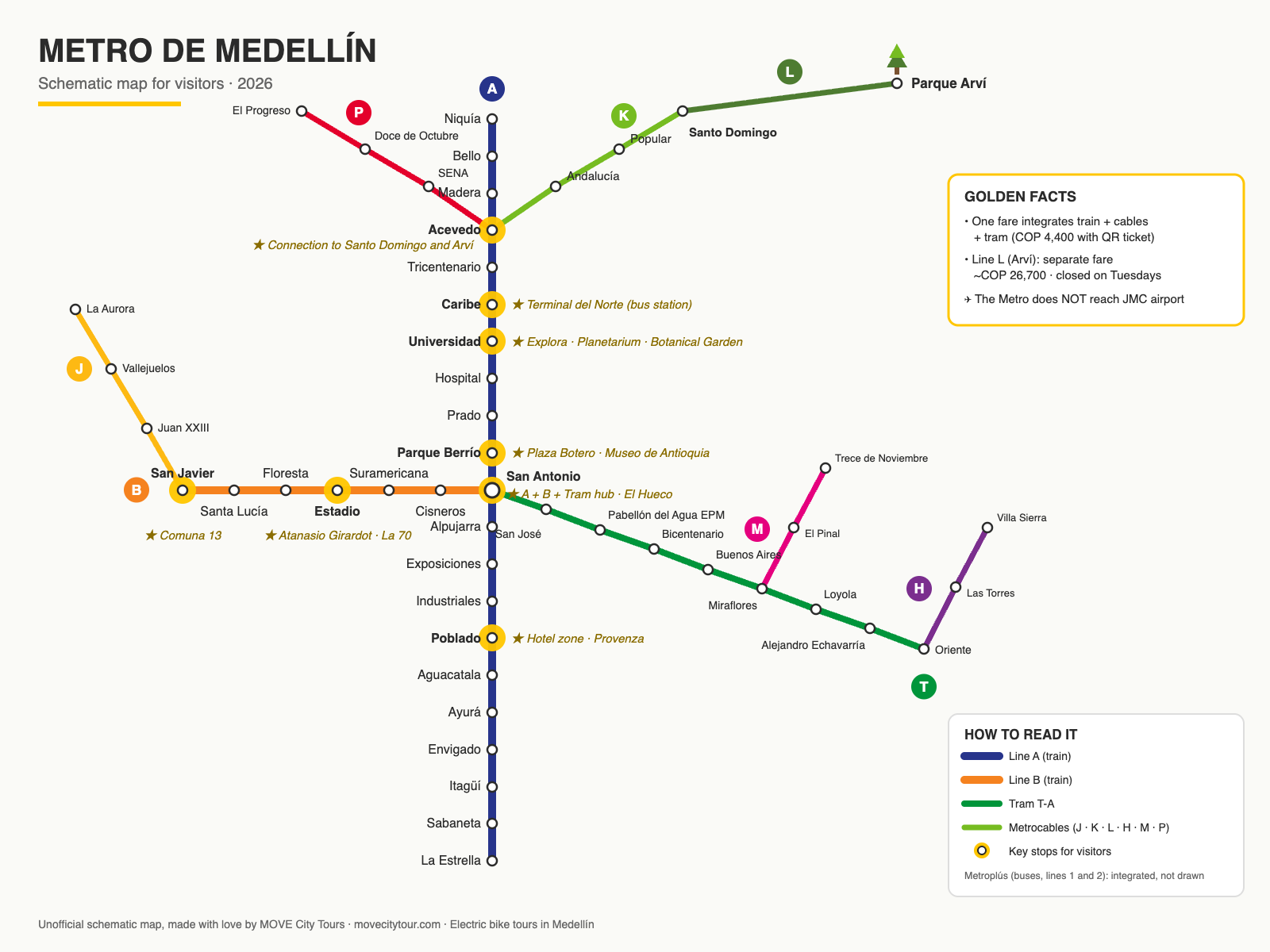
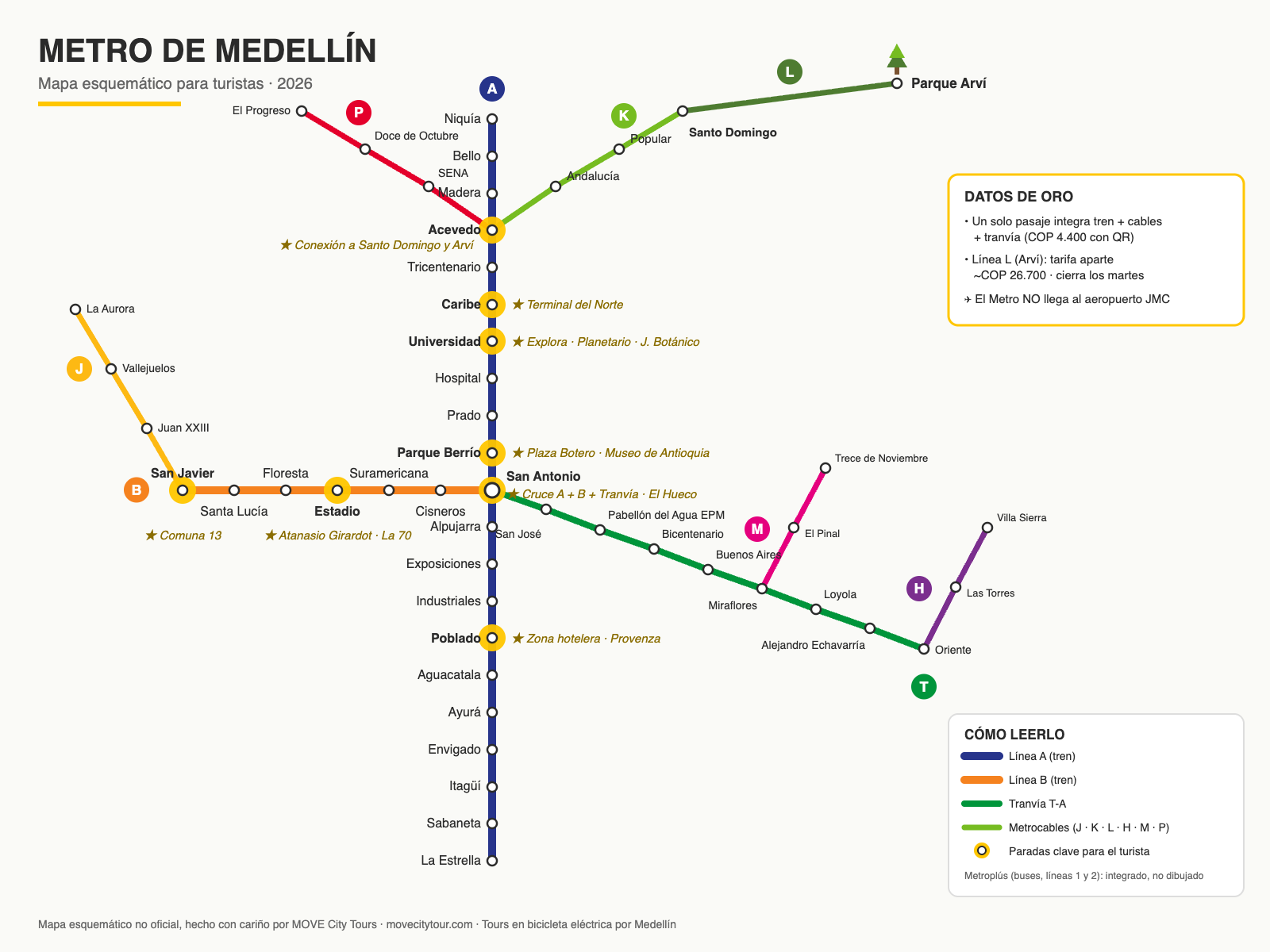
You don't need to memorize the full map. This is all you need to navigate:
- Line A (the backbone): crosses the valley north to south, from Niquía to La Estrella. Almost everything you care about is on this line or connects to it.
- Line B (the western arm): runs from San Antonio, in the heart of the Centro, out to San Javier (the gateway to Comuna 13).
- The Metrocables: urban cable cars that climb the hillside barrios and double as the most spectacular viewpoints in the city. Most of them are included in your fare.
- The Ayacucho Tram: runs from San Antonio toward the east of the city, also integrated.
- Metroplús: buses on dedicated lanes, part of the same system.
The golden logic: one single fare lets you combine train + cable + tram + bus, as long as you don't exit the system. You go in, move across half the city, and only "spend" the fare when you leave through the turnstiles.
What it costs and how to pay in 2026
Here's the data you came for, up to date:
- Single ticket (QR code): COP 4,400 per ride — sold at the ticket booths in any station. The practical choice if you're here for a few days: buy the ticket, scan the QR at the turnstile, done.
- Cívica card: COP 3,820 per ride. The locals' rechargeable card — cheaper fares and no booth lines. Worth it if you're staying several weeks or coming as a digital nomad.
- The Arví cable (Line L): the system's one exception — it has a separate fare: about COP 26,700 for foreign visitors. More below on why it's worth every peso anyway.
A local tip: carry cash in small bills for the booth. And never buy tickets from anyone outside the booth — the official ones are inside.
Hours: early starts, planned late nights
The Metro runs Monday to Saturday from 4:30 a.m. to 11:00 p.m., and Sundays and holidays from 5:00 a.m. to 10:00 p.m. Practical translation: it works for catching the early bus to Guatapé and for coming home from dinner — but if the party runs past midnight, the ride home is by app, as we explain in the complete Medellín guide.
Rush hours are what you'd expect from a hard-working city: weekdays from 5:30 to 8 in the morning and 5 to 7:30 in the evening, the train gets genuinely packed. If you can travel outside those windows, you'll ride seated with room for your camera.
The stations that matter to a tourist
This is the part no map explains — what's behind each name:
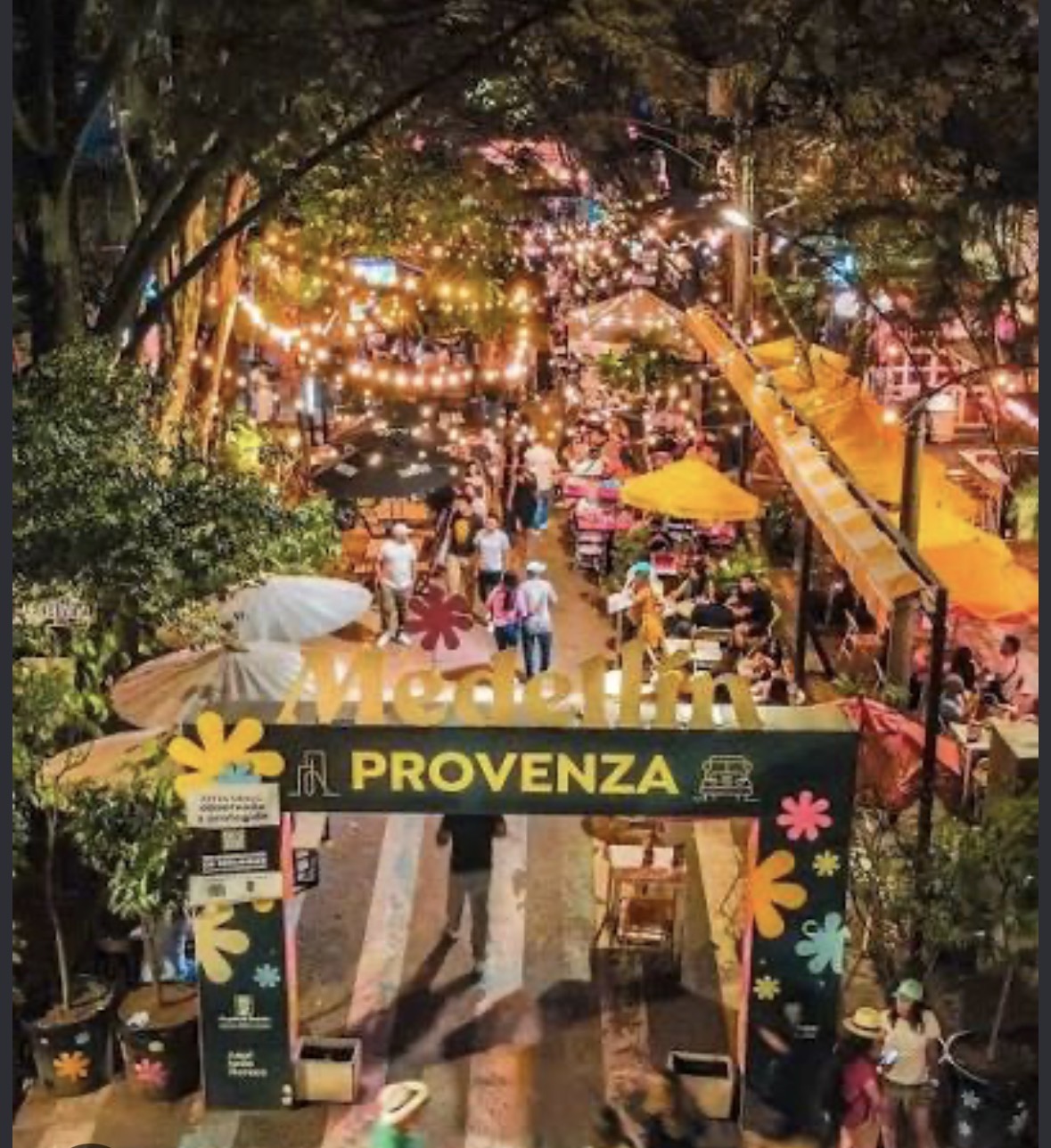
- Poblado: the station for the classic hotel zone. Heads up: it sits down on the avenue — from there to Provenza it's uphill on foot or a short app ride.
- San Antonio: the grand junction of lines A, B and the tram, right in the Centro. Step out here and you walk straight into the world of El Hueco.
- Parque Berrío: Plaza Botero and the Museo de Antioquia steps from the exit. The classic heart of the Centro.
- Universidad: the family-plan station — Parque Explora, the Planetarium and the Botanical Garden, all walkable.
- Acevedo: where Metrocable K climbs to Santo Domingo and connects to the Arví cable. The most spectacular half-day plan a single fare can buy.
- San Javier: the end of Line B and the gateway to Comuna 13 and its Metrocable J.
- Estadio: the Atanasio Girardot stadium and the La 70 scene. If Nacional or DIM are playing, this station is a street party.
- Caribe: connected by a direct footbridge to the Terminal del Norte — your station for buses to Guatapé, the coast or Bogotá.
The Metrocable: a lookout ride included in your fare
No other metro in the world gives you this: the cables climb the hillside and suddenly you have the whole city under your feet — rooftops, football pitches, barrio life gliding by in silence. The classic is cable K from Acevedo up to Santo Domingo — included in your fare — and from there Line L continues to Parque Arví: 15 minutes flying over native forest up to 2,500 meters, picnic territory and mountain air. Line L has a separate fare (COP 26,700 for foreign visitors) and closes on Tuesdays for maintenance — don't show up on a Tuesday with the whole plan built around it. Cable J from San Javier pairs perfectly with a visit to Comuna 13.
Metro culture: the rules we paisas expect you to know
None of this is written in fines — it's written in the culture, which weighs more:
- No eating or drinking inside the system.
- The blue seat is given up before anyone asks.
- Let people off before boarding, and on escalators the left side is for walking.
- Keep the volume down: headphones on, calls short.
- Nothing gets scratched, stuck or tossed. Ever.
Follow those five and you'll ride like one more paisa. Break them and you'll feel the stares — the Metro belongs to everyone, and everyone protects it.
Is the Metro safe for tourists?
Yes — it's among the safest spaces in the city: staff in every station, cameras, and that collective vigilance of the Metro culture. The common-sense rules from our Medellín safety guide apply: at rush hour, phone put away and backpack worn in front, like on any packed metro in the world. And a reassuring fact for women traveling solo: staff presence is constant and asking for help works.
Frequently asked questions about the Medellín Metro
Does the Medellín Metro reach the airport? No. José María Córdova international airport is in Rionegro, outside the valley, with no Metro connection. You get there by taxi (~COP 132,000), ride apps or the Combuses shuttle (~COP 20,000). The full details are in the airport section of our Medellín guide.
How much does the Medellín Metro cost in 2026? COP 4,400 for a single QR ticket and COP 3,820 with the Cívica card. One fare integrates the train, most cables, the tram and Metroplús. The exception is the Arví cable (Line L), which costs extra: about COP 26,700 for foreign visitors.
What are the Metro's operating hours? Monday to Saturday from 4:30 a.m. to 11:00 p.m.; Sundays and holidays from 5:00 a.m. to 10:00 p.m.
How do I get to Comuna 13 by Metro? Line B to San Javier (its final station). From there you can walk up toward the escalators or take Metrocable J for the view.
Is the Metrocable included in the fare? The urban cables (like K to Santo Domingo and J at San Javier) are integrated, yes. The only one with a separate fare is Line L to Parque Arví — which also closes on Tuesdays for maintenance.
Do I need the Cívica card as a tourist? For a few days, no: the single QR ticket from the booth does the job. If you're staying weeks or months, the Cívica saves you money on every ride and skips the lines.
The Metro shows you the city from the inside — and our bikes show it to you at people height. Book your electric bike tour or message us on WhatsApp, and keep the complete Medellín guide handy.
Ready to experience it?
Discover Medellín on an e-bike private tour. Local guides · Instant confirmation · 5.0 ★ (360+ reviews).