Medellín doesn't work as one city. It works as twenty towns stuck together, each one grown its own way, in a valley that was never big enough for them.
That's why "what's Medellín like?" has no answer. El Poblado and Manrique are nine kilometres apart and they are two different countries. This guide is so you know which is which before you land. It isn't here to sell you any of them.
In the order people actually ask.
El Poblado
Comuna 14 · Poblado station, line A · The tourist one
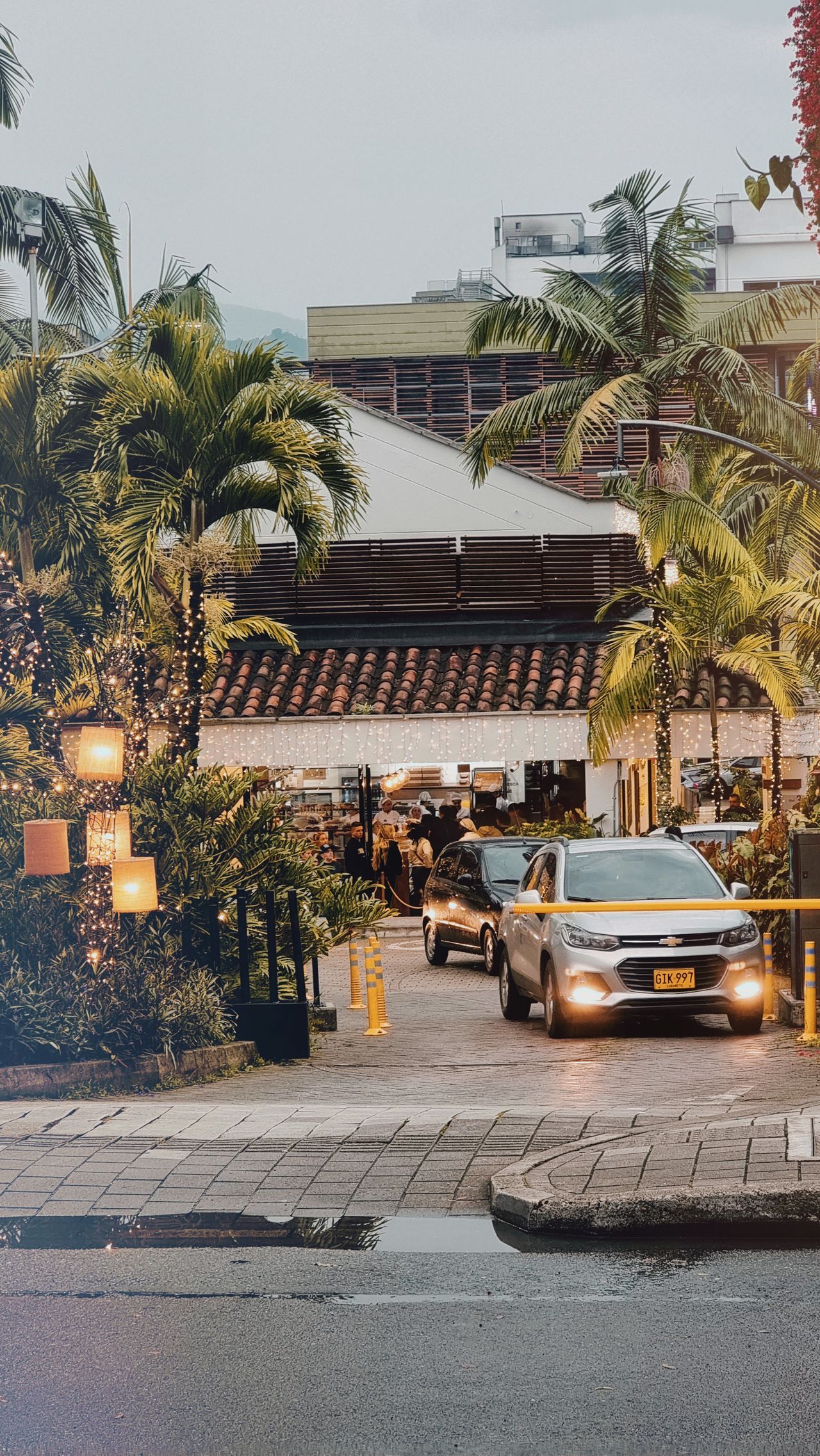
This is the Medellín you've seen on Instagram: rooftops, new towers, menus in English, Parque Lleras, Provenza. It's where most foreigners stay and where nearly all the hotels are.
The upside is real: it's convenient, everything is walkable, and at three in the morning there are still people on the street. So is the downside: it's expensive by local standards, it's loud, and the Medellín you'll see there looks a fair bit like Miami.
It's a hillside, and that's worth knowing before rather than after: from Poblado station up to Provenza is a twenty to twenty-five minute climb on foot. Plenty of people discover this dragging a suitcase.
Right for you if: it's your first time, you're short on days, you want a night out without planning it.
Laureles
Comuna 11 · Estadio, Floresta and Suramericana stations, line B · Local but easy
Time Out named it the coolest neighbourhood in the world in October 2023, and it changed after that: rents went up and the digital nomads arrived. But the neighbourhood underneath is still there.
Laureles is flat — which in Medellín matters more than it sounds — with streets laid out in curves around two circular parks, and full of old trees. People walk here in the evening. There are neighbourhood bakeries, not only specialty coffee bars.
La 70 is its bar street, and the Atanasio Girardot stadium sits right beside it: when Nacional or Medellín play, you'll hear it.
Right for you if: you want a real city, you walk a lot, you're staying more than four days.
Envigado
Its own municipality · Envigado station, line A · The residential one
Technically it isn't Medellín at all: it's a separate municipality that the city swallowed, and you can't tell where one ends and the other begins. It's quieter, cheaper than El Poblado, and it has a food scene that locals actually use.
Its main square, with the church, is one of the few places in the metro area where at seven in the evening you'll still find people sitting and talking without buying anything.
Right for you if: you're travelling with family, staying for weeks, or you already know Medellín.
El Centro
Comuna 10 · Parque Berrío, San Antonio and Prado stations · The one you have to see
Everything that matters about the city is here: Plaza Botero with its twenty-three sculptures, the Museo de Antioquia, the Palacio de la Cultura, Parque de las Luces, Calle Junín. And so is everything the city is uncomfortable about: visible poverty, street vending, and blocks that after six empty of one kind of person and fill with another.
It isn't a neighbourhood to sleep in. It's a neighbourhood to visit in daylight, look upwards, and leave before dark.
Right for you if: you came for the city and not for the pool. Daytime, ideally with someone who knows it.
Barrio Prado
Comuna 10 · Prado station, line A · The one that was nearly lost
Block after block of 1920s and 1930s mansions that the Antioquian elite had built in imitation of what they'd seen in Europe: Swiss chalets, castles with turrets, one house that is an Egyptian temple inside and another shaped like a steamship.
It's the only heritage-listed neighbourhood in Medellín, with 261 protected buildings, and for forty years it wasn't on a single tour. That's changing now.
Right for you if: you care about architecture or about how the city got here.
Comuna 13 — San Javier
Comuna 13 · San Javier station, line B · The one that changed
The neighbourhood that went from the most violent in the city to the most visited. Outdoor escalators, graffiti that tells the story of what happened here, music, people selling green mango.
The full version needs saying: it now takes so many visitors that in high season it's hard to walk, and there's an open and legitimate argument inside the neighbourhood about who is actually getting that money. Going with a guide from there isn't a detail. It's the difference between visiting and consuming.
Right for you if: you want to understand what happened to Medellín, not just photograph it.
Perpetuo Socorro
Comuna 10 · Industriales or Exposiciones stations · The new one
It was a district of workshops and warehouses. It still is a district of workshops and warehouses, except now there are galleries, design studios, breweries and some of the best restaurants in the city between them.
It's small, it's an afternoon, and it hasn't been fully found yet.
Right for you if: you like neighbourhoods mid-change, before they finish changing.
Belén
Comuna 16 · No metro station of its own · The everyday one
A big middle-class paisa neighbourhood with nothing to "see", which is exactly what makes it interesting. You eat well and cheaply here, the parks fill up on Sundays, and people get on with their lives without looking at anyone from outside.
The climb up Cerro Nutibara to Pueblito Paisa starts on this side.
Right for you if: you've done the obvious things and want to see how the city actually lives.
Manrique
Comuna 3 · Northeastern hillside · The steep one
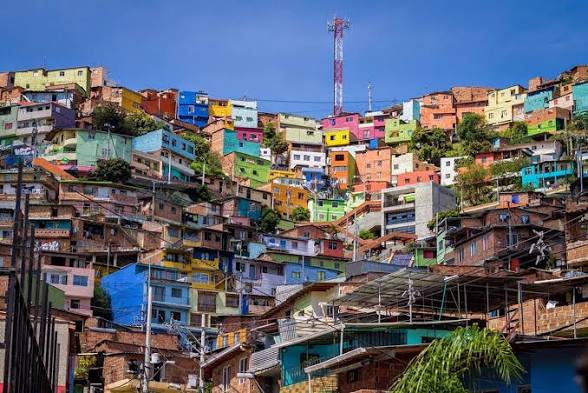
Northeast, pure slope, stairs everywhere. This is the Medellín of stacked houses you see from below and almost nobody climbs. It grew in the early twentieth century as working-class ground, and it still behaves that way: here the city doesn't tidy itself up for visitors.
It's also Medellín's tango neighbourhood. Carlos Gardel died in this city — his plane crashed at Olaya Herrera airport on 24 June 1935 — and Medellín turned the grief into devotion. On carrera 45, now Avenida Carlos Gardel, stands the Casa Gardeliana, founded in 1972.
Right for you if: you walk well and don't mind the gradient.
How they connect
The metro is one thing worth understanding: line A runs north to south (Niquía–La Estrella) and line B runs east to west (San Antonio–San Javier). They cross at San Antonio. Add the tram, the cable cars that climb the hillsides, and the Comuna 13 escalators.
That gets you almost everywhere for less than a coffee costs. What the metro doesn't solve is the gradient: El Poblado and the hillside comunas ask for legs.
And one thing almost nobody tells you
Medellín's neighbourhoods don't read well from a car. A car moves too fast for what you're supposed to be looking at, which is the facades, the eaves, the corners and the people.
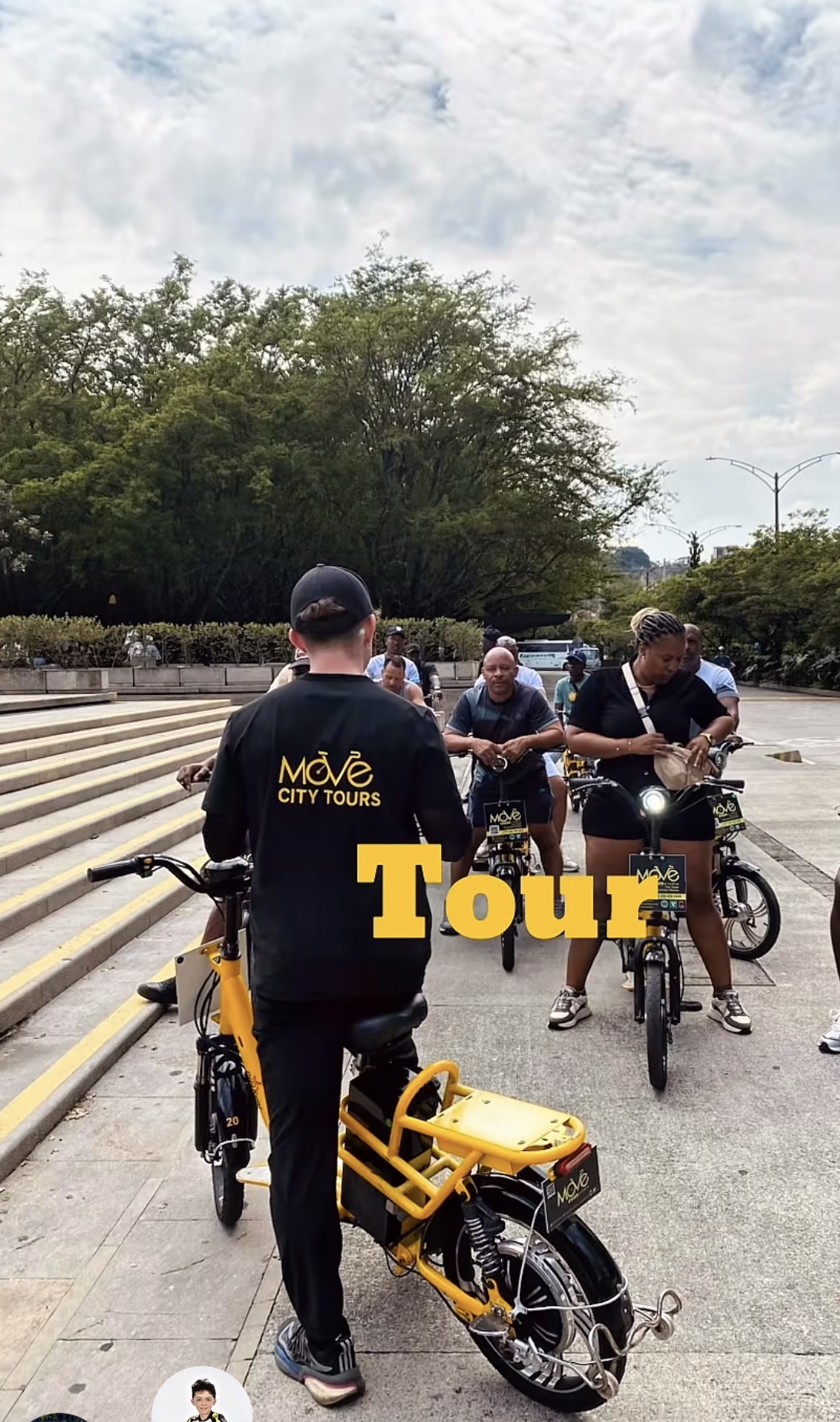
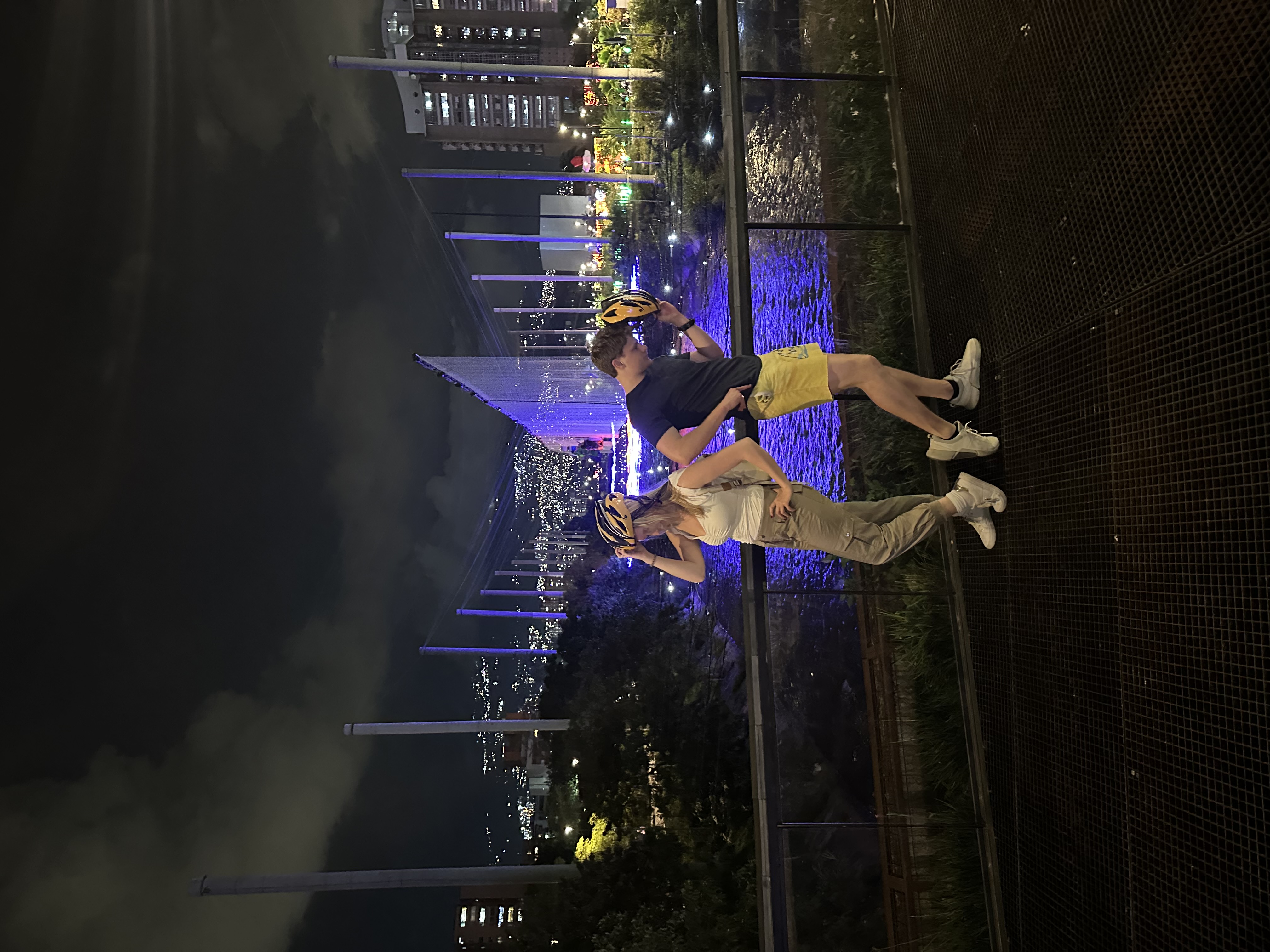
They read well on foot, and better on a bike, because the middle of the valley is flat and the distances between neighbourhoods are absurdly short: Laureles to the centre is twenty minutes of pedalling.
Which is exactly what we do. If you want to see several neighbourhoods in one day without spending half of it in traffic, message us on WhatsApp and we'll build the route around the days you have.
Next: where to stay in Medellín, why Laureles is one of the world's coolest neighbourhoods, is Medellín safe for tourists? and the best tours in Medellín.
And the place pages: Laureles, El Poblado, Comuna 13 and Barrio Prado.
Ready to experience it?
Discover Medellín on an e-bike private tour. Local guides · Instant confirmation · 5.0 ★ (350+ reviews).