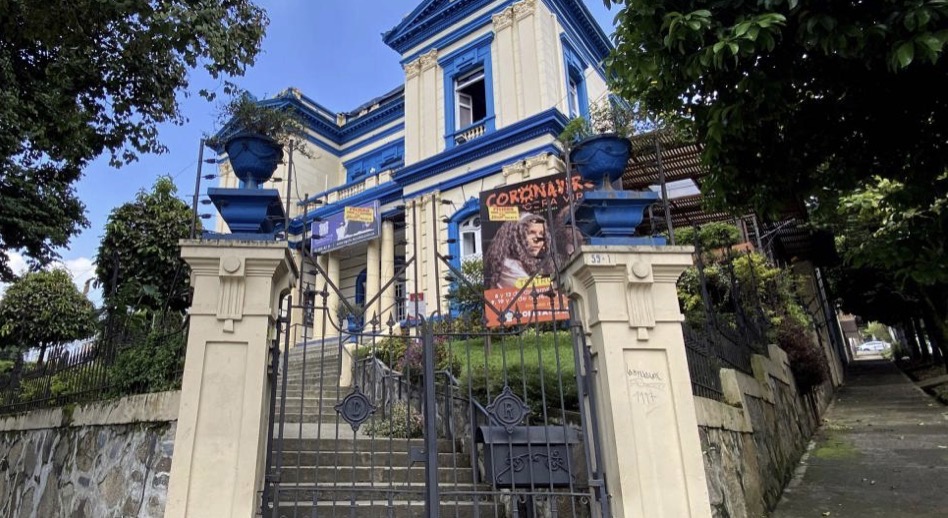
A hundred years ago this was the most expensive address in Medellín. The richest families in Antioquia — coffee, tobacco, mining — built their houses here, and they didn't build them modestly: Swiss chalets, castles with turrets, mansions with stained glass, and a palace whose interior imitates an Egyptian temple. They are all still standing. **Prado is the only heritage-listed neighbourhood in Medellín**, with 261 protected buildings, and for decades it was also the great absentee from the city's tourist routes. That is changing right now. Which is exactly why this is the moment to come.
What to see & do
1. The houses, which are not ordinary houses
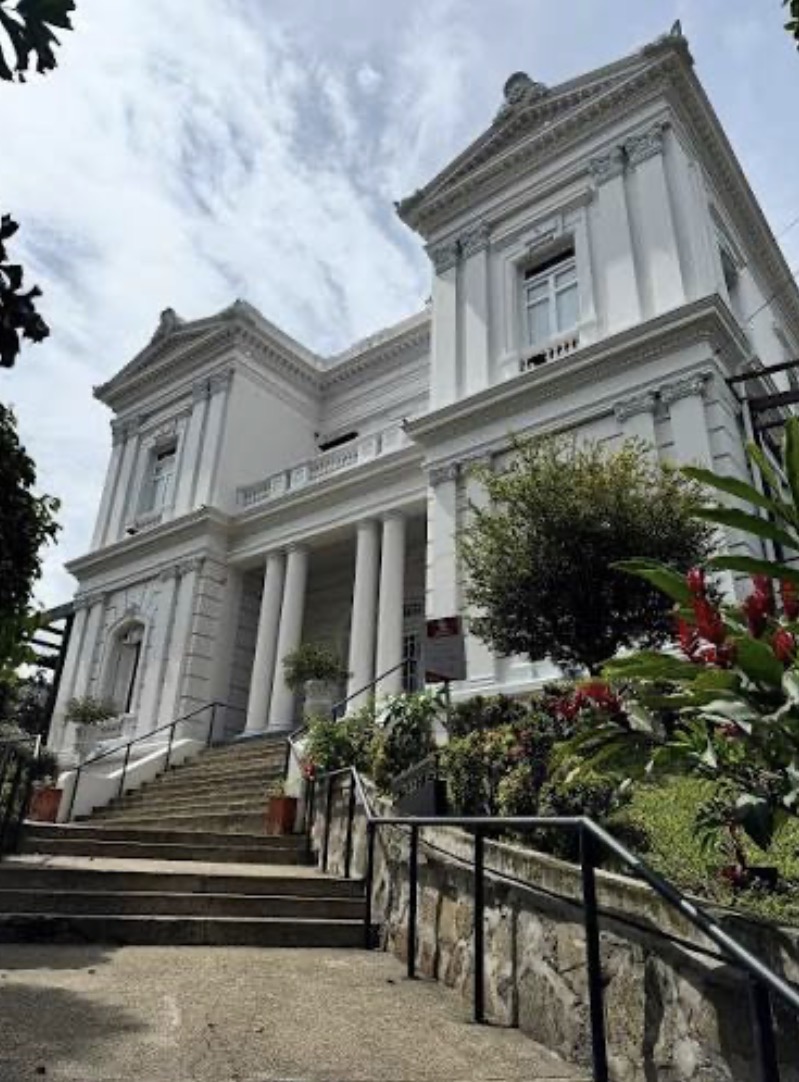
Swiss chalets, European castles, art déco façades, enormous front gardens, very high ceilings, balconies and stained glass. Medellín's elite of the 1920s and 30s travelled to Europe and wanted to bring the luxury home, literally: they commissioned houses in the image of what they had seen. One is connected to the family of Tomás Carrasquilla, one of the most important writers in Antioquia's history. And on the upper floors of several mansions, the city's freemasons met in secret.
2. The Egyptian Palace
A building that imitates the temples of Luxor and the pyramids of Giza, inside and out, in the middle of Medellín. Fernando Estrada, the city's first professional optometrist, began it in 1929 with the architect Nel Rodríguez; it took more than fifteen years to finish. Today it is a cultural centre and offers guided tours of about an hour. It stands at carrera 47 #59-54.
3. The house shaped like a ship
In 1949 Jacobo Cohen, from a Sephardic Jewish family, commissioned a mansion built in the image of a steamship: chimneys, a space for the turbine, and floors with details imitating waves. But this is not a whimsical house. It was built with notably thick walls, a large cellar, a passageway, two cisterns and escape routes: it is the house of someone who knew what it was to have to flee. And it has an ending nobody expects — the Cohen family never lived there. Mrs Cohen rejected the mansion once she saw it finished, and they moved a block away. Since late 1966 it has been the headquarters of ASMEDAS, the Antioquia Medical Association.
4. The mayor's house, ghost included
A 1937 house the city bought so that Medellín's mayors would live there during their term. The only one who actually did was Sergio Fajardo. Neighbours have said for years that the house has a ghost, and the local press has devoted more than one article to it. We don't take sides: we just note that the house is there and the story is still being told.
5. The man who dreamed the neighbourhood
Ricardo Olano Estrada (1874-1947) drove Prado into being in 1926. He was no ordinary developer: he chaired the Society for Public Improvements and the Chamber of Commerce, promoted the "Plan for a Future Medellín" and edited the city's first tourist guide. He took his model from the garden-city layout of El Prado in Barranquilla — which is why the avenue separating Prado from comuna 3 is called, precisely, Barranquilla. He lived here, and he planted guayacán trees along the streets himself so that the wind coming down from Cerro Pan de Azúcar would carry their scent. His line: "A city without trees is a desert of cement and brick, incapable of housing the human soul."
6. The beer man's house
Juan de la Cruz Posada (1869-1961) managed the Cervecería Antioqueña, which later merged with La Libertad to form Cervecería Unión, the brewery behind Pilsen. But that is the least interesting part: he was a mining engineer trained at Berkeley, general superintendent of the Antioquia Railway from 1913 to 1918, and he directed the construction of the city's first modern aqueduct, the Piedras Blancas power plant and the first tramway works. As manager of Coltabaco between 1921 and 1932 he introduced retirement pensions, paid Sundays off, paid holidays, collective insurance, medical service and help buying a home — all before Colombian law required any of it. In the neighbourhood they also say the Christmas bonus was his idea, though that does not appear in his official biography.
7. Why it fell, and why it is coming back
Living in Prado meant showing status, until it didn't. Medellín grew south and west, the families moved out, and in the 1970s the construction of Avenida Oriental finished the job of cutting the neighbourhood off from downtown. Prado dropped off the city's mental map and off the tourist routes for decades. Today it is coming back: houses that were shut for twenty years have reopened as restaurants, galleries, hotels and cultural spaces.
Our tours to this place
Prado is not on our fixed tours: we build it to order, with a local guide, because it is a neighbourhood you have to know how to read. None of these houses has a plaque explaining whose it was or what happened inside. Message us and we will put it together around the days you have.
Practical info
- Getting there: it sits in comuna 10, right beside the city centre. Prado metro station is on the edge of the neighbourhood, and it is about a fifteen-minute walk from Parque Berrío.
- When to go: daytime, which is when you can actually see the architecture. Weekdays are quieter and easier to walk.
- How long: two hours to walk it properly; three or four if you go inside a house or stay for lunch.
- Egyptian Palace: carrera 47 #59-54. Offers guided tours of about an hour.
- Salón Prado: a 1928 mansion turned cultural and gastronomic space, with a bookshop, billiard tables, a contemporary art gallery, coworking and local cooking. Calle 65 #50A-85. Worth messaging ahead.
- Casa Patrimonio: home-style lunches and local cooking in another of the neighbourhood's mansions, with a salad bar included in the price. The bean cazuela is worth the trip.
- Look up: almost everything good in Prado is above the first floor — the tops of the façades, the stained glass, the detail in the eaves.
- It is a neighbourhood, not a museum: most houses are private and people live in them. Photograph the façades, not the windows.
- Safety: by day, walking normally, there is no mystery to it. Apply what you would in any large city: phone away while you walk.
Frequently asked questions
Why is Barrio Prado heritage-listed?
Because it preserves almost intact the set of mansions Antioquia's elite built between the 1920s and 1940s, in European styles that exist nowhere else in the city. It has 261 protected buildings and is the only neighbourhood in Medellín with that status.
Can you go inside the houses in Barrio Prado?
Most of them no, because they are private and lived in. But several have reopened to the public with new uses: the Egyptian Palace, which offers guided tours; Salón Prado; Casa Patrimonio; and the ASMEDAS building, the house shaped like a ship. Those you can enter.
Is Barrio Prado safe to visit?
Yes, by day and walking normally. It is a residential neighbourhood next to the city centre, with constant movement. Apply large-city caution: phone away while you walk and awareness of what you are carrying.
How long do you need for Barrio Prado?
Two hours covers the essentials on foot. If you go into the Egyptian Palace or stay for lunch, budget three or four.
What is the ship-shaped house in Medellín?
A mansion Jacobo Cohen commissioned in 1949 in the image of a steamship, with very thick walls, a cellar, a passageway and escape routes. His family never lived in it. Since 1966 it has been the headquarters of the Antioquia Medical Association.
Who founded Barrio Prado?
The urban planner Ricardo Olano Estrada, in 1926. He drew on the garden-city model of El Prado in Barranquilla, and wanted Medellín to stop being a large town and become a modern city.
Gallery
Keep reading
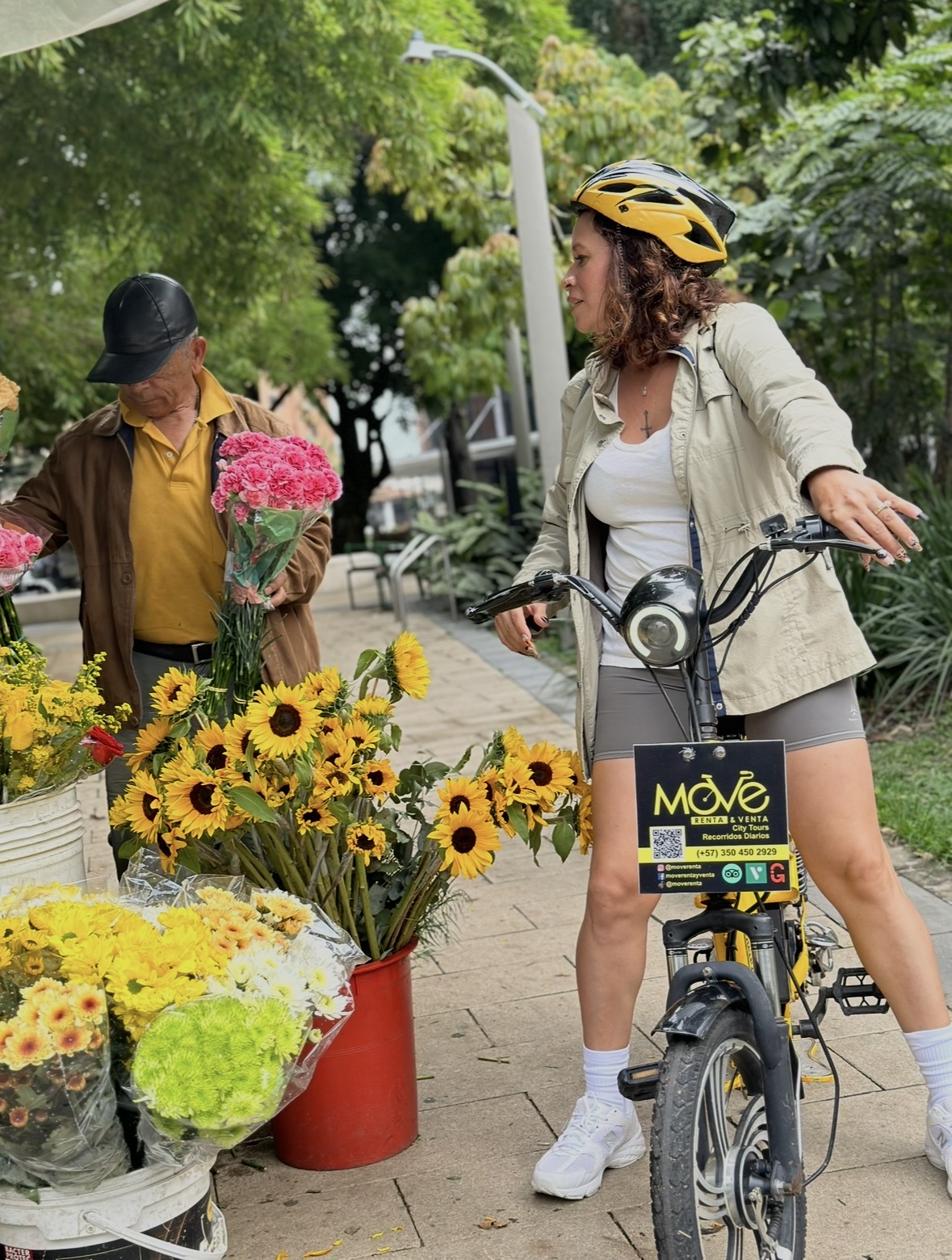
Medellín by Electric Bike: the City You Never See from a Car
A car seals you in with AC and music. An electric bike forces you to look. This is the real difference between passing through Medellín and
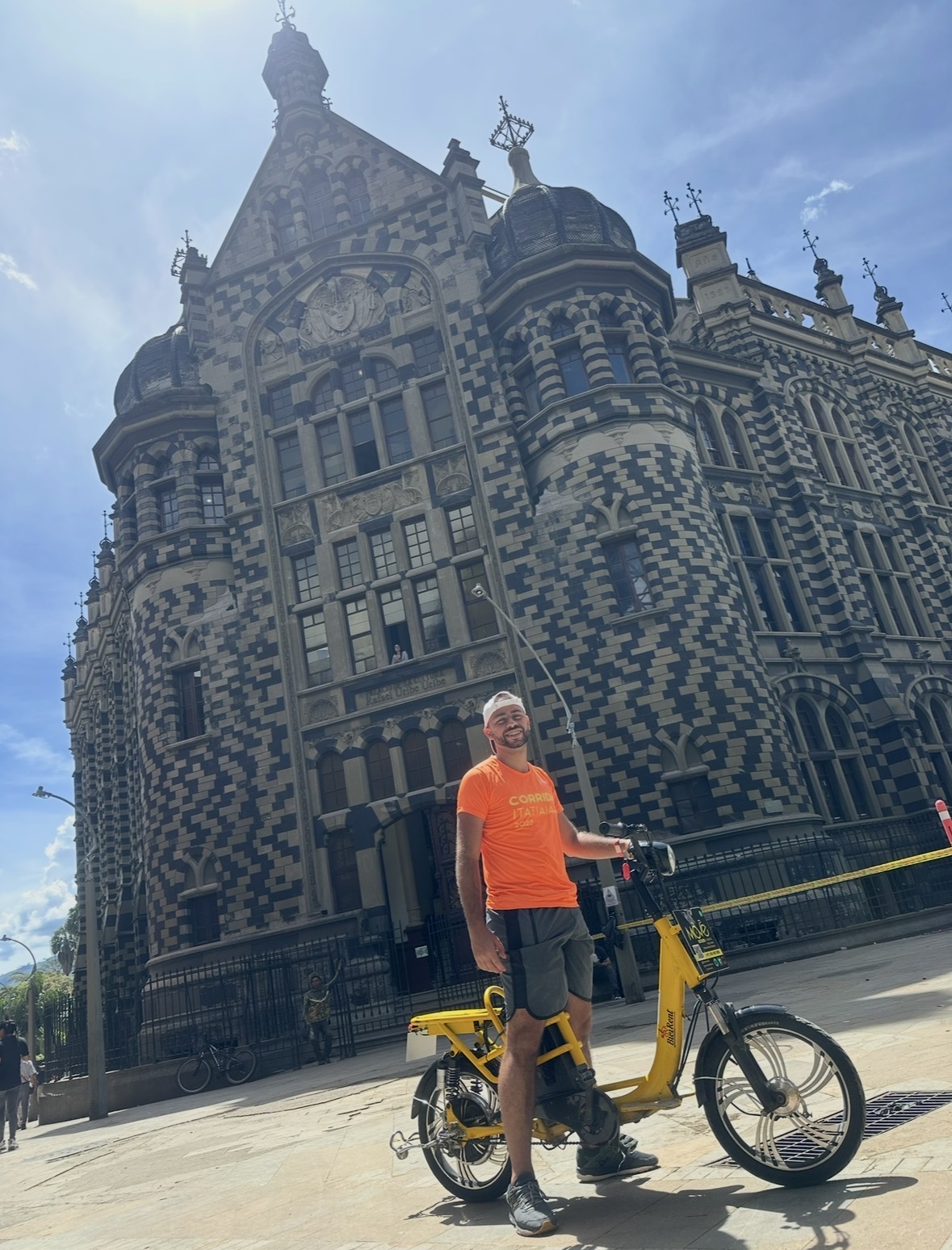
The Best Tours in Medellín in 2026: a Local's Honest Guide
There are dozens of tours in Medellín and not all of them are worth the money. This is a local's honest guide: which tour to take depending
Is Medellín Safe for Tourists? An Honest 2026 Guide
Yes, if you move like a local. Safe zones, where not to walk at night, taxis vs Uber and the “no dar papaya” rule — straight from people who