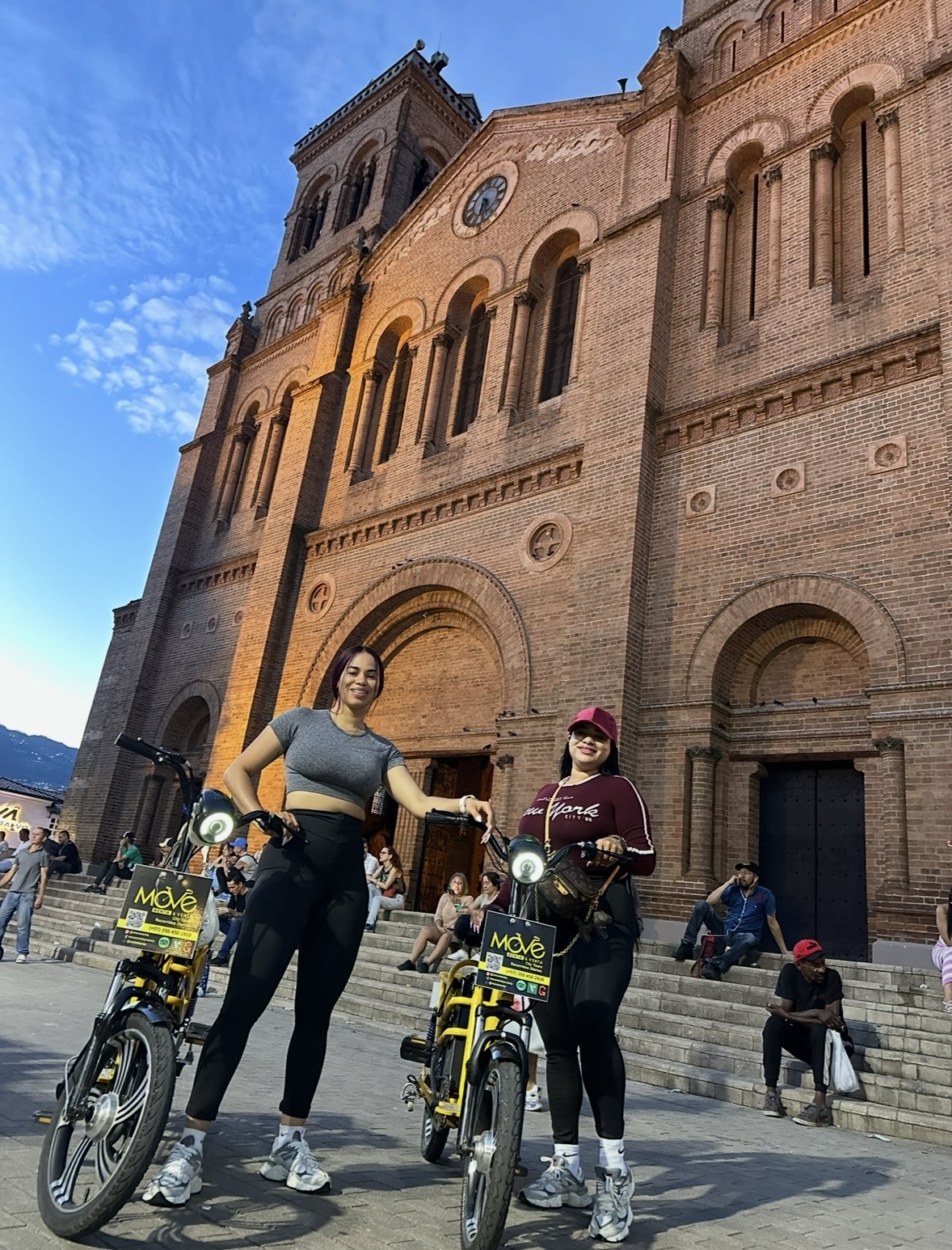
Junín Street is the pedestrian spine linking Parque Berrío with Parque Bolívar, and for decades it was THE promenade of Medellín — so much so that the city invented a verb for it: juniniar. Today it is loud, crowded, working-class commerce. It is not pretty in the postcard sense, but it is one of the most alive streets in the city, and it sits exactly between the places you came downtown to see.
What to see & do
1. Juniniar
Medellín has a verb of its own and it was born on this street. To juniniar was to come down to Junín and walk with no destination — to see and be seen, run into people you knew, and end up having a drink. In the forties and fifties it was the city's compulsory outing, and although today's Junín is more commercial and less elegant, the verb survived and people still use it.
2. Salón Versalles
A café opened in 1963 by an Argentine immigrant that became a refuge for writers, journalists and talkers. It still runs almost unchanged, with the same empanadas and the same tables. It is one of the few places in Medellín where time stopped in a way that does not feel staged.
3. The Coltejer Building
The skyscraper that presides over the street, finished in 1972, topped with a spire shaped like a sewing needle in tribute to the textile industry that made the city rich. For decades it was the tallest building in Colombia and it is still the emblem of Medellín's skyline.
4. Street-level commerce
Shoe shops, jewellers, opticians, stationers, ice-cream counters. Junín today is a pedestrian street of popular commerce, noisy and full at every hour. Not beautiful in the tourist sense, but one of the liveliest streets in the city.
5. Teatro Lido and the cultural fabric
The area still holds historic theatres and halls that keep programming shows. It is what remains standing of the cultured, mid-century Medellín.
Our tours to this place
Our downtown tours (Urban, Panoramic, Full) cover the historic heart around Junín — and your guide marks where to come back and juniniar:
Related tours
Practical info
- Getting there: metro line A, Parque Berrío or San Antonio station. Junín links the Berrío area with Parque Bolívar.
- When to go: daytime, on a weekday. It is a commercial street, so Sundays are quiet and the area changes character after dark.
- How long: a good half hour to walk the whole stretch, plus whatever time the shop windows steal.
- How to combine it: it is the natural axis between Plaza Botero and Parque Bolívar. Walk it and chain it with the Palace of Culture and the Museum of Antioquia without a detour.
- Safety: very busy by day, with police presence. The usual downtown rules: bag in front, phone away, nothing valuable on show.
- Admission: it is a public street, nothing to pay. Salón Versalles and the shops keep their own hours.
Frequently asked questions
What does juniniar mean?
To go walking along Junín with no purpose beyond strolling and running into people. It is a verb unique to Medellín, born on this street, and still in use.
Is it pedestrianised?
Yes, most of the stretch is car-free, so you walk it without traffic.
Is it worth it for a tourist?
As a pretty street, no. As a portrait of the real city and its history, yes — and it lies on the way between two places you will visit anyway.
Is Salón Versalles still open?
Yes. It is a city institution and has been running since 1963.
Is Junín Street safe?
By day it is a very busy street with police presence and needs no more care than the usual watch for pickpockets. After dark the centre empties out and it is not a place to stroll.
Keep reading
Where to Eat in Medellín 2026: Best Zones & Restaurants
The local guide to where to eat in Medellín by neighborhood: Laureles, El Poblado, Provenza and markets. From hood food to upscale Paisa cui
Exotic Colombian Fruits: The Guide to Trying Them All in Medellín (Fearlessly, Without Missing One)
Granadilla, mangosteen, lulo, guanábana: what they are, how to eat them and where to try them like a local — ñapa trick included.
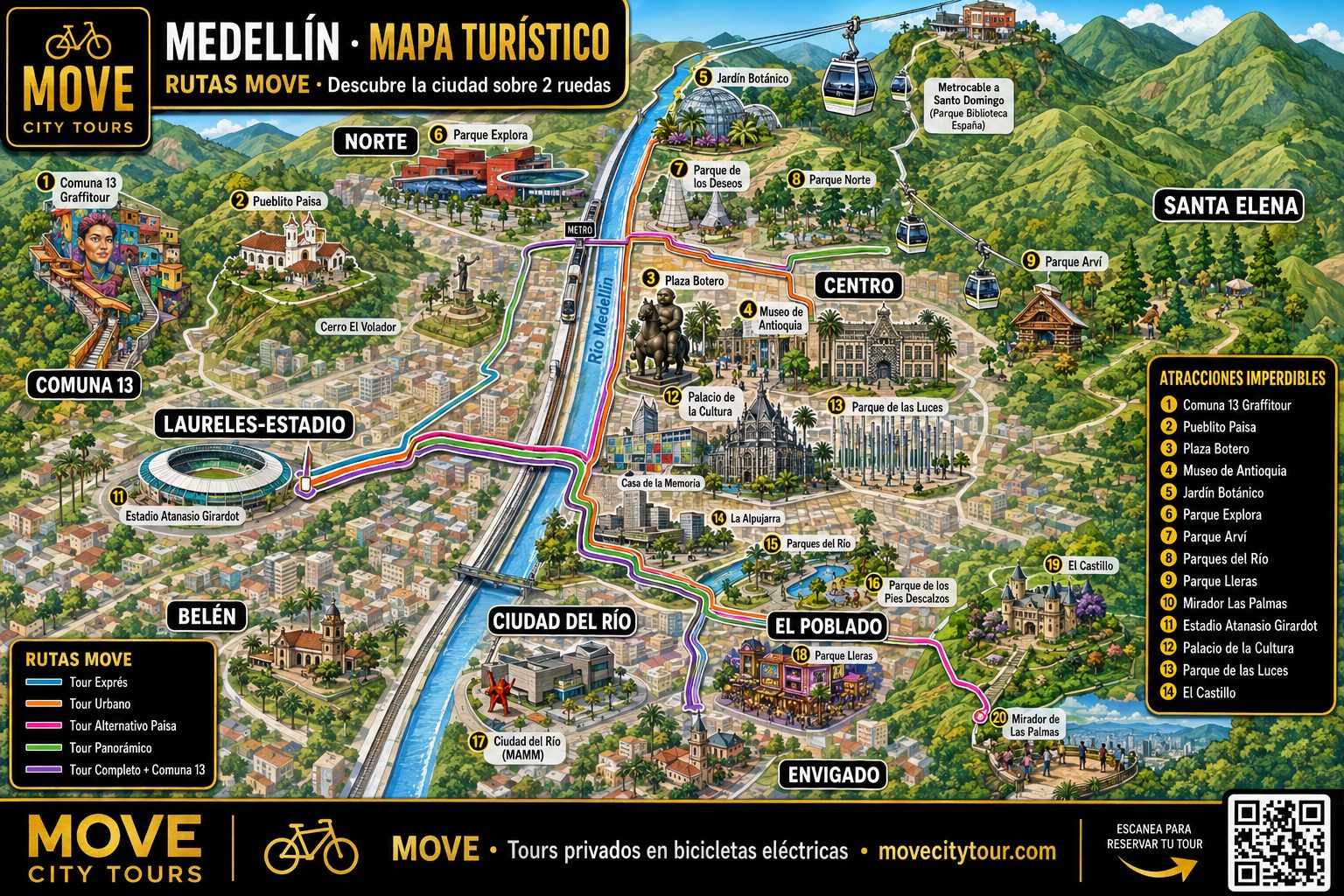
Medellín Tourist Map: What to Visit and How to See It All by Electric Bike
The Medellín tourist map explained sector by sector — Comuna 13, Plaza Botero, Pueblito Paisa, El Poblado and more — and why the electric bi