![[object Object]](/api/admin/media-library/file/move-medellin/uploads/f1ed16cb-d1a4-4aa2-b74f-72aa63230655.jpg)
December is the happiest month this city has. I say that without exaggerating: there is music everywhere, every single day, and every single day there is an excuse to get the family together, to smile and to have a good time.
If you come to Medellín in December looking for the Christmas lights, you will find them and you will love them. But what really makes this month different is not by the river or in the official parks: it is on the blocks, on the balconies, in the kitchens and in the closed-off streets where neighbours bring out the pots. That is what I want to tell you about here.
It all starts on the night of 30 November
Paisa Christmas does not start with a calendar. It starts with a night.
On 30 November people gradually stay out on the street. They come out onto the balconies, the party gets going, out come the drinks, the chicharrón, the sancocho, the buñuelos, the natilla. Everything happens outside, on the block, among neighbours. And at exactly midnight, as 1 December begins, the whole city explodes into fireworks, paper lanterns and firecrackers.
That is la alborada. There is no stage, no organiser, no ticket. It is the entire city, at the same time, welcoming December.
And it is not only Medellín. The tradition is alive across the whole metropolitan area: Bello, Itagüí, Sabaneta, La Estrella, Envigado, Girardota, Copacabana. That night every hillside in the valley lights up at once.
Where the alborada comes from
The tradition is recent and has a specific origin: 2003, in the context of the demobilisation of the paramilitary blocs in the city. The fireworks of that night coincided with the arrival of December, and over the years the date stuck.
Medellín has changed since then in a way that is hard to explain to anyone who did not see it before. The alborada stopped being what it was back then and today it belongs to the neighbourhoods and to families: the night the city tells itself that December has arrived. I am telling you because it is part of the story and because I would rather you heard it from me.
Fireworks and pets: the part that never makes the postcards
Not everyone agrees with the alborada, and that has to be said.
The strongest objection is about pets. Medellín is a very green city and people here have animals everywhere; for a great many families the dog is not a pet, it is another member of the family. And the fireworks of 1 December affect them enormously. That night there are thousands of homes shut tight, music on to cover the noise, looking after a frightened animal.
It is a conversation the city has every year and has not settled yet. If you are travelling with your pet, bear it in mind.
And one more thing, said as a local and not as a brochure: fireworks are for watching and hearing, not for handling. Every December here there are burn injuries, and many of them are children. Enjoy it from the balcony, from the street, from wherever you are. That is spectacle enough.
7 and 8 December: the night of the little candles
If the alborada is noise, the day of the little candles is the opposite: it is the most familiar and most magical night of the year.
It is the day of the Virgin, and it works like this. The block is swept clean during the day. The street is closed off, left to pedestrians and full of children playing. And when night falls, around seven or eight, each family starts lighting its candles inside paper lanterns, one by one, until the whole block is lit from the ground up.
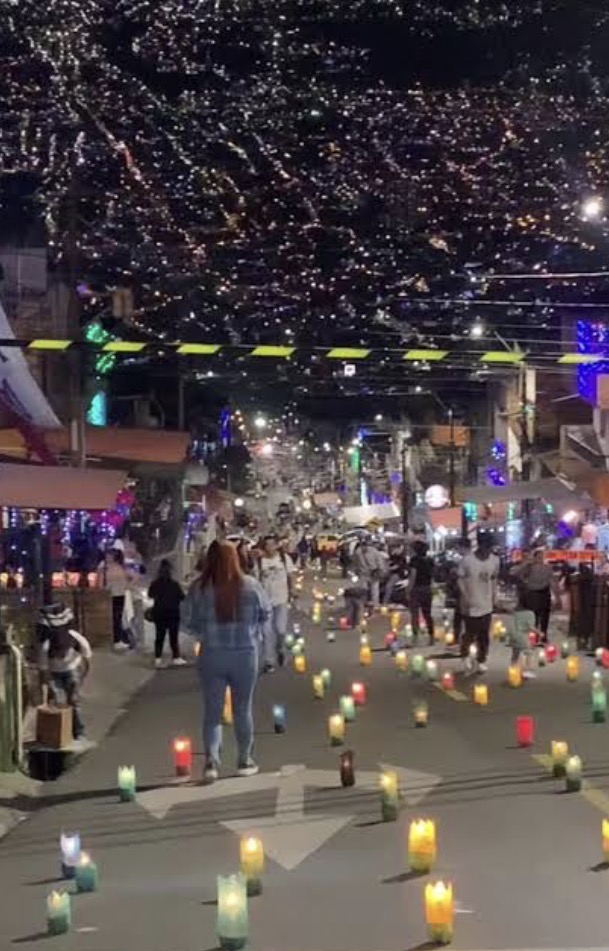
📸 A block in Medellín on the night of the little candles.
Each candle is a wish. That is what you learn as a child: you light a candle and you ask for something. And the night goes by like that, among lanterns, paper balloons, neighbours, and the grill lit in the middle of the street, because it is also a night for a marranada, for bringing out the firewood and cooking in front of everybody.
From early on you see people buying candles as if it were Christmas Eve. And since 8 December is a national holiday, the day of the Immaculate Conception, the party on the 7th stretches late without anyone checking the clock. Plenty of people light candles on the night of the 8th too.
The novenas: from the 16th to the 24th, house to house
The novenas are the most Colombian and the most paisa thing there is.
Medellín is a very Catholic city, and from 16 to 24 December the novena is prayed while waiting for the arrival of the Christ Child. But putting it that way falls short, because a novena is above all a gathering.
It works in turns: today one family hosts it, tomorrow another, the day after another, and so on for nine days. In residential complexes the management gathers the children and the neighbours and they do it all together. In the neighbourhoods they do it by block. There are also big community novenas in certain districts and parks, such as El Tesoro, Santa Fe, Envigado, la Mayorista or Parques del Río, in the main parks of each municipality, and in the towns nearby, such as El Retiro, San Vicente, Marinilla, Guatapé or Santa Fe de Antioquia.
But the real novena is the one at home. Buñuelos, empanadas and natilla are shared around. The children sing the carols with tambourines, drums and guitars, and they do not sit still. And on the 24th, the last day, every child gets their present, after nine nights of waiting for it.
Why this feels different here
Medellín has something not every city has: people know each other.
The neighbourhoods sit right against one another, the streets belong to everybody, and your neighbour knows the person on the ground floor, the one next door and the one on the next block. That warmth exists all year, but in December you notice it more, because that is when everyone comes together.
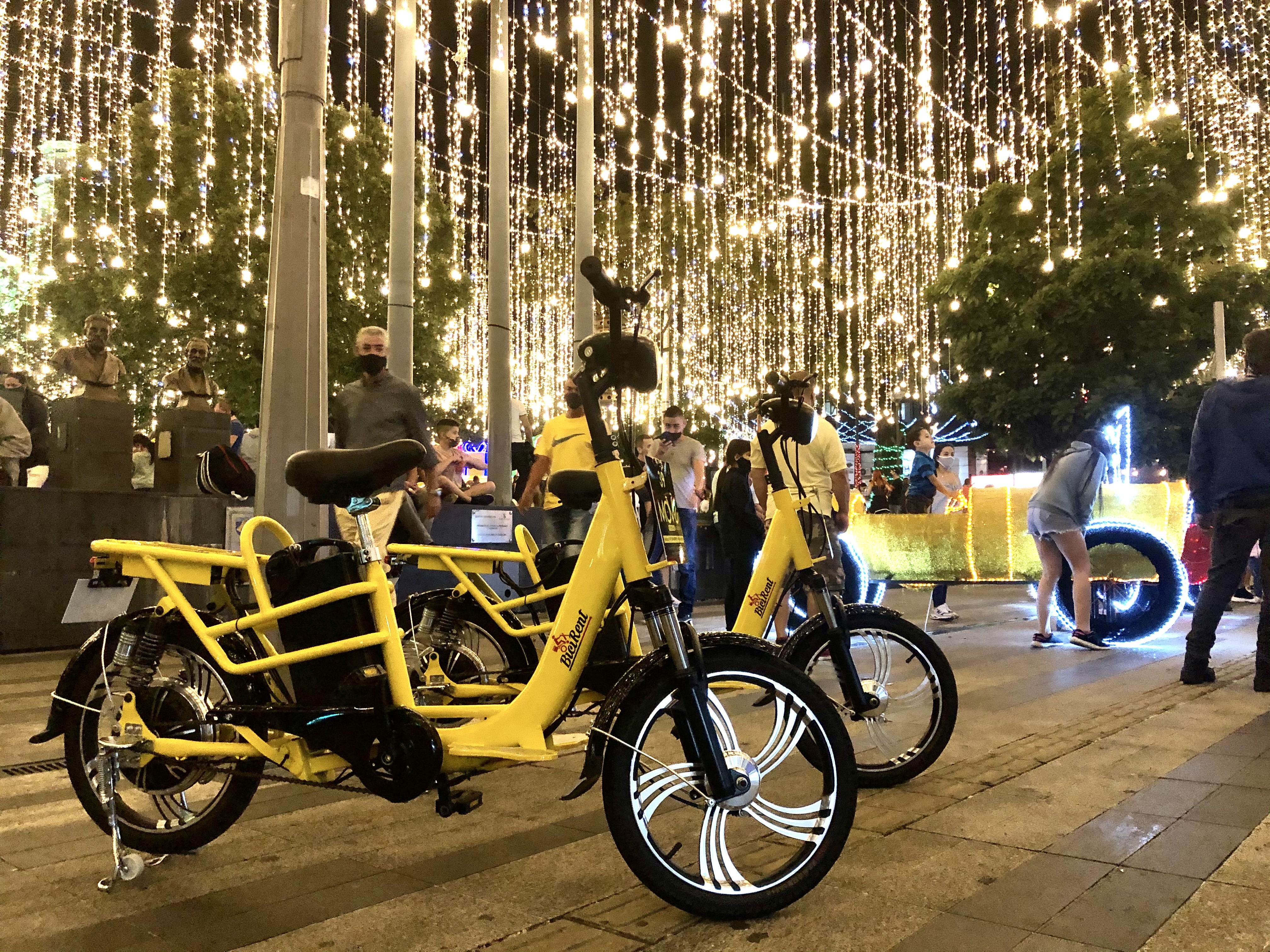
So if you ride through the city on a December night, you will notice something curious: there are whole neighbourhoods lit up that have nothing to do with the official displays. It is the houses and the balconies of families. That, to me, is the real light of December in Medellín.
The 24th, the 25th and the sancocho in the street
The 24th is Christmas Eve, with its dinner and its gathering, and it probably looks a lot like what happens in your country.
The 25th is another matter. The 25th is when Medellín does something you will not see in many places: sancocho in the street.
Sancocho is a soup with beef, pork or chicken, potato, plantain and sometimes corn on the cob. And on the 25th it is cooked over firewood, right on the public street. Big pots, stoves set up on the pavement, the whole block eating from the same sancocho. Technically that is not allowed, but on the 25th no rule applies to anyone.
The streets empty of cars and fill with people. Children play outside, whoever drinks has their drinks, and the city wakes up differently. On 1 January it happens all over again, exactly the same.
New Year
From the 16th to the 31st the shops fill up, because here people are after el estrene: new clothes to welcome the year in. And the 31st is celebrated spectacularly, with the family, with the block, and once again with the street as the main character.
Where you actually experience it
If you want to see this as it really is, my advice is simple: look for it in a neighbourhood, not in a shopping-mall district.
The traditions are far stronger in working-class, traditional neighbourhoods, such as Manrique, Aranjuez, Campo Valdés, barrio Antioquia or any block in Bello, than in the more touristy areas. That is where the street gets closed, where the lanterns are lit, where the tambourine sounds.
Now, let us be practical: turning up alone in a neighbourhood you do not know, at night and in December, is not the best idea, and not out of fear, but because you will not know where the novena is, what time it starts or which block has the candles. None of this is advertised anywhere. You know it because someone from here takes you.
And the Christmas lights?
The Christmas lights are the other great chapter of December in Medellín, and they deserve their own space.
If you want the dates, the locations and the recommendations for this season, they are in our guide: Medellín Christmas Lights: the complete guide.
And if you want to see them in a different way, without losing the evening hunting for parking, we explain how here: How to See Medellín Christmas Lights in a Different Way.
Living the paisa December where it actually happens
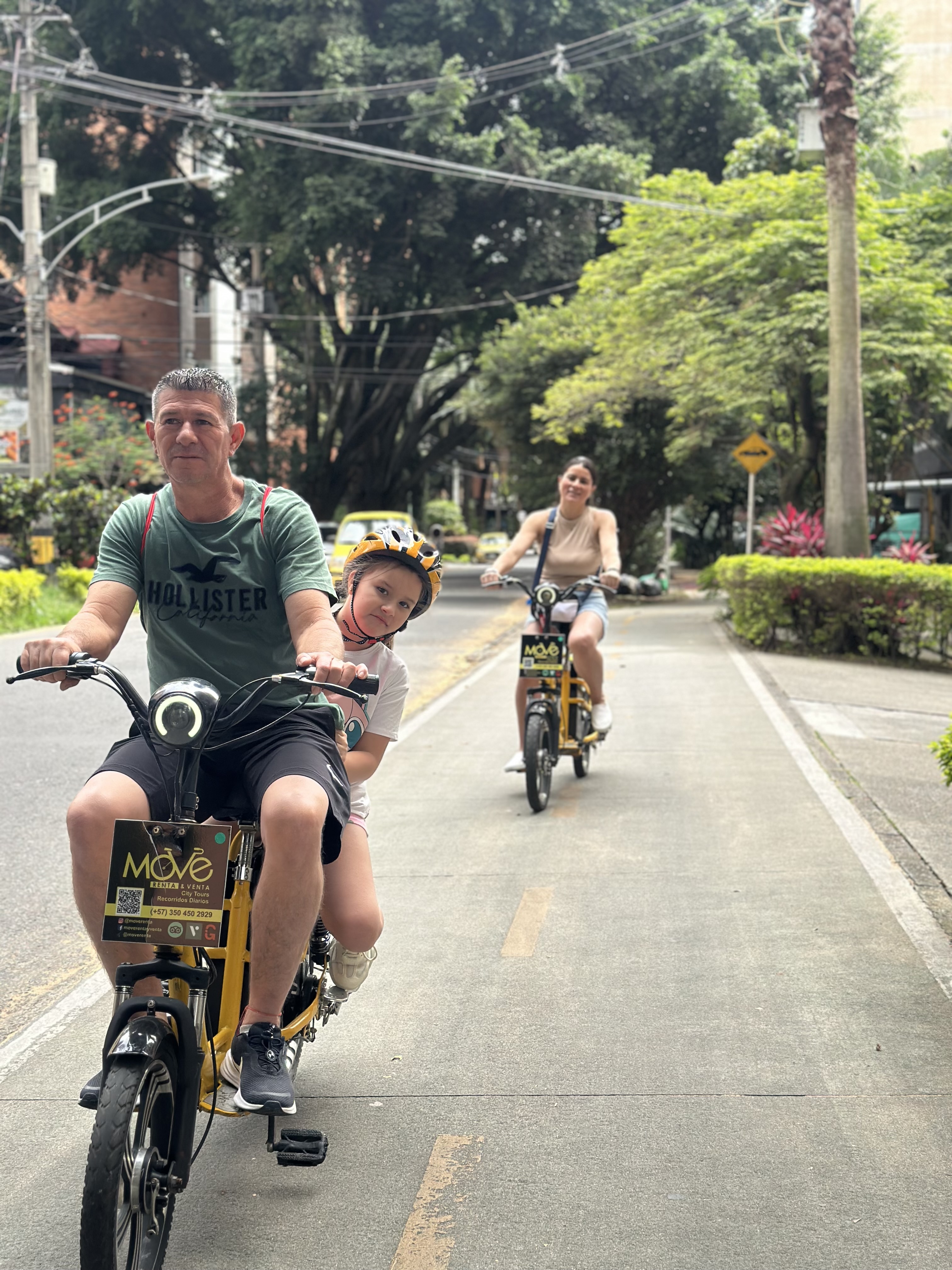
At MOVE we work Sundays, public holidays, and on 24 and 25 December. That is not a small detail: it means that on the dates when the city is at its most beautiful, we are still rolling.
And because our routes go through the neighbourhoods, and many of them run at night, you will come across this for real: a block in the middle of a novena, a house that has been decorated for twenty years, a balcony full of lanterns, the smell of a grill in the street. Things that from inside a car slide past the window and are gone.
We are not going to promise you will land right in the middle of a novena, because that cannot be scheduled. What we can tell you is that you will be in the places where it happens, with someone from here beside you explaining what you are looking at.
Message us on WhatsApp and we will tell you what you can experience on the dates of your trip.
Ready to experience it?
Discover Medellín on an e-bike private tour. Local guides · Instant confirmation · 5.0 ★ (340+ reviews).