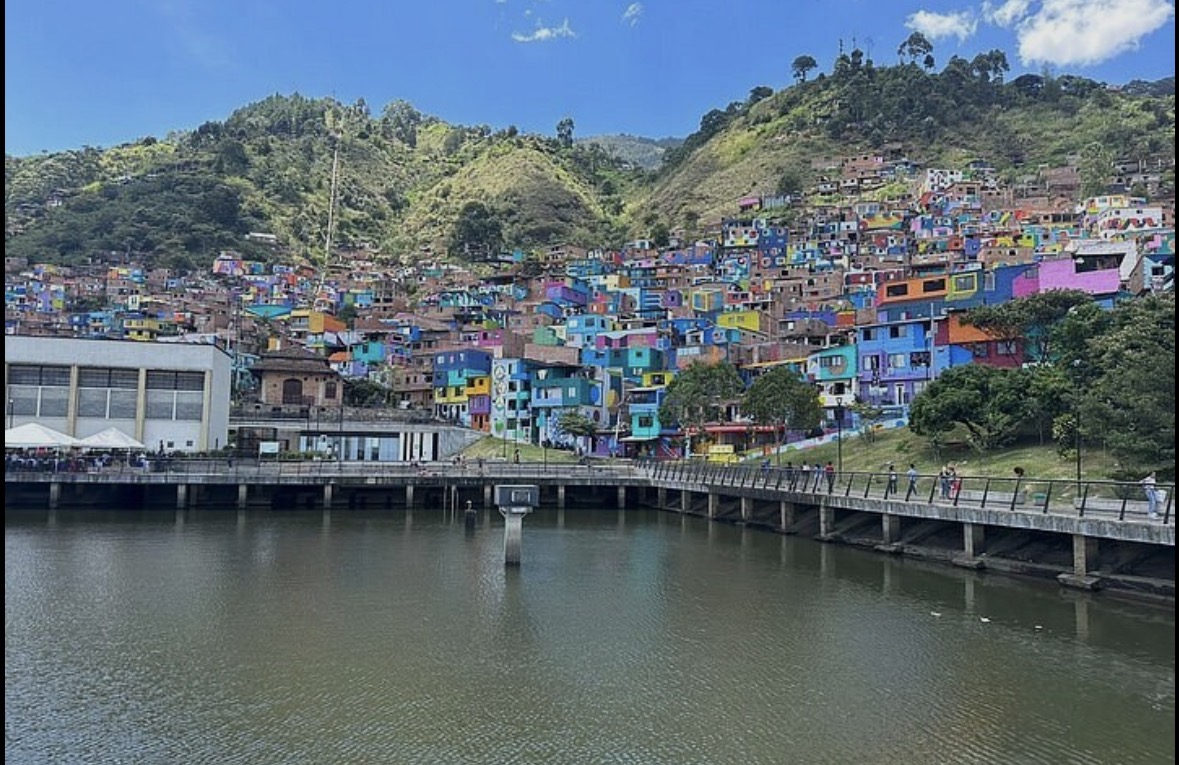
Manrique — Comuna 3 — sits on Medellín’s northeastern hillside and was born in the early twentieth century as working-class territory: families drawn to the valley by industrialisation, building up neighbourhoods like Berlín and Campo Valdés, linked to downtown by the old tramway. That origin is still tangible: here the city doesn’t dress up for visitors — it simply lives. And it holds a story that surprises everyone: **Manrique is Medellín’s tango neighbourhood**. Carlos Gardel, tango’s greatest voice, died in this city — his plane crashed at Olaya Herrera airport on 24 June 1935 — and Medellín turned grief into devotion. On Carrera 45, renamed Avenida Carlos Gardel, stands **Casa Gardeliana**, founded in 1972 and a Cultural Heritage site of the city since 2002: photographs, memorabilia and a statue of the “Zorzal” donated by the Argentine government. All around it, tango plays in bars and fondas as if Buenos Aires were just around the corner. Manrique also lived the hardest chapter of the city’s recent history: in the eighties and nineties it was one of the comunas hit hardest by violence, and a generation of kids grew up with the worst possible role models in front of them. Telling that matters — without morbid detail or improvised figures — because it makes what you see today more valuable: a comuna of hard-working people who pulled their neighbourhoods through, and one mass tourism hasn’t reached yet. That is exactly the reason to come. There are no queues for photos here — there are conversations. Visiting feels less like a tour and more like a friend from the barrio showing you his block.
What to see & do
1. Casa Gardeliana
The tango house-museum on Avenida Carlos Gardel: Gardel memorabilia, the story of why Medellín is a tango city, and a statue donated by Argentina.
2. La 45
The Carrera 45 corridor: fondas, bars and dance halls where tango, salsa and popular music share the night. Neighbourhood commerce by day; the northeast’s party by night.
3. Neighbourhood life
Corner shops, bakeries, ladies chatting on the pavement, packed football pitches. What other destinations market as an “authentic experience” is simply Tuesday here.
4. The hillside views
Manrique climbs the mountain, and every block uphill gifts a different panorama of the Aburrá valley.
5. The contrast with tourist Medellín
After Provenza and Comuna 13, Manrique answers a different question: not “what does a tourist visit?” but “how does a paisa live?”.
Our tours to this place
Manrique is our newest experience and we build it to measure: tango, fondas and neighbourhood life with a local guide, in private. **Message us on WhatsApp** and we’ll shape it around your day and your pace.
Practical info
- Best with a local: not because it’s off-limits, but because without context it’s just another street — and with context it’s one of the city’s most memorable visits. Message us and we’ll set it up.
- When to go: daytime for neighbourhood life and Casa Gardeliana; La 45 at night is a party plan, best enjoyed accompanied.
- Bring cash: this is neighbourhood commerce and many places don’t take cards.
- Photograph with respect: ask before portraying people or the inside of homes. People here are not part of the scenery.
- June is tango’s big month: around the anniversary of Gardel’s death (24 June) there’s special programming — check the city’s cultural agenda for your travel dates.
Frequently asked questions
Is it safe to visit Manrique?
By day, with a respectful visitor’s attitude, yes — and with a local by your side the experience changes completely. As in any big city, safety varies by sector and hour: the scary online statistics come from dynamics far removed from visitors.
Why tango, if this is Colombia?
Because Gardel died in Medellín in 1935 and the city adopted him forever. Manrique, working-class and bohemian, is where that music took root.
How is it different from Comuna 13?
The 13 is the icon: street art, escalators and thousands of visitors a day. Manrique is the opposite: almost no tourists, zero spectacle and real encounters. They don’t compete; they complement each other.
How do I get there?
It’s in the northeast, uphill from downtown. The simplest way is taxi or ride app; the best, with a local guide who turns the ride into a story.
Is it worth it with only a few days?
First time and two days? Prioritise the classic circuit. Already know the city, or travelling in search of what guidebooks miss? Manrique is exactly that.
Keep reading
Best Things to Do in Medellín (2026): Top Experiences
Discover the best things to do in Medellín in 2026: Comuna 13, Pueblito Paisa, the historic center, day trips, food and more, with local tip
Things to Do in Medellín as a Couple or With Friends (No Boredom)
Medellín plans to enjoy together: active, fun and for everyone. The idea that works for couples and groups alike.